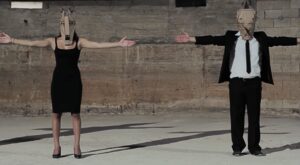
Landscape as Archive
In this text, Pelin Tan considers land and landscape as layered archives that carry the memories of human and more-than-human beings. Moving from walks through the Tigris basin to seed...
read
Orta Format focuses on current concepts and discussions through an editorial perspective as an independent art publication; it addresses the vulnerabilities and needs within the field of art through the lens of archival practices and memory.
In this text, Pelin Tan considers land and landscape as layered archives that carry the memories of human and more-than-human beings. Moving from walks through the Tigris basin to seed...
read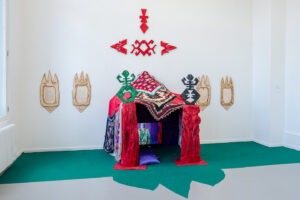
In her curatorial practice, Naz Kocadere explores the ways artistic expression takes shape in language and within relations of power. Here, she shifts her focus from words to the materiality...
read
In the series Experiments and Stumbles on Collaboration, İpek Çınar writes about how coming together and being "we" gets built —and where it falters— through the experience of running an...
read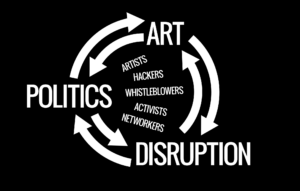
Whistleblowing actions have transformed our perception of surveillance and control in today’s information society. This text examines the effects of whistleblowing as a form of dissent on politics, society, and...
read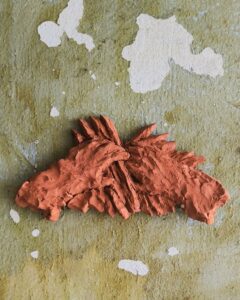
When material sheds the instrumental approach of modernism and becomes a carrier of memory and knowledge, how does it speak to us? Starting from her family history extending to Northern...
read
Zeynep Okyay writes on the practice of PASAJ, the independent art space she has sustained for over fifteen years, with reflections on space, ownership, and the intricacies of being together....
read
(Counter-)archive is an extra-institutional, independent, and autonomous space of memory and knowledge. It is positioned outside the regimes of control, hierarchy, and representation imposed by the state, academia, museums, or market-based cultural institutions. It constructs processes of production, circulation, and meaning-making through collective and activist practices, particularly within the framework of feminist, queer, and postcolonial archival studies. It determines its own methods and principles. It approaches the act of archiving as a rights-based and political intervention. It focuses on gaps, silences, and affect. Suggested Sources: Derrida, Jacques. Archive Fever: A Freudian Impression. Translated by Eric Prenowitz. Chicago: University of Chicago Press, 1996. Enwezor, Okwui. Archive Fever: Photography between History and the Monument. Göttingen: Steidl, 2008. Alsaden, Amin. “The Counter-Archive: Eluding the Erasures of Iraq’s Successive Wars.” The American Archivist 86, no. 2 (2023): 419–435.
Autonomy refers to the collective capacity to organize life beyond relations of domination, dependency, and imposed authority. Rather than individual self-sufficiency, it describes the shared ability to provide for one another, make decisions together, and create the material and social conditions for freedom. Autonomy emerges through common practices of care, resistance, and cooperation that challenge systems such as capitalism, colonialism, patriarchy, and state control. Suggested Sources: CounterPower. Organizing for Autonomy: History, Theory, and Strategy for Collective Liberation. James C. Scott. The Art of Not Being Governed: An Anarchist History of Upland Southeast Asia. New Haven, CT: Yale University Press, 2009. Tan, Pelin, Özge Çelikaslan, and Alper Sen, eds. Autonomous archiving. dpr-barcelona, 2016.
Carework encompasses the totality of mental, emotional, and physical effort required to sustain individual and collective life. As feminist theorists emphasize, this concept represents a broad spectrum of burdens ranging from invisible domestic work to paid care services in the market. Historically built largely on women’s unpaid labor, this process has become a field of “political struggle” for those whose work has been deprived of economic value, rendered precarious, and made invisible. Care labor includes not only support activities within the household, but also the infrastructural labor that makes social existence possible, along with the pursuit of the social justice this labor deserves. Suggested Sources: Mierle Laderman Ukeles. “Manifesto for Maintenance Art 1969!” Queens Museum. The Care Collective, The Care Manifesto: The Politics of Interdependence, translated by Gülnur Acar Savran (Istanbul: Dipnot Yayınları, 2021) Nancy Fraser. “Crisis of Care? On the Social-Reproductive Contradictions of Contemporary Capitalism.” In Social Reproduction Theory: Remapping Class, Recentering Oppression, edited by Tithi Bhattacharya, 21–36. London: Pluto Press, 2017. Paula England, “Emerging Theories of Care Work,” Annual Review of Sociology 31 (2005): 381–399. Silvia Federici. Re-enchanting the World: Feminism and the Politics of the Commons. Translated by Ebru Kılıç, Istanbul: Sel Yayıncılık, 2023.
Material participates in the formation of meaning through its own materiality, resistance, texture, and capacity to affect; within contemporary art practice, it exceeds its physical boundaries and occupies a conceptual terrain. Despite the communication networks that impose the rapid circulation characteristic of our time, it emphasizes the importance of slowing down and making sense through touch. Material is alive and intra-active; it is not merely a passive surface to be shaped, but a dynamic component capable of activating the subject and participating in the process of production. The relationship between the artist and the material is not one-directional; throughout the production process, the positions of subject and object continuously shift and transform one another. Through its ability to generate meaning within conceptual, historical, and political contexts, material takes form along the route shaped by the artist’s labor, hands, and mind, while simultaneously reshaping that very route. Suggested Resources Barad, K. (2007). Meeting the universe halfway: quantum physics and the entanglement of matter and meaning. NC:Duke University Press. Carter, P. (2004). Material Thinking: The Theory and Practice of Creative Research. Melbourne: Melbourne University Press. Ingold, T. (2011). Redrawing Anthropology: Materials, Movements, Lines. Surrey: Ashgate Publishing. Latour, Bruno. (2004). Politics of Nature: How to Bring the Sciences into Democracy. Cambridge, MA: Harvard University Press. Polanyi, M. (1966). The Tacit Dimension. New York: Doubleday & Company Inc.
Participatory art is an approach that moves artistic production beyond the act of a single artist by incorporating the experiences, knowledge, and labor of audiences, participants, and different communities into the process; it focuses less on the object itself and more on process, relationships, and the collective production of meaning. It aims to share the stages of decision-making, production, and interpretation, and values creating spaces for social connection, empowerment, dialogue, and encounter. Often through workshops, performances, interventions, and collaborative projects, it makes the boundaries between art and everyday life more permeable. Suggested Sources: Claire Bishop. Artificial Hells: Participatory Art and the Politics of Spectatorship. Verso Books, 2023. Tania Bruguera, et al. Tania Bruguera: Talking to Power = Hablándole al Poder. Yerba Buena Center for the Arts, 2018.
Solidarity practices are often autonomous forms of organization that make collective existence possible under conditions of crisis, inequality, and exclusion. They are built through non-hierarchical, horizontal relationships and are based on the principles of care, reciprocity, and shared responsibility. Within feminist, queer, and postcolonial approaches, they center invisible labor and marginalized experiences. They emphasize viewing solidarity not only as a form of support, but also as a political intervention and a transformative practice. Suggested Sources: Silvia Federici. Re-enchanting the World: Feminism and the Politics of the Commons. PM Press, 2018. Dean Spade. Mutual Aid: Building Solidarity During This Crisis (and the Next). Verso Books, 2020. Valeria Graziano, Marcell Mars, and Tomislav Medak. “Pirate Care.” (2020).
Survival strategies refer to the individual and collective methods developed to sustain life and production under conditions of precarity, social exclusion, and structural inequality. This concept encompasses not only economic means of livelihood, but also practices of existing within heteronormative systems, political oppression, and a persistent sense of futurity being denied. Survival goes beyond maintaining the present moment; it involves preserving the capacity to imagine the future and collectively construct other ways of living. Especially in the field of art, solidarity networks, commons, and alternative forms of existence that emerge through invisible labor, political activism, and non-market modes of production form the basis of these strategies. Suggested Readings: Bellini, Andrea, and Göksu Kunak, eds. Artists' Survival Kit. Centre d'Art Contemporain Genève, 2023. Guy Standing. The Precariat: The New Dangerous Class. London: Bloomsbury Academic, 2011. José Esteban Muñoz. Cruising Utopia: The Then and There of Queer Futurity. New York: New York University Press, 2009.
You can support Orta Format so that it can continue broadcasting, pay royalties, and produce more content.
You can follow and share our social media accounts.


We are open to personal support, funding, sponsorships, and collaborations. Please contact us.
We are working on easier support models.