(Counter-)archive is an extra-institutional, independent, and autonomous space of memory and knowledge. It is positioned outside the regimes of control, hierarchy, and representation imposed by the state, academia, museums, or market-based cultural institutions. It constructs processes of production, circulation, and meaning-making through collective and activist practices, particularly within the framework of feminist, queer, and postcolonial archival studies. It determines its own methods and principles. It approaches the act of archiving as a rights-based and political intervention. It focuses on gaps, silences, and affect.
Suggested Sources:
Derrida, Jacques. Archive Fever: A Freudian Impression. Translated by Eric Prenowitz. Chicago: University of Chicago Press, 1996.
Enwezor, Okwui. Archive Fever: Photography between History and the Monument. Göttingen: Steidl, 2008.
Alsaden, Amin. “The Counter-Archive: Eluding the Erasures of Iraq’s Successive Wars.” The American Archivist 86, no. 2 (2023): 419–435.
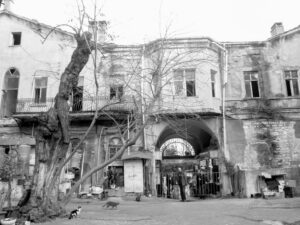
Eda Yiğit examined the examples of the historic Tokatlıyan Han—transformed into a living space for artists and offering experiences worth remembering—the Tarlabaşı Monastery, which, although still standing, has lost its...