The Right to Color
In her curatorial practice, Naz Kocadere explores the ways artistic expression takes shape in language and within relations of power. Here, she shifts her focus from words to the materiality...
read
Eda Yiğit


Editor: İpek Çınar
“Thinking with Concepts in Contemporary Art” has been supported as part of the SAHA Writing Series / Supported by SAHA Art Writing.
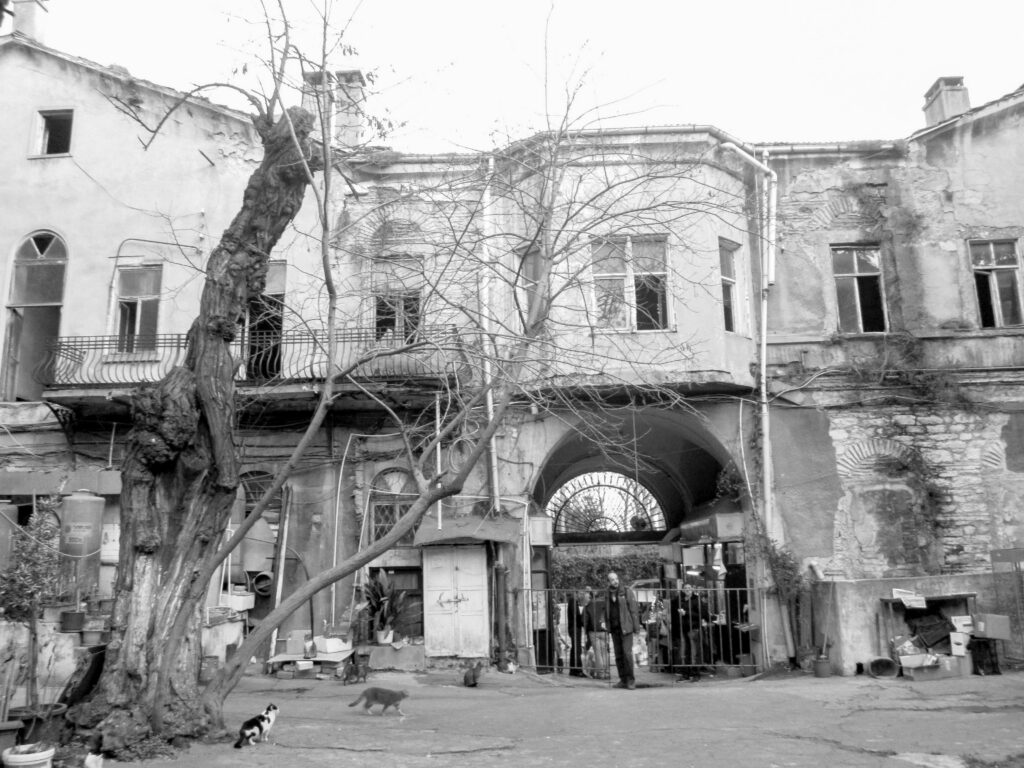
The value of remembering and rethinking the spaces in which artist communities live and produce continues to hold relevance in today’s art environment. These spaces not only carry the historical remarks in terms of architecture, but are also bearers of historicised experiences. These environments, in which works open to improvisation or produced through collective plannings, staged, and exhibited, existed as spaces where subjects and communities could exercise initiative, reflect their intellectual worlds onto one another, and operate without struggling against hierarchy and bureaucracy. The absence of such spaces direct us either to search archives for similar areas that existed in the past or to discover places that still carry this spirit today.
Those who create archives offer a framework that determines how the content they deem “worthy of remembrance” will be remembered. Archival records concerning spaces in which artists existed often circulate only when they become the specific subject of research and are written about; otherwise, they remain invisible. Moving through these archives nurtures a desire to keep archives that allow encounters with those similar to us and that are nourished by shared values. Following these journeys, sometimes it becomes necessary to change what is underlined, to work on it, to sift through it, and to create selections, while at other times it requires stepping out of the archive and attempting to rewrite things from beginning to end. Along with this, it is important to act through an archival practice that enables the cultural universes of spaces to be imagined as much as possible and that remains sensitive to the voices of their witnesses. As losses in our lived environment continue to deepen, holding on to the knowledge of interrupted experience becomes possible by expanding the boundaries of the archive through collective memory. This approach simultaneously takes on the quality of a counter archival practice through individual narratives. For this reason, I wanted to bring together a few examples that can be seen along the same route during a walk through Beyoğlu, which I have witnessed and traced, in light of both institutional archives and my personal archive.
The examples I will discuss are places that are known and remembered by those who have witnessed the transformation of Beyoğlu from the 1990s to today, yet they are largely inaccessible in terms of knowledge and experience for younger generations who did not share this witnessing. Sharing the practices of remembrance is an important resource not only for grasping urban and cultural losses, but also for articulating and concretizing today’s demands related to urban culture. Without confining experiences worth remembering solely to an archival context, it is necessary to develop new imaginaries by considering their potential to serve as models for community spaces. I will list these meeting and encounter spaces through a backward looking perspective from today. Beyoğlu hans and passages, mostly constructed from the second half of the nineteenth century onward, are among the architectural and urban indicators of modernization. Beyond their architectural distinctiveness and economic functions, they are also significant for housing practices of coexistence among different communities. These structures, characterised by multilingual, religious, and ethnic diversity generate rich public space practices rich in cultural encounters.
As the first example, I will speak of the story of the historic Tokatlıyan Han, which has transformed into a living space for the artists since 2022. The second example is the Tarlabaşı Monastery, a structure that is still standing but has lost its own community and has been transferred to capital. The Monastery lost not only its own community but also the former residents of the neighbourhood that it was located, due to urban transformation. These days, following the completion of its restoration process, it is preparing to open as a hotel that will also serve as an art events space. Although its physical presence has been preserved, we will see together how an urban space emptied of its interior, meaning its people, will sustain its social existence. The final example is Narmanlı, one of the oldest structures of İstiklal Avenue, which served as a home for figures of arts and culture until the early 2000s. Today, it is a place that many people who knew its former state can hardly tolerate passing by, let alone entering. This rare structure, as a living space shaped by those who witnessed its past and by its residents, offers a profound opportunity to question the potential uses of historical spaces.
Artists need both to be within communities and to be nourished by them. Relationships established with the communities that include the tradespeople, artisans, and cultural actors carry important potentials that shape artistic production practices. An artist’s relationship with the social sphere, the state of being both inside and outside, means having a special elbow room. It provides the possibility of standing autonomous, without diminishing or becoming identical with a community under the same roof. In this way, when artists find life in the spaces they construct, they become members of the same imaginary zone and experience neighbourliness, collectivism, and solitude. This is one of the reasons they position themselves in shared districts and neighbourhoods. I say “imaginary” because rather than the permanence of spaces, we find ourselves speaking of a mental geography based on shared beliefs and feelings, and similar intellectual and aesthetic grounds.
Within this framework, I will take a close look at Tokatlıyan Han, which in a short time transformed into a space for artists and which I experienced as a resident of the han, at the Monastery in Tarlabaşı, accessed through narratives found in archives, and at Narmanlı Han, whose loss I observed by witnessing social struggle.
The New Ecosystem of Tokatlıyan Han
Tokatlıyan Han has swept into what it was, at least partially, freed itself from its worn out, dilapidated, and deserted state. Since 2022, alongside individual existences, a community has formed within the han that is at times capable of acting collectively. Witnessing and contributing to the formation of this community from the very beginning has meant being able to grasp, without interruption, the transformation of the space and of human relationships over time.
In 2022, when artists searching for affordable studios began renting rooms here, the atmosphere of the han changed. As the artist community expanded, a sense of neighborhood emerged. It was interesting to observe the transformation of the space, of the people, and of artistic production practices overtime. Tokatlıyan Han was re-spatialized by turning into a living space for the artists. Although this sphere may be only a tiny notch in the han’s deep rooted and long history, it gained significance in the lives of artists as a case worth thinking about, narrating, and writing on.
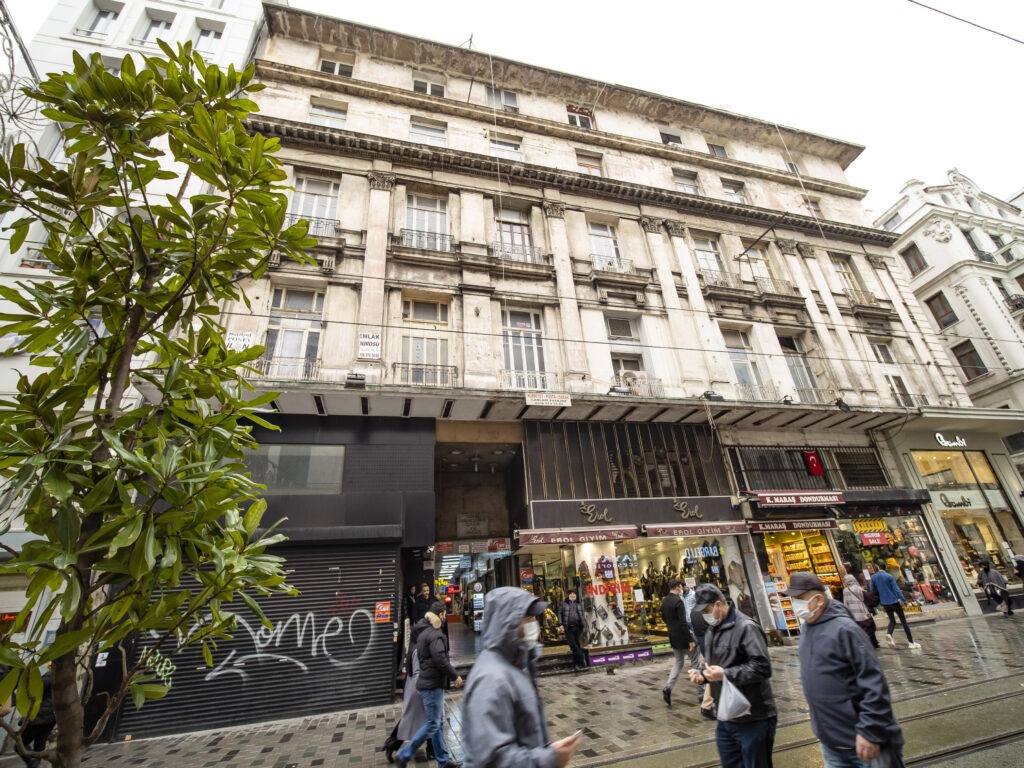
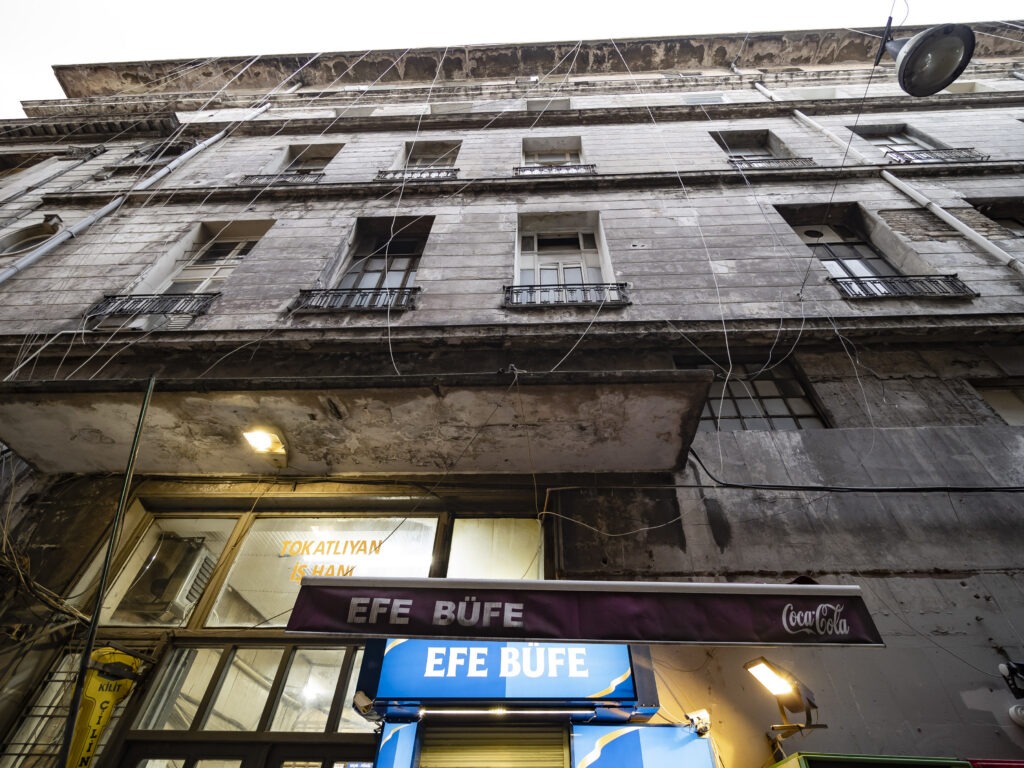
I found the “room of one’s own” that I was searching for to think and write at Tokatlıyan Han. In keeping with the spirit of the han, instead of calling my room a studio, I called it yazıhane (bureau), as lawyers and accountants do. Although I did not aim to observe the han from the inside as a researcher, from the moment I settled in, observing it like an ethnographer and accumulating the acts of witnessing turned into a dominant reflex. As this reflex turned into documentation, it gained the potential to make a small contribution to writing of today’s history. One of the first notes I kept regarding my relationship with the han from an ethnographic perspective was as follows:
I have been wandering through this han like a ghost for years. For almost fifteen years, mostly when I am alone in Beyoğlu, as I pass in front of the han, I suddenly turn the wheel inward and take a short walk between occupations or rushes. Every time I enter the han, another shop that I knew has closed or its owners have left the han. No fresh people take their place either. When those who spent their lives producing inside the shops leave their place, the colourful shop windows slowly begin to darken. The remnants visible behind the glass display cases are quickly covered with dust. The smell of time here is sharp. At the entrance of the han, I catch the intense scent of lavender wafting from the sachets in the basket of the woman dressed in purple who greets me at the door.
What would happen if those remaining in the han were to leave as well? Can this place carry its past without people, solely through the rough skeleton of the space and the traces within it? If the signs left from the past lives cannot be embodied through the memory of the living, how will lifeless architecture, history that has lost its subjects, or interrupted memory be of use to us? With these questions in my mind, I search in this han, able to preserve its spirit in some extent, for that room I will make my own, facing the back garden of the church, where I will settle. (Mayıs, 2022)
The han where I settled to establish an intellectual base turned into a shared living space, a collective sphere that at times allows autonomy. This place, where the sense of dilapidation and abandonment was dominant, which had been imprinted on memories as something no possible to revive, and where circulation and liveliness inside have gradually decreased from the 2000s to today, came back life together with the artists. Although it cannot be compared to its flamboyant times, it partially continues its function as a place of production with its handicraftsmen. Handicraftsmen and artists form parts of the same ecosystem by sharing this common space. In order to stand against the dispossessing nature of gentrification that has deeply affected Beyoğlu, it is important to be able to preserve this cultural ecosystem.
Tokatlıyan offers a distinctive spatial experience for the artists: It is both central and out of sight, suitable for creating seclusion within liveliness. It has not been cut off from its history, therefore, it has not been lost; and with the arrival of artists it has found its rhythm again. Among the passages and hans in Beyoğlu surrendered to capital, it remains a structure that has not completely drifted away from its old spirit. There were artists[1] here long before those who settled on the second and third floors of the han[2] later. Alongside Kalan Müzik, musicians who have made the han their nest over time and the music group Vomank, which has been producing alternative music focused on Armenian music in its studio here for nearly ten years, are present in the han.[3] The presence of musicians in the han not only diversifies the sounds of the space but also makes possible an interdisciplinary interaction between visual arts and music. Let me also remind you that Tokatlıyan Hotel was, in the past, a frequent meeting place for the worlds of art, literature, and music.[4]
I also happened to play a role, albeit coincidentally, in the han’s transformation into a living space for artists. After I rented a bureau here, I took the initiative to help artists and cultural workers who were looking for studios to rent rooms, which created a snowball effect. As familiar names kept inviting other names here, a community emerged who knew one another and valued solidarity by forming new acquaintances.
Shortly thereafter, the fact that building where the Akademililer Art Center resided on Balo Street went into renovation became another factor in this transformation. Due to its proximity to Tokatlıyan’s old buildings, they shifted their new studio spaces to the han. As a result, within two years the han turned into a small neighborhood. Not only did the number of artists renting studios increase, but the number of people who formed a bond with the han and visited from time to time also grew considerably. Guests became more and more frequent, and current debates in the art field became the subject of lively conversations. Artists take turns modeling for one another; sketches, drawings, and paints spread out in front of the han’s doors and turn into individual ex-libris. The difference between the time that envelops the space and the time of the outside world becomes perceptible.
A couplet from my field notes in which I describe the flow of a day at Tokatlıyan with an ethnographic reflex:
I like the early hours of Beyoğlu. While everyone is busy opening their shops, sweeping the shopfronts, and unloading goods, I witness the awakening of life. Among all the different states of Beyoğlu, these are probably the moments when labor and life are felt the most strongly. Crows rummage through thrash left over from the night. If I have a load, I take the tram; otherwise, I walk from Tünel toward the han, thinking about how I will spend my day there. I usually enter the han from the main entrance. If it is not too early, Sevinç Abla, lavender seller, is at the door. Starting the day by talking with her feels good. In front of the elevator, İsa greets me with his brightly colored shirt and smiling face. Since I began coming to the han, we have a special bond with him. I tap my card for the elevator. When I reach the second floor, if no one has arrived yet, I flip the electrical switch in the corridor and turn on the lights of the floor. Glancing at the images on the doors of the artists’ rooms, I come to the window facing the “botanical” garden. If it is a summer day, I check who is there from the open windows in the void of the han. I take a breath. After turning down the corridor, I reach my room, jangling my keys. The first thing to do is to make coffee and water the plants while the coffee is brewing. This is how the days begin. (March 2023)
The artists’ approach and production practices, and thus the relationships they establish with art, are quite different from one another. There is an atmosphere where proximities vary according to the need for solidarity, political view, and the rhythm of life. While the han’s non monolithic and non homogeneous character is an advantage, differences in attitudes toward intergenerational communication, horizontal organization, and hierarchical discourse also stand out in collective decision making processes for collective work. It seems more accurate to say that the artists of the han are not an initiative gathered around shared principles, but rather a community of artists brought together on the basis of neighborliness. As the groups who live and produce in the han change over the years, the memory of the space is also reconstructed through narratives, and while a layered and deepening knowledge of everyday life accumulates, the fact that rent levels are no longer affordable for artists deepens uncertainty about the future.
The Monastery of Tarlabaşı
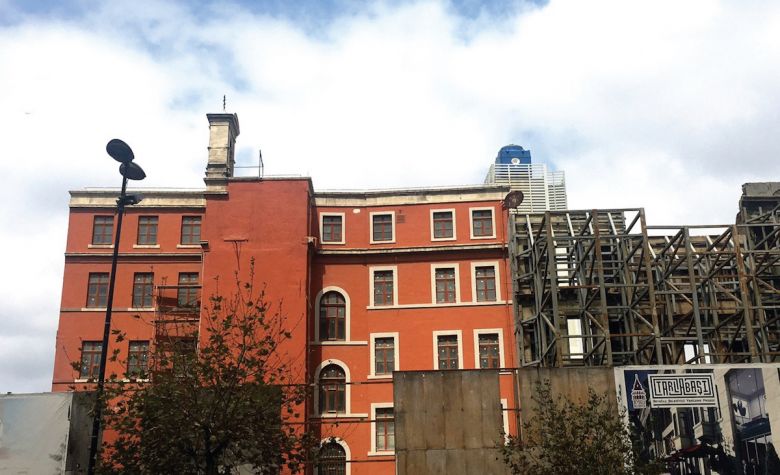
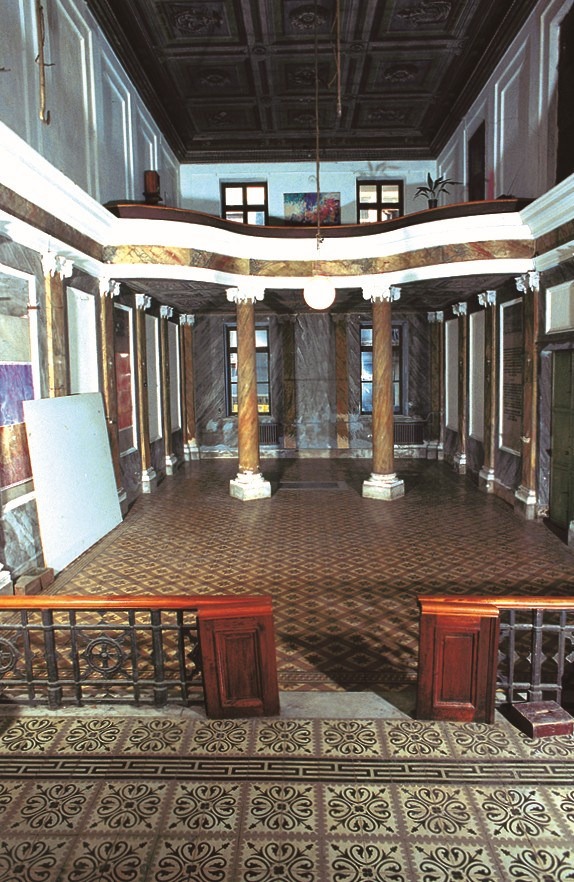
Another example that can be considered a terrain of artists like Tokatlıyan, the Monastery has a unique story shaped by its architectural and historical qualities. Known as the İstanbul Art Center, the Monastery has turned into a living space for artists in Tarlabaşı. The Beyoğlu Anarad Higutyun School, which originally began serving as an Armenian Catholic Girls’ School in 1843, was closed in 1982 on the grounds that the neighborhood was no longer suitable for a school.[5] In 1988, becoming the set of the TRT television series titled Cahide, based on the story of Cahide Sonku, marked the starting point of the adventure for artists. With an agreement reached with the Anarad Hığutyun Foundation, the space began to function as a film set and to form relationships with artists. This process continued until 2006. Theater practitioners, painters, performance artists, dancers, actors, associations, and well known figures gradually settled into the space.[6] This place, where innovative theatrical forms were realized through site specific performances, where music performances and parties were held on the terrace at night, and where painters continued to produce, also found a place in the memory of independents and social movements.[7] In 2007, the Monastery was allocated to Toros Incorporated Company in return for rent on condition that maintenance and repairs be carried out in accordance with the original structure.[8] In 2013, news began to circulate that the five floor building would be converted into a thirty bed hotel within the scope of Tarlabaşı Renewal Project.[9]
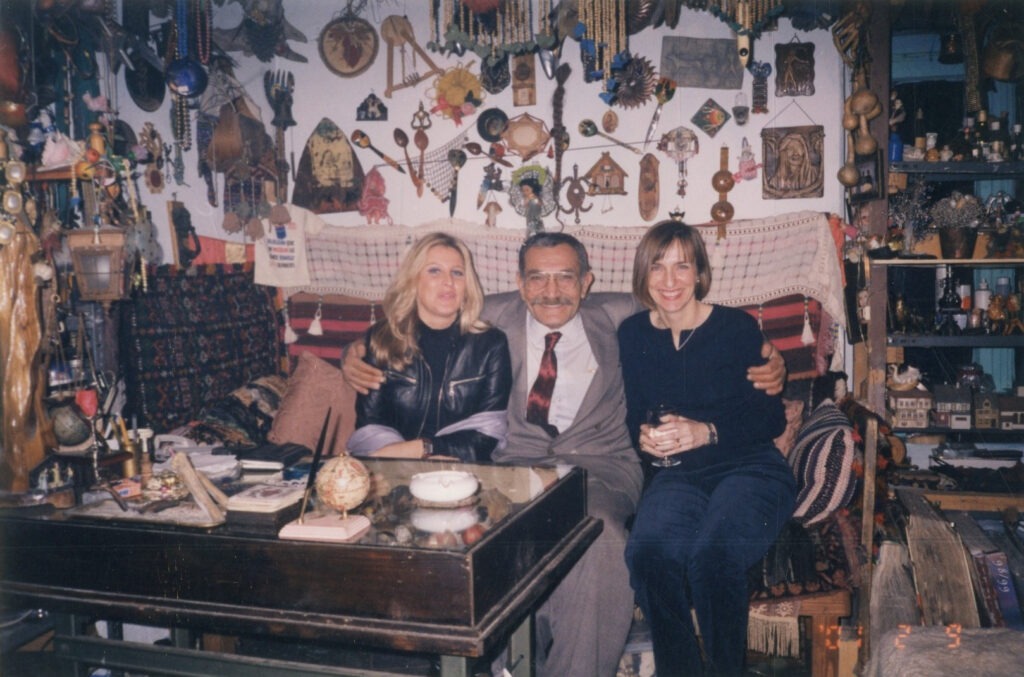
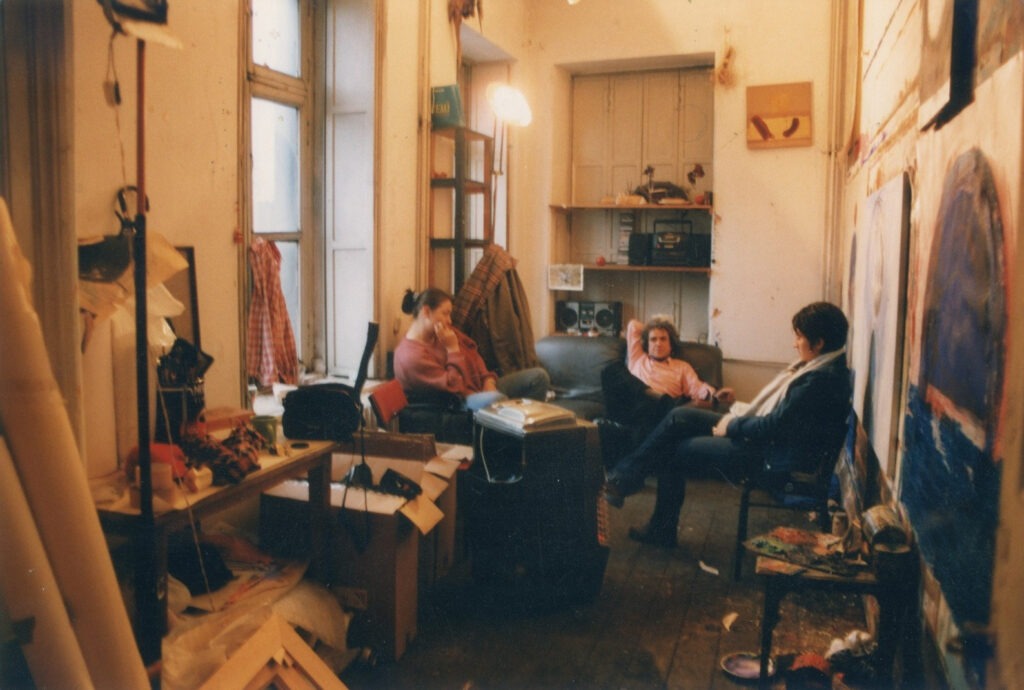
The 1990s, shaped by the destructive effects of the 1980 coup, marked a period in which neoliberal economic accumulation was decisive in the relationship between capital and art, while this structure, where artistic expression and creative forces were spatially organized, existed in an informal and independent manner. The space, shrunk by political pressure, became home to a collective stance oriented toward the reflex of swimming against the current. The Monastery can be considered a symbol of togetherness between residents and artists that refuse gentrification in Tarlabaşı, a neighborhood that became a dwelling for marginalized identities, local and foreign migrants, and underground culture.[11]
When I first saw this building in Tarlabaşı in the 2000s, its brick red plaster, the spacing between floors indicating ceiling heights, its arched windows, and its ornamentation caught my attention. However, at the time I did not yet know that this was a former school building that had turned into an oasis for artists.
Watching the movie Tarlabaşı… Tarlabaşı…directed by Hilmi Etikan, which tells of Tarlabaşı being severed from Beyoğlu by means of a boulevard, like a cut drawn with a ruler, was a shattering experience.[13] In that film, reminiscent of scenes specific to the Second World War and making one feel the sense of ruin to the core, there were people whose eyes revealed their anxiety about the future, who were forced to watch the destruction of their neighborhood with pain and astonishment from their windows. The opening of Monastery, which blossomed from the lives of artists on the edge of Tarlabaşı Boulevard, had not yet reached its first anniversary, the movie Tarlabaşı… Tarlabaşı… received an award.[14] It has been more than twenty years since I watched the movie. These days, images from the movie depicting Madam Anahit, the accordionist who never lacked a rose on her lapel in Çiçek Passage, mourning with her music in front of building ruins, have begun circulating again on social media.
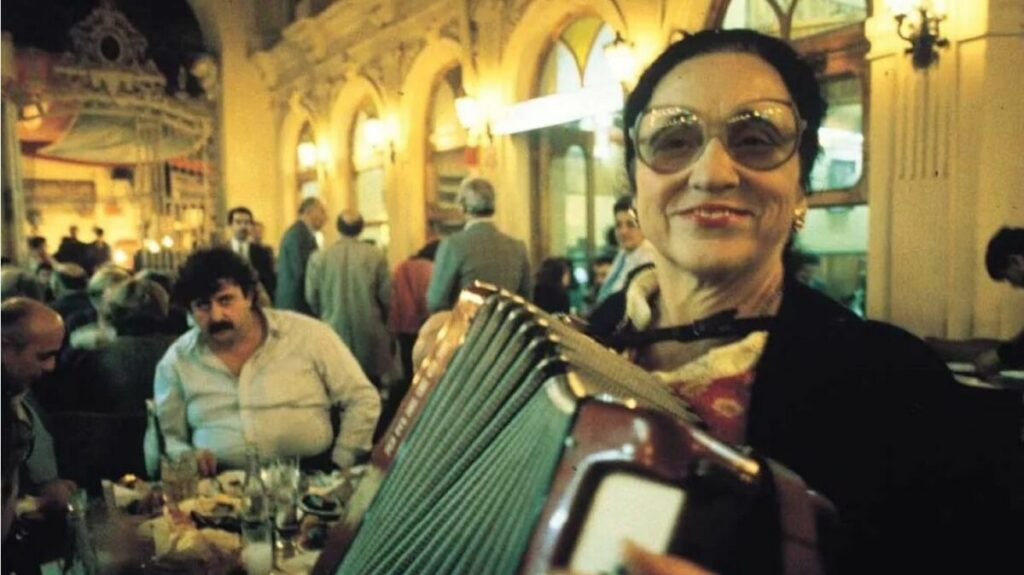
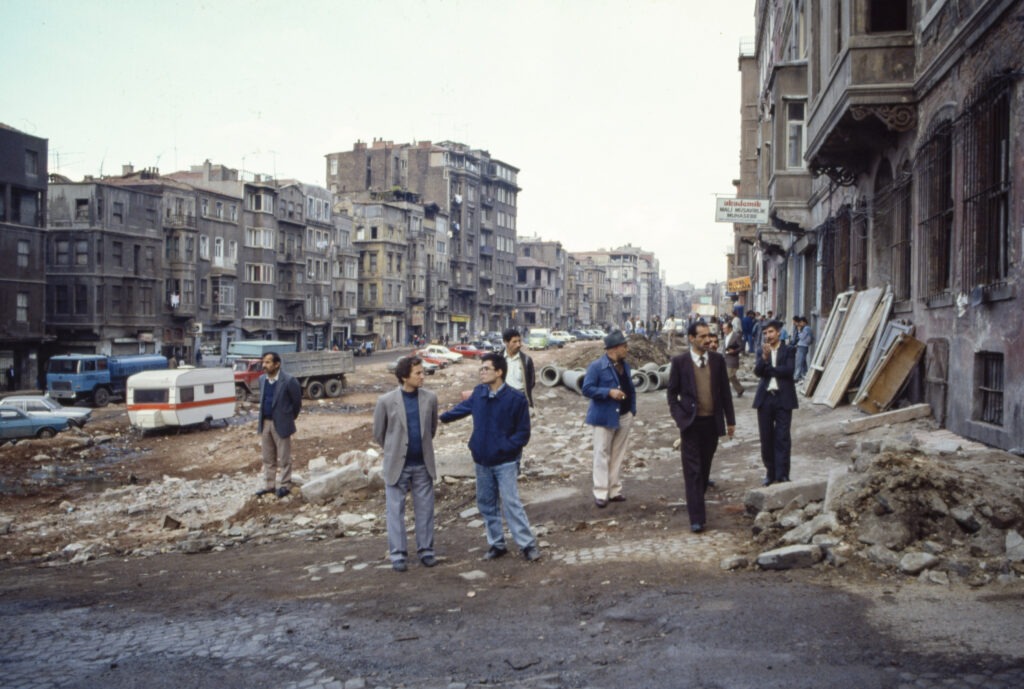
At this city changes form through destruction accompanied by neoliberal policies, its creative subjects search new caves where they can breathe, and only on rare occasions, they find them. However, new dynamics also transform these spaces, and in the end, they are too lost. Despite this, the auras of places, extraordinary people, and witnessed events are inscribed into a shared memory. Losses are spread over time, yet they continue to exist in minds.
There are many common points between the Monastery and Tokatlıyan, such as their ownership structures, their management through Armenian church foundations, their formation through the heritage of non Muslim communities, and their ability to function as spaces of multiculturalism and multiple disciplines. There are also shared tendencies between Monastery and Tokatlıyan, such as the deliberate selection of artists among those who wish to rent rooms and the attention paid to creating shared concentrations on certain floors. In Tokatlıyan, in the consideration of past experiences, those who wished to rent space were met through a conversation seen as an interview. The realization of acceptance into the space through conversation was intended to safeguard the neighborhood ecosystem there. Another common point of these two old spaces may be their lack of comfort. For instance, while reading an interview in which İnci Eviner[15], one of the artists with a studio in the Monastery, emphasized how poor the toilet conditions were, I am reminded that despite the fifteen year gap, we have been engaged in a similar struggle for a year in Tokatlıyan to have the toilets renovated. Despite shortcomings in meeting the expectations of modern life, like İnci Eviner, we too go to the han every morning with great excitement. We share a sense of being in a place where worn surfaces and objects expand time, and where smells, colors, and encounters shape everyday life.
Narmanlı, Deprived of its Home and Spirit
In Beyoğlu, Narmanlı Yurdu was one of the places that artists are backed in terms of art and cultural history, directly influencing artistic production practices while also becoming a nourishing source and a frequented point of the social sphere beyond this role. It was one of the sites that carried water to the multicultural universe of a livable Beyoğlu.
Like the Monastery, it was a world where artists’ rooms looked onto the same courtyard[16], and like Tokatlıyan, where different cultural understandings and forms of artistic expression shared the same living space. The moment one turned inward from the intense pedestrian flow of İstiklal Avenue, it revealed a texture that surprised us with its scale, as we passed among cats, acacia trees, and wisteria surrounding the pool. Knowing the past of Raşit Bey and his family, who took the guardianship of the han for more than seventy years[17], and partially witnessing the life of Miktat Şahin, who came to the han in 1970 and lived there from that point on, has enabled me to think about the history of the han together with stories of displacement. Thanks to the narratives of those who passed through the han, as well as artists and writers, the story of the han has reached the present day.
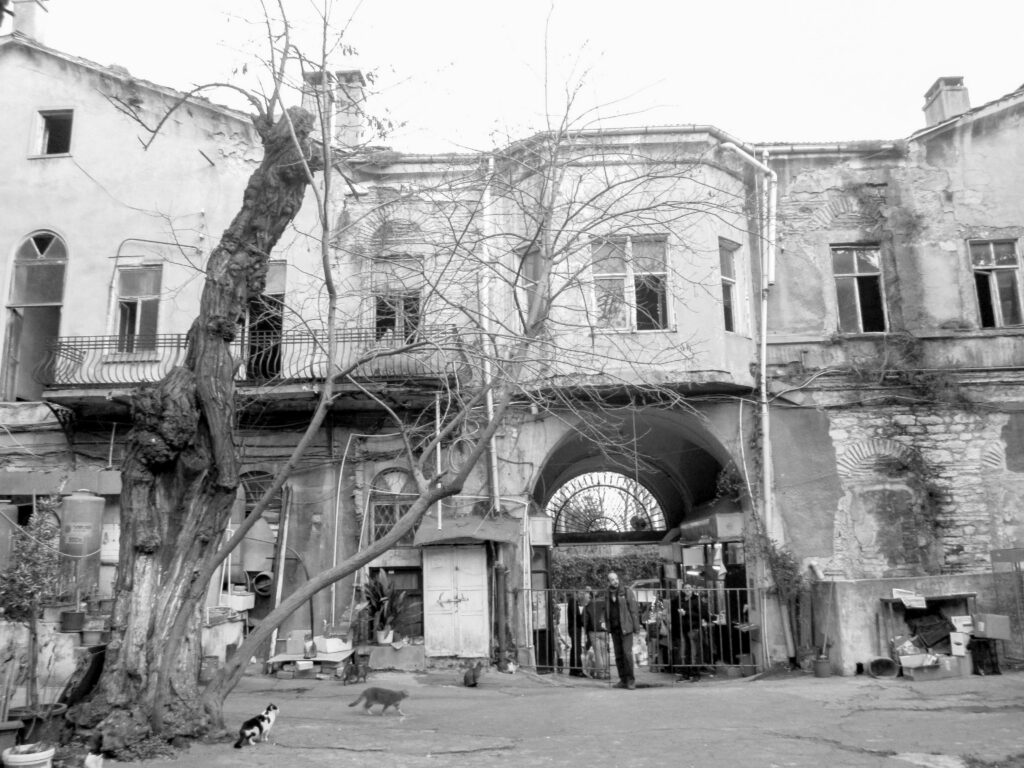
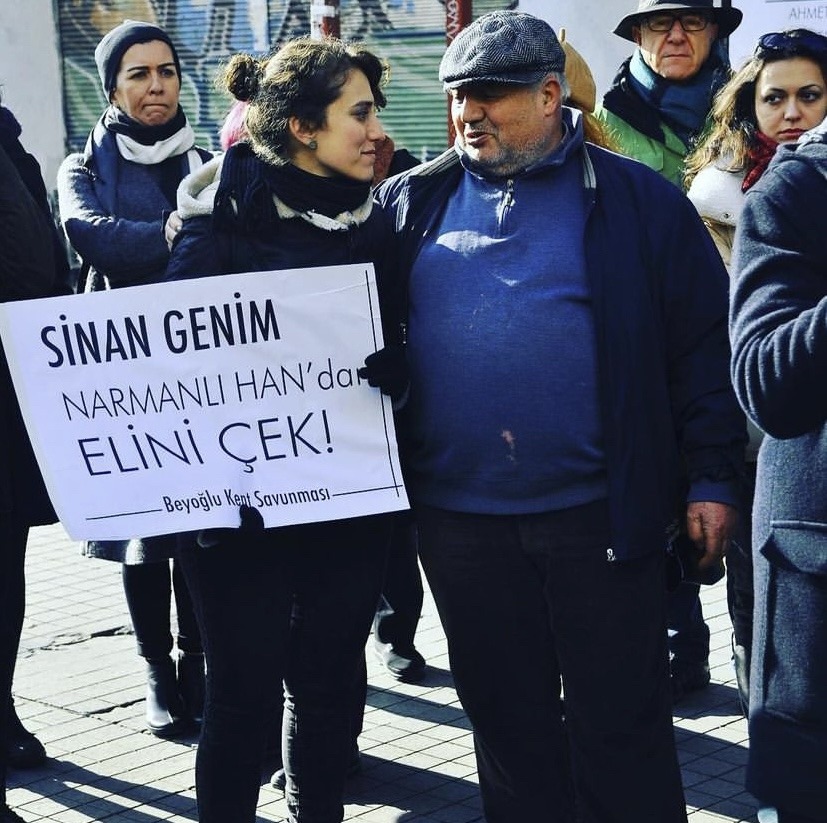
The Abdullah Brothers’ photography studio was in Narmanlı. In the 1940s, Ahmet Hamdi Tanpınar wrote his novel Huzur here, and his presence in Narmanlı was reflected in the characters of the book and permeated his relationship with Istanbul.[18] It is known that Tanpınar covered the windows of his room with newspaper sheets instead of curtains and paid a reasonable amount of rent.[19]
Bedri Rahmi Eyüboğlu and Aliye Berger, the sculptor Firsek Karol, and Zühtü Müridoğlu were also artists who had studios in Narmanlı. Among those who frequently came and went to the han were Haldun Dormen, Sabahattin Eyüpoğlu, and, one of Turkey’s first women sculptors, Mari Gerekmezyan[20], as well as the painter Zeki Faik İzer, Adalet Cimcoz and Mehmet Ali Cimcoz. Tables, songs, and conversations…
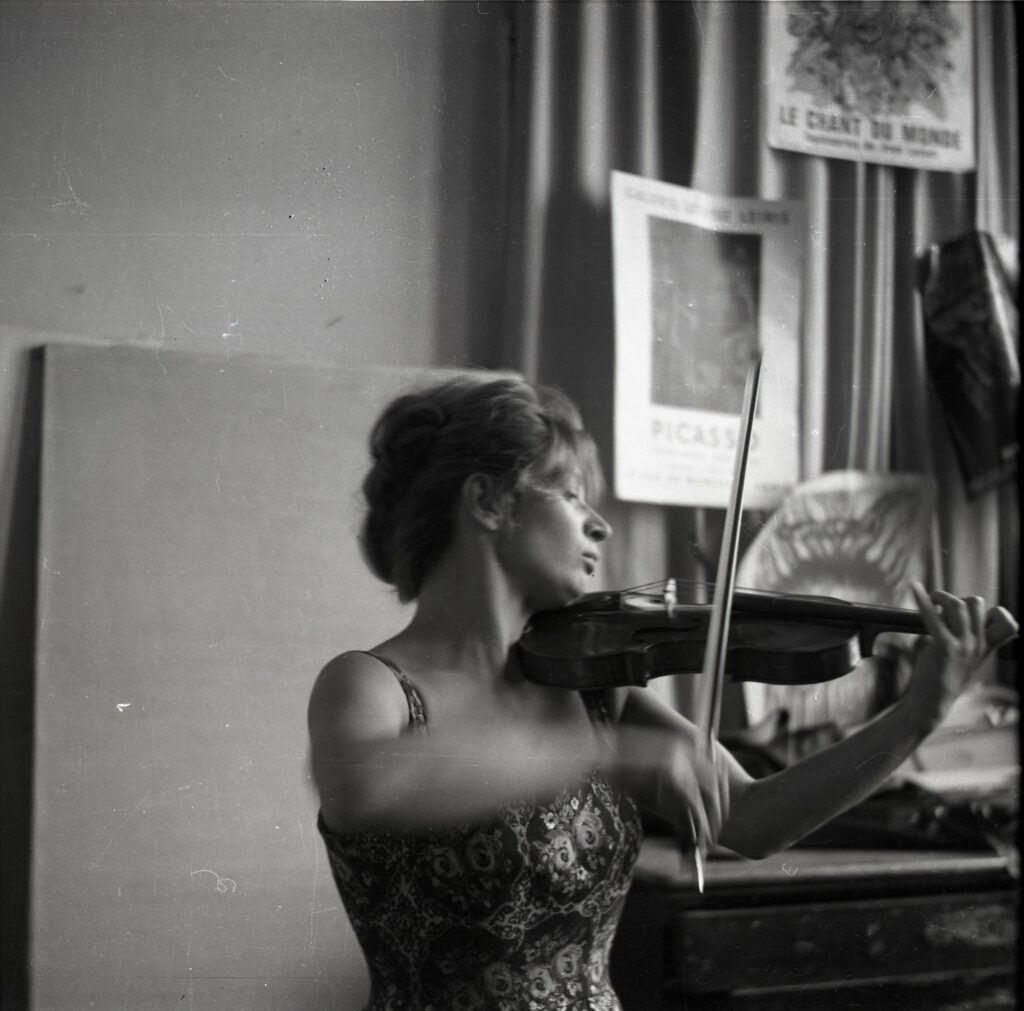
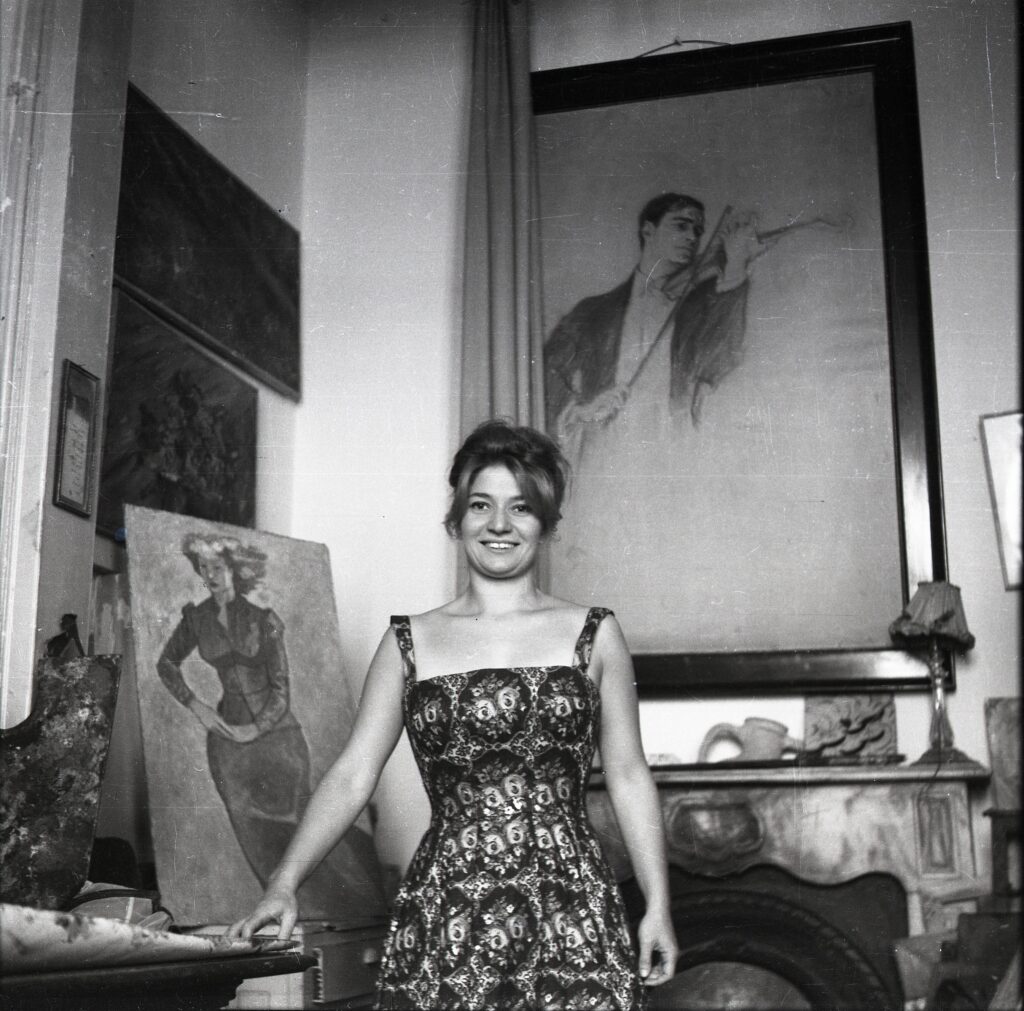
The first painting exhibition of the D Group artists was opened here. The Mimoza Hat Shop, where painting exhibitions were held, was also on the ground floor. Neş’et Atay, who worked for Ulus Newspaper, Jamanak Newspaper, Andrea Bookstore, and the second-hand bookstore and record shop Deniz Bookstore, which was noted for its association with underground culture, were located in the han.[23] The Greek language newspaper Apoyevmatini, whose administrative office was in the Syria Apartment, was printed here.[24] With the 2000s, tenants began to leave the han and it started to empty. Arif Keskiner’s testimony summarizes this atmosphere as follows:
Inside Narmanlı Han there was Bedri Rahmi’s studio. Later it became a gallery and so on. On the upper floor there was Aliye Berger, the sister of the Halikarnas Fisherman, she had her studio upstairs. About once a month Aliye Abla would host a cocktail there. We would join too, to drink free alcohol. She would make yellow vodkas […] Years later, Abidin Abi’s first exhibition opened in Narmanlı. In Bedri Rahmi’s Gallery. I bought a few paintings from there, and I had my brother buy some as well. I had met Abidin Abi years earlier in Moscow. Narmanlı Han had such a thing like that. Also, Atıf Abi had established a company there called Yerli Film, which was his first partnership. He partnered with Orhan Günşınay. His first office was there in Narmanlı. At the entrance, straight ahead on the left. It was a beautiful place.[25]
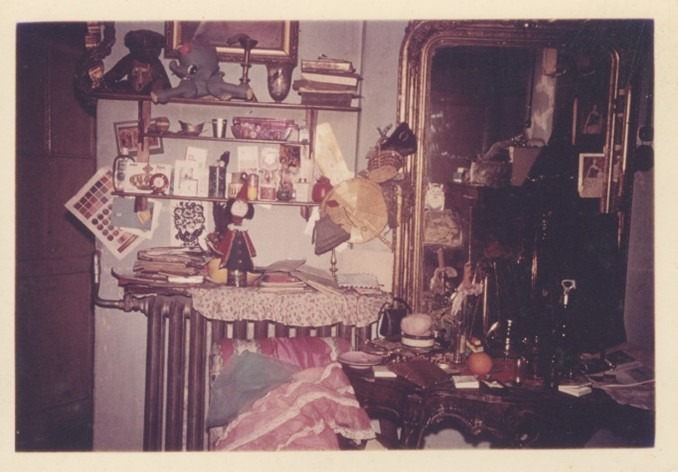
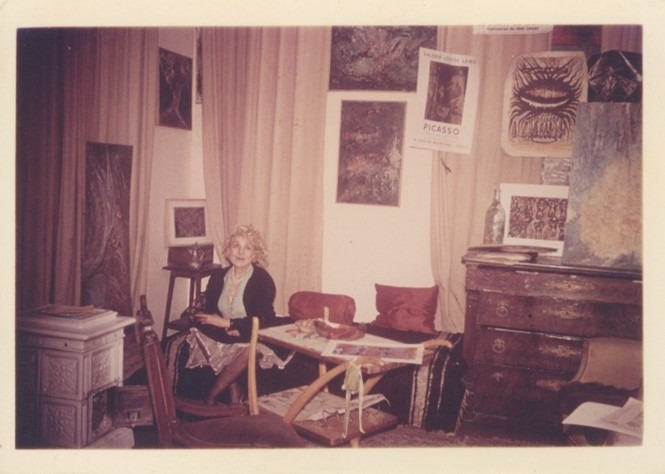
Narmanlı Han was one of the oldest buildings of Beyoğlu, constructed in 1831 as the Russian Embassy Building. From the mid nineteenth century onward, it was used as a Russian prison, and after the October Revolution of 1917, life in the han revived with the arrival of Russian refugees in Istanbul. Trotsky also stayed in Narmanlı and at the Tokatlıyan Hotel before going to Büyükada.
In 1933, merchant brothers Avni and Sıtkı28 Narman from the Narman district of Erzurum purchased Narmanlı. Thanks to the brothers’ lack of concern for making profit, their love of art, and their modest disposition, the rooms of the han were rented to artists and publishing houses at low prices, and the han became a habitat, a home for artists.[29] Sometimes the socialization of spaces begins with a modest invitation to a shared area woven through human relationships. The world established here transforms property owners into the true owners of the space, to whom gratitude is owed.
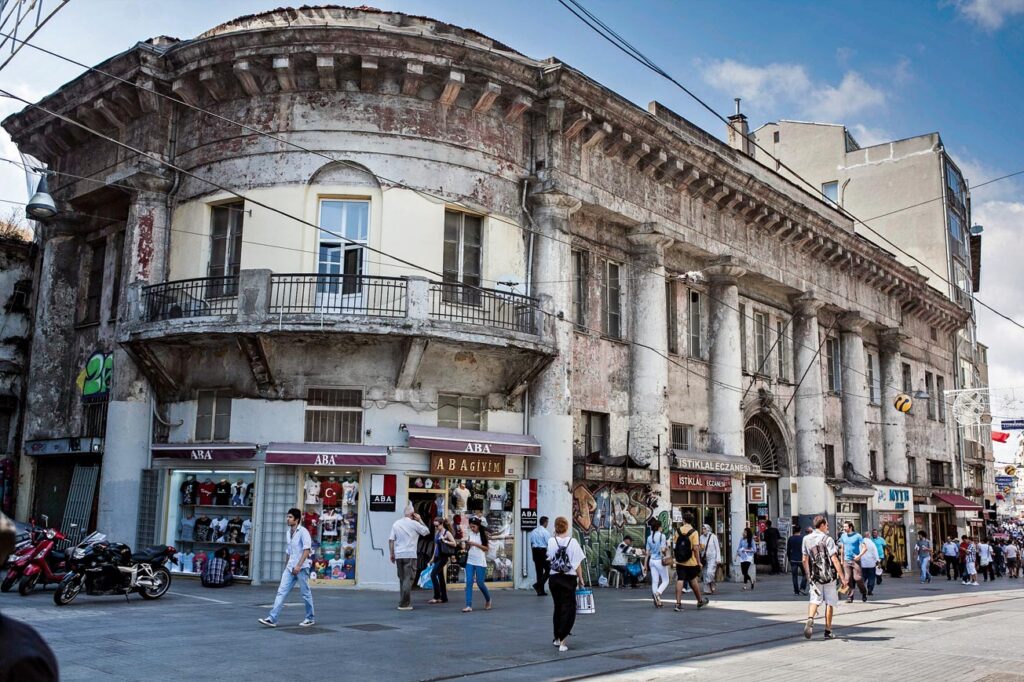
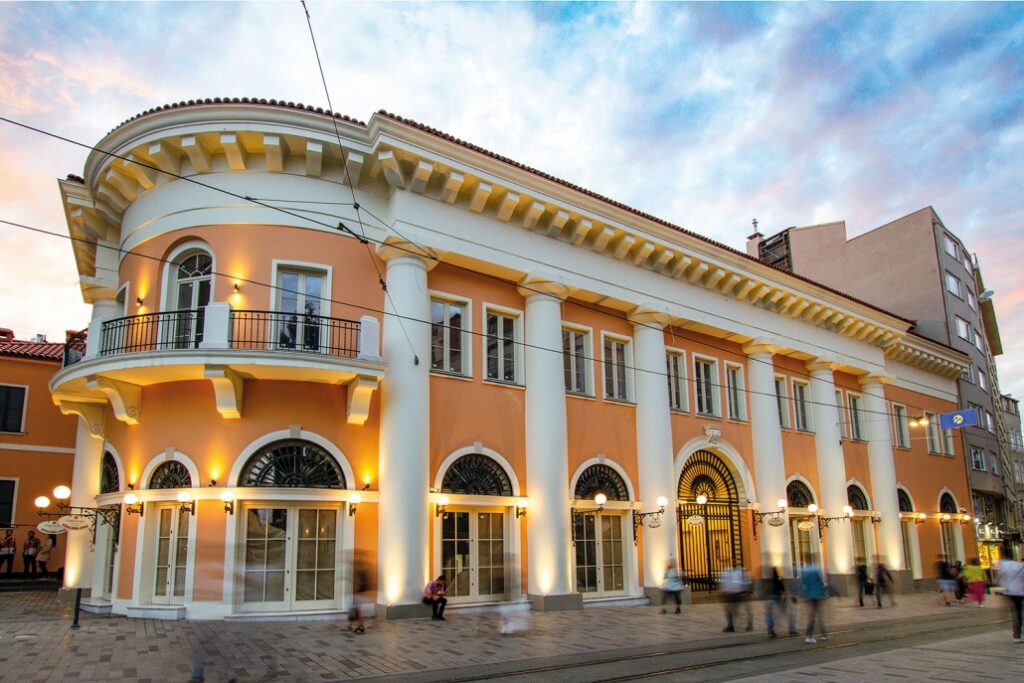
At Narmanlı Han, protests were organized with the participation of the members of social movements and components of civil society, on the grounds that the building’s original fabric was not preserved, its place in collective memory was wounded, the trees in the courtyard were cut down, and the space was commercialized. The transformation of Narmanlı Han in contradiction to its own history was criticized.
There are things from the past that remain in my memory. I would look in through the gate of Narmanlı. If Miktat Amca was in the courtyard, I would ask how he was and have tea with him. As my visits became more frequent, I slowly began to recognize the cats as well. I would bring along dried fruit or fruit leather that my mother prepared in season, that I know he and his family enjoyed. At our last meeting, Miktat Amca said, “I need a little more time to tell the past.” Before the time he needed had passed, he was forced to leave Narmanlı, and shortly thereafter he passed away. We are witnesses to their sorrows.
Zeki Müren, Orhan Gencebay, Müjdat Gezen, Atıf Yılmaz, I will tell you about all of them, but give me time. I am going through a difficult period. I am even thinking of writing a book about Narmanlı. As I speak now, everyone comes before my eyes. Aliye Berger, Bedri Rahmi, Ferit Edgü… My father remembered Ahmet Hamdi Tanpınar well. He apparently always carried a black cat in his arms. I always lived here with distinguished, cultured people. There was Sarkis Bey, who brought food every day to the cats of Narmanlı, and Meral Hanım, who carried food to them from the fish market. Meral Hanım gave everything she had to feed the cats. She and my father would feed them together. There was Turan Bey, who stayed for three years with the Dalay Lama, who knew almost everything, from law to judgeship to veterinary medicine… (May 2015)[32]
The questions in my mind multiply. I wonder where the sign that once hung at the entrance of the han reading “Narmanlı Han No. 390” is now. Today, we encounter only an imitation of this sign.
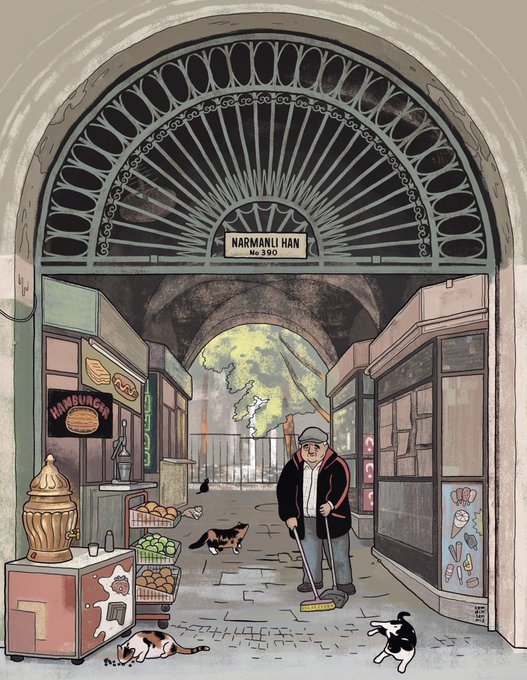
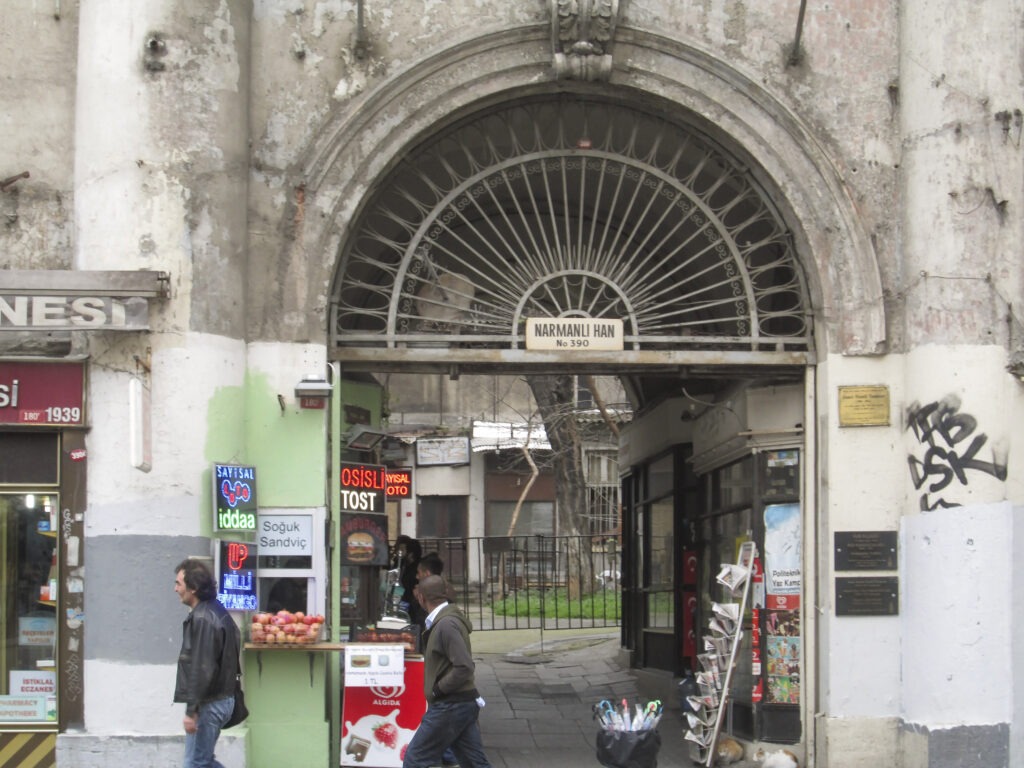
What follows is a process in which the subjects change but similar stories are encountered. Narmanlı Han was purchased for fifty seven million dollars by Mehmet Erkul, the owner of Erkul Cosmetics, and Tekin Esen, the owner of Eteksan Textile. The restoration work lasted nearly two and a half years. Not only Miktat Amca and his family, but also the cats living in the courtyard were displaced. First they were moved to the around of Tünel and then dispersed to different corners of Beyoğlu. For this reason, Narmanlı is the site of a story of displacement involving a family and hundreds of cats.
These examples, which concern what cannot be converted into money, carry references that enrich our imaginations regarding the relationship subjects establish with space and require us to think about needs in the field of art.
The Monastery and Narmanlı, which we lost over time along with their artist ecosystems, have ceased to be spaces that producing subjects can appropriate. Tokatlıyan Han, beyond the context in which I have tried to convey its potentials, is also moving away from being a permanent space for artists due to rents in Beyoğlu approaching market rates. It is turning into a temporary place where commercial expectations are prioritized in its management. While worrying about the difficulties and impossibilities of establishing a new studio in Beyoğlu, it is also necessary to remember that this is an economically chronic and painful problem in another district of Istanbul or in another city as well.
[1] For example, Kirkor Sahakoğlu and Aret Gıcır are among the artists who have had studios here for a long time.
[2] The current list of artists announced for Tokatlıyan Han events in 2024 is as follows. In the field of painting: Ahmet Arif Merey, Alireza Mojabi, Ataman Oğuz, Başak Canher, Beyza Gökay, Demet Yalçınkaya, Eda Ağaoğlu, Joel Menemşe, Fikriye Pakkan, Hristo Özkurkudis, Merih Yıldız, Resul Aytemür, Semra Çelik, Serap İskender, Sibel Tarhan Kasapoğlu, Songül Canerik, Tolga Boztoprak, Vasıf Pehlivanoğlu, Yalçın Bulut. Artists who work not only in painting but also in fields such as performance, sculpture and music include Gülhan, Orçun Beslen, Özge Akdeniz, Murat Melih Özen and Zeliha Demirel. Members of the han also include Ali Ekber Kul in dramaturgy, Aramis Kalay in photography, Aylin Pakova Çil as architect and ceramic artist, Eda Yiğit as curator and researcher, Erin Aniker as illustrator, Erkan Canan in journalism, Çiğdem Şimşek in philosophy, İlyas Ceran in musicology, Sinan Akcan in dramaturgy, Sonat Çavuşoğlu in sculpture, Süreyya Su as writer, and the members of the music group Vomank, Ari Hergel, Lara Narin, Tayis Mutlu, Rupen Melkisetoğlu and Saro Usta.
[3] For more detailed information on Vomank, see the following source. Yiğit, Eda. 2025. “Independent in Istanbul: Cultural Ties, Realised Dreams.” Reset Network. Accessed 11 January 2026. https://reset-network.eu/independent in-istanbul-cultural-ties-realised-dreams/
[4] “Tokatlıyan is a hotel owned by Mıgırdiç Tokatlıyan, designed by architect Alexandre Vallaury and opened in 1897, built on the site of a theatre building whose eight year existence ended in a fire.” Source: Yiğit, Eda. “From the City’s Stage to the Artists’ Stage: Tokatlıyan Han.” Çapak Magazine. Accessed 11 January 2026. https://www.capak.org/elementor-4632/
[5] Armenian News Agency. “İstanbul’daki 193 yıllık Ermeni Rahibe Okulu Otel Oluyor.” Accessed 1 September 2014. https://www.ermenihaber.am/tr/news/2013/05/02/%C4%B0stanbul%E2%80%99daki-193-y%C4%B1ll%C4%B1k-Ermeni-rahibe-okulu-otel-oluyor/18177
[6] Salt. “Manastır (İstanbul Sanat Merkezi).” Salt Online. Accessed 12 August 2024. https://saltonline.org/projects/manastir/
Salt and artist Volkan Aslan, in collaboration, prepared the Manastır (Istanbul Art Center) Oral History Project, within which an archive consisting of interviews with individuals and groups who used the Manastır space, as well as visual and audio materials, has been made accessible, and the names of those who passed through Manastır are shared.
[7] Açık Radyo. “Manastır.” Accessed 4 September 2024. https://acikradyo.com.tr/program/manastir
[8] Agos Newspaper. “Anarad Hığutyun Yöneticilerine Hapis İstendi.” Accessed 24 August 2024. https://www.agos.com.tr/tr/yazi/5787/anarad-higutyun-yoneticilerine-hapis-istendi
[9] Öztürk, Erhan. “183 Yıllık Rahibe Okulu Küllerinden Doğuyor”. Sabah Newspaper. Accessed 24 August 2024. https://www.sabah.com.tr/yasam/183-yillik-rahibe-okulu-kullerinden-doguyor-2393232
[10] Salt. “Manastır (İstanbul Sanat Merkezi).” Salt Online. Accessed 12 August 2024. https://saltonline.org/projects/manastir/
[11] It is difficult to list one by one the artists and structures connected to Manastır, but it is possible to name a few figures remembered in the artists’ collective memory. Adnan Vurdevir, who worked in set production in the cinema sector and made the use of the space possible, and Selahattin Geçgel, one of the important figures of Turkish cinema history, known by the nickname Godzilla, who turned his room in Manastır into almost a museum with materials collected from film sets, are among the most frequently mentioned names.
Nural, Yetkin. “Duvarlar Dile Gelince: MANASTIR.” Bantmag. Accessed 4 September 2024. https://bantmag.com/duvarlar-dile-gelince-manastir/]
In addition, Şule Ateş shares the following in her account: “I first entered the building in the autumn of 1988, as if it were again a November, for the rehearsals of Kasım and Nasır, which I adapted from Murathan Mungan’s story, together with a magnificent cast. Engin Alkan, Jülide Kural, Bennu Yıldırımlar, Şebnem Sönmez, Yıldıray Şahinler and Ali İçözü are those I can recall now, and please let those I missed remind me. We were all recent graduates. We started rehearsals by scraping the peeling plaster of one of Manastır’s rooms together, but then we could not continue. In 1992, I returned to Manastır with Yada Theatre’s play Ismene, directed by Hüseyin Katırcıoğlu. We performed twice in this chapel together with Zişan Uğurlu. At that time, it was Feyyaz Yalçın’s photography studio.” Ateş, Şule. Accessed 29 November 2025. https://www.facebook.com/share/r/1ARWq8Cc7Z/]
[12] Salt. “Manastır (İstanbul Sanat Merkezi).” Salt Online. Accessed 9 October 2024. https://saltonline.org/tr/1590/manastir-istanbul-sanat-merkezi
[13] Kamera Arkası, Tarlabaşı… Tarlabaşı… Accessed 4 September 2024. https://www.kameraarkasi.org/yonetmenler/belgeseller/tarlabasitarlabasi.html
[14] The film Tarlabaşı ranked among the top five films out of 710 at the Second International Festival of Architecture and Urbanism Film held in Lausanne in 1989 and received the UPIAV Award.
For the film link see Accessed 27 December 2025. https://www.youtube.com/watch?v=rZ-m9d5r0eM
[15] Açık Radyo. “Kendimi Gerçekleştirebileceğim Bir Sahneydi Manastır (İnci Eviner)”. Accessed 4 September 2024. https://acikradyo.com.tr/manastir/kendimi-gerceklestirebilecegim-bir-sahneydi-manastir
[16] “We enter a wide inner courtyard through the gate. The wall further inside is decorated with tiles.” Source: Belge, Murat. İstanbul Gezi Rehberi. İstanbul: İletişim Yayınları, 2013, 274.
[17] Yiğit, Eda. “Narmanlı Han Üzerine Cengiz Özdemir ile Röportaj: “Huzur”un ve Huzursuzluğun Mekanı.”, Mesele No: 87, 2014, 60-64.
[18] Ibid.
[19] XXI Architecture, Design and Space. “Beyoğlu Kent Savunması’ndan Narmanlı Han Açıklaması.” XXI, Accessed 11 January 2026. https://xxi.com.tr/i/beyoglu-kent-savunmasindan-narmanli-han-aciklamasi
[20] Due to her relationship with the married Bedri Rahmi Eyüboğlu and her Armenian identity, Mari Gerekmezyan was ignored by both her relatives and the art community. For detailed information on Mari Gerekmezyan and Aliye Berger see Günal, Asena and Çelikkan, Murat. Hatırlayan Şehir: Taksim’den Sultanahmet’e Mekan ve Hafıza. Hafıza Merkezi, 2019. Accessed 11 January 2026. https://hatirlayansehir.hakikatadalethafiza.org/narmanli-han/
[21] Violinist Ayla Erduran passed away in January 2025. The owner of the photograph, Eliza Day, is a photographer who documented her period and the art scene of her time through portraits of significant artists. Salt. “Ayla Erduran.” Salt Online. Accessed 11 January 2026. https://archives.saltresearch.org/handle/123456789/10955
[22] Salt. “Ayla Erduran”. Salt Online. Accessed 11 January 2026. https://archives.saltresearch.org/handle/123456789/10954
[23] Günal, Asena and Çelikkan, Murat. (2019). Hatırlayan Şehir: Taksim’den Sultanahmet’e Mekan ve Hafıza. Hafıza Merkezi, 2019. Accessed 11 January 2026. https://hatirlayansehir.hakikatadalethafiza.org/narmanli-han/
[24] Belge, Murat. İstanbul Gezi Rehberi. İstanbul: İletişim Yayınları, 2013, 274.
[25] Quoted from an oral history interview conducted within the research project titled “Tarihi Kent Merkezlerinin Yeniden Yapılanmasında Belirleyici Faktörler ve Olası Senaryolar: İstanbul Beyoğlu Örneği” led by Prof Dr Asuman Türkün. Arif Keskiner, who knew Beyoğlu intimately and worked as a journalist, actor, publishing house director, cinema reporter, film director, photo novel writer and film producer, passed away in March 2024.
[26] Salt. “Aliye Berger”. Salt Online. Accessed 11 January 2026. https://archives.saltresearch.org/handle/123456789/41401
[27] Salt. “Aliye Berger”. Salt Online. Accessed 11 January 2026. https://archives.saltresearch.org/handle/123456789/41403
[28] Hacı Mustafa Narmanlı’s son Sıtkı is described as follows. “When his first son, whom he named Sıtkı, began to show an interest in music at the age of six, his father decided to buy him an instrument on his next trip to Istanbul. Mustafa Bey entered a musical instrument shop and asked for all the instruments to be played so that he could choose one for his son. In the end, he found an instrument whose sound he liked. It was a violin. Sıtkı later became a student of the violinist and teacher Kari Berger.” J. K. Erkan, Kim Bu, trans. Zeynep Avcı (İzmir: Tudem Yayın Grubu, 2021), 120.
[29] Ibid.
[30] Atlas Dergisi. “Narmanlı Han’ın Tedirginliği”. Accessed 1 August 2025. https://www.atlasdergisi.com/gundem/narmanli-hanin-tedirginligi.html
[31] Istanbul Metropolitan Municipality. “Narmanlı Han.” Accessed 11 August 2025. https://sehirplanlama.ibb.istanbul/narmanli-han/
[32] Quoted from a conversation conducted with Miktat Şahin in the courtyard of Narmanlı Han.
[33] X. Accessed 1 December 2024. https://x.com/cemdinlenmis/status/1245693656708907010/photo/1
In her curatorial practice, Naz Kocadere explores the ways artistic expression takes shape in language and within relations of power. Here, she shifts her focus from words to the materiality...
read
In the series Experiments and Stumbles on Collaboration, İpek Çınar writes about how coming together and being "we" gets built —and where it falters— through the experience of running an...
read
Whistleblowing actions have transformed our perception of surveillance and control in today’s information society. This text examines the effects of whistleblowing as a form of dissent on politics, society, and...
read