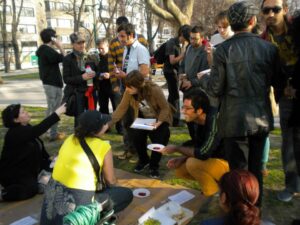
Without Ownership
Zeynep Okyay writes on the practice of PASAJ, the independent art space she has sustained for over fifteen years, with reflections on space, ownership, and the intricacies of being together....
read
Solidarity practices are often autonomous forms of organization that make collective existence possible under conditions of crisis, inequality, and exclusion. They are built through non-hierarchical, horizontal relationships and are based on the principles of care, reciprocity, and shared responsibility. Within feminist, queer, and postcolonial approaches, they center invisible labor and marginalized experiences. They emphasize viewing solidarity not only as a form of support, but also as a political intervention and a transformative practice.
Suggested Sources:
Silvia Federici. Re-enchanting the World: Feminism and the Politics of the Commons. PM Press, 2018.
Dean Spade. Mutual Aid: Building Solidarity During This Crisis (and the Next). Verso Books, 2020.
Valeria Graziano, Marcell Mars, and Tomislav Medak. “Pirate Care.” (2020).
Zeynep Okyay writes on the practice of PASAJ, the independent art space she has sustained for over fifteen years, with reflections on space, ownership, and the intricacies of being together....
read
As part of the collaboration initiated by İMALAT-HANE and Orta Format around Leyla Suarez’s text Leyla Has No Use for Doubt, we organized a gathering consisting of two closed sessions...
read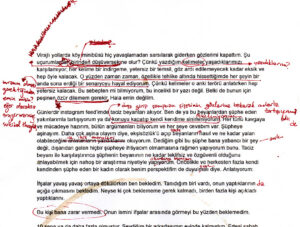
In this text, Leyla Suarez constructs a narrative that moves between incompleteness, confrontation, and solidarity; she reflects on the fractures created by personal loss, abandonment, friendship, and experiences of sexual...
read
We are open to considering all suggestions and contributions for the folders we are focusing on. We will continue to add texts step by step.