Landscape as Archive
In this text, Pelin Tan considers land and landscape as layered archives that carry the memories of human and more-than-human beings. Moving from walks through the Tigris basin to seed...
read
Funda Susamoğlu

“Thinking with Concepts in Contemporary Art” has been supported as part of the SAHA Writing Series / Supported by SAHA Art Writing.
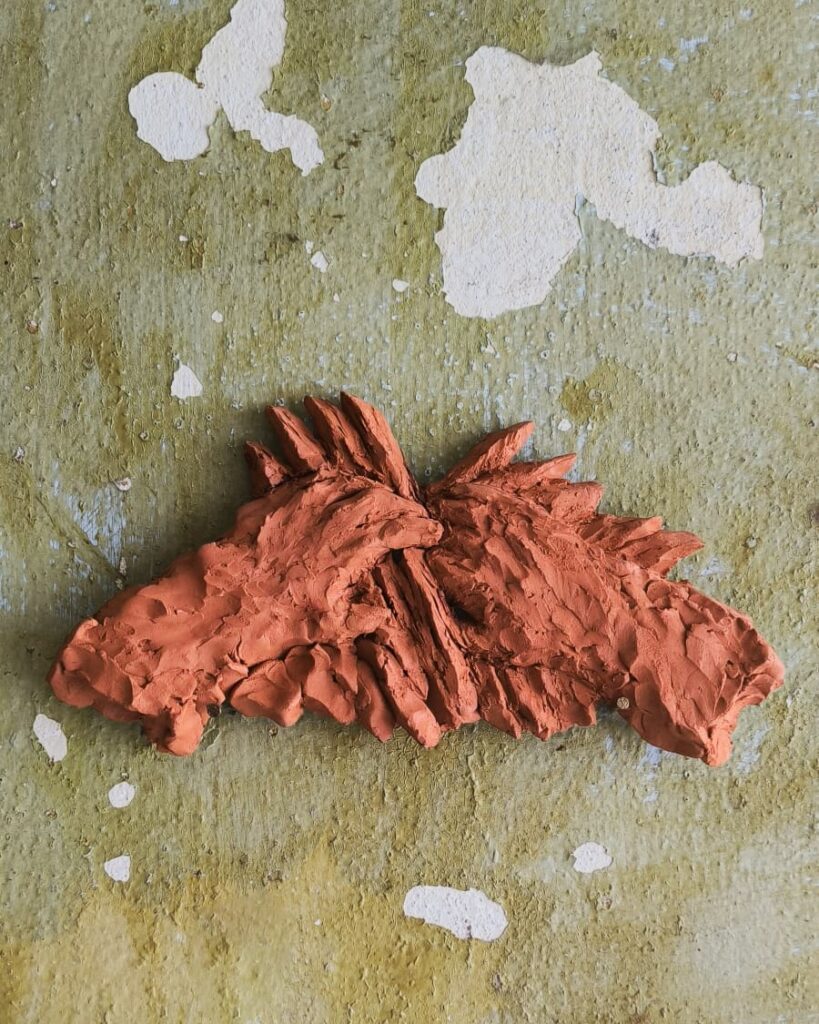
In contemporary art, the concept of material has expanded beyond what is tangible toward a perspective that understands it together with the historical and cultural meaning it carries. This understanding resembles the way an archaeologist reads a pottery unearthed from the ground while attempting to determine its date. Before its classification has even been completed, the artefact already presents itself as material. What is understood here as material is the physical and cultural significance embedded in matter, read as forms of knowledge layered within one another.
As I reconsider the role of material within the interplay between sensory and verbal modes in the body of thought jointly produced by theory and practice in art, I approach the subject as a personal proposition. Today, it is essential to conceive of material in art not as an instrument but as a carrier of memory and knowledge. Once modernism’s abstractionist and purist commitment to “truth to materials” was disrupted, and the emergence of the readymade shifted attention away from technique and toward context, the tacit knowledge embedded in what we call material opened up a compelling field of inquiry. [1] Yet despite these transformations in artistic thought, material has remained the first thing the artist confronts in the process of giving form to an idea. At times, its familiarity renders it almost invisible. At others, its social and cultural entanglements make it all the more legible.
Is it possible to understand material in art as a form of personal knowledge? This question focuses on the encounter between the artist’s subjective understanding and the knowledge specific to material itself. I understand this not as something isolated from the conditions of its time, but as taking shape through them, embedded in time, within a field of subjectivity that comes into being through the convergence of what is present in that particular moment.
To read material as a form of personal knowledge is to move toward the idea that all original knowledge is personal. In his work critiquing modern science’s claim to objectivity, Michael Polanyi focuses on the structure of knowledge and knowing. In Personal Knowledge, he argues that we arrive at what is new and original by pursuing, with personal commitment, a question whose answer we do not yet know, but whose potential we intuitively sense. [2] Along a parallel trajectory, Tim Ingold distinguishes anthropology from ethnography and focuses on the researcher’s participatory position within the field methods of anthropology. [3] He emphasizes that genuine knowledge cannot be acquired without engaging with the situation in which the researcher is immersed. In both accounts, knowledge is embedded in the experience of the subject and entails a critique of the demand for objectivity.
In his discussion of anthropology as a model of education, Ingold examines the intersection of anthropology and art. In considering the four defining qualities of anthropology, he characterizes the field as generous, open ended, comparative, and critical. He associates generosity with an attentiveness to the actions and words of those around us, and with a willingness to respond to them. He argues that its aim is not so much to arrive at a final conclusion as to make visible the pathways that run through social life and to sustain the continuity of relationships. It is grounded in the awareness that no single way of life can be the only possible one, remaining attentive instead to the new possibilities that alternative paths may bring forth. From the perspective of where we find ourselves today, he emphasizes the need to ground a critical view of the future in a dialogue that emerges from life itself. [4]
Ingold also turns his attention to “participant observation,” one of the most distinctive methods of anthropological fieldwork. His argument that experience and observation can take place simultaneously points to the distance that has opened up between the protocols through which science claims knowledge of the world and the practice of living within it. He emphasizes the importance of observing without objectifying, by participating in and accompanying the activity itself. Here, knowing and being are brought into closer relation. Observation is reconfigured as participation in life alongside others. [5]
In his work, Ingold asks, “Are artists real anthropologists?” and, in doing so, questions what it is that makes art anthropological. In examining the intersection of anthropology and art, he draws attention to the need for a form of knowledge that is able to think without conceptualizing itself, that engages with life, and that develops from within. Moving away from the classificatory orientation of ethnography, he offers a critique of the concept of the “Other” as articulated by the art historian Hal Foster. Rather than delineating the boundaries of difference, he proposes a unifying perspective grounded in the awareness that we are part of the same world. Anthropological art adopts an approach that allows things to be themselves. [6]
Participant observation is not a method of data collection but points instead to a gentler form of science in which exchange occupies a central place. It calls for a mode of attention and mutual participation in which observer and observed become inseparable. To engage with something while it is still in the process of coming into being is to accept what it offers, much like a tracker following a trail. In a manner that parallels Polanyi’s thinking, Ingold argues that both science, practiced like tracking, and art converge in a mode of reasoning grounded in the imagination, one that acknowledges its own personal and affective character. He suggests that our knowledge of the world can expand through our knowledge of ourselves. Within this discussion, the movement across fields is understood not in terms of an interdisciplinary perspective that reinforces the boundaries between disciplines, but rather as an antidisciplinary formation, one that allows different forms of knowledge to overlap, pass through one another, and proceed together.
In this framework, if we understand the artist’s relationship to material as a form of personal relation, it becomes possible to speak of a structure that expands through reciprocal interaction in the process of making. Individual memory meets and becomes intertwined with the particular knowledge of what is grasped and sensed by hand. With this in mind, I will begin by drawing on my own artistic practice to trace the origins of my material based academic interests and my fascination with the primitive/primordial. As I revisit my archive, I will attempt to reactivate my personal memory and to make sense of how I arrived at the present by walking backwards through my own history.
My father, Zekai Susamoğlu, emigrated to Australia in 1969 as a skilled craftsman. He was not an anthropologist, but a talented upholsterer from Ankara. His curiosity about seeing the world set him on this journey. For nearly two years, he worked in furniture factories in various cities. He then spent the next eight years as a technician on the tropical islands of northern Australia. He lived and worked alongside Aboriginal communities, sharing in hunting, cooking, and everyday life, and gaining a rich experience through these encounters. When he returned to Turkey, he brought back not only the experience itself, but also a collection of handmade objects and a suitcase full of slides.
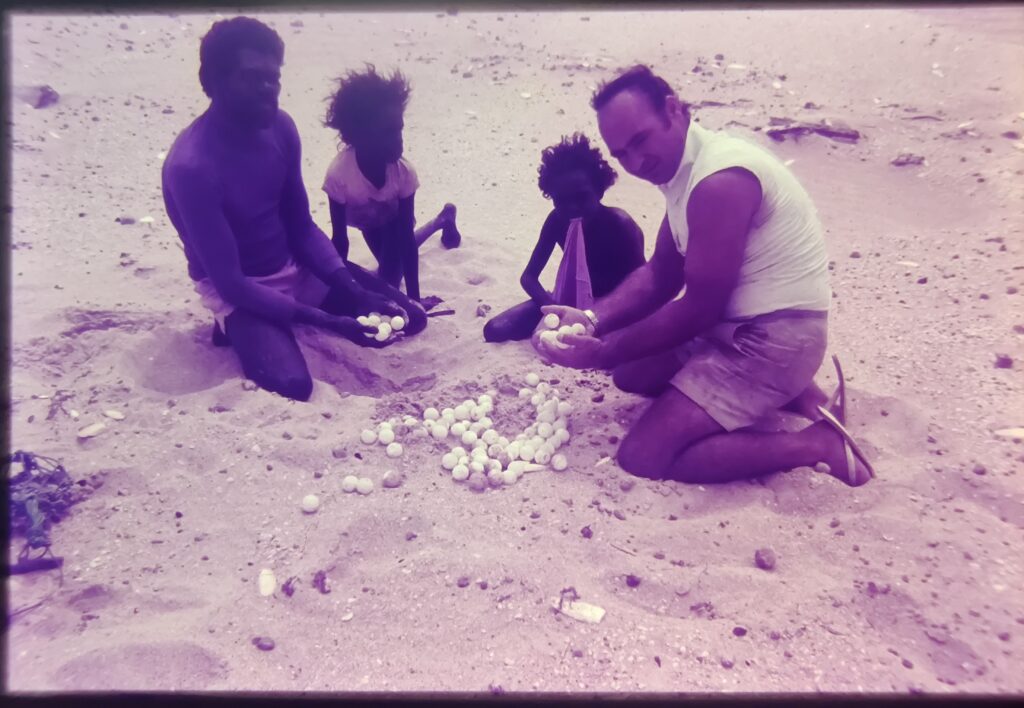
Zekai Susamoğlu, North Australia, Groote Eylandt, 1972-73, Susamoğlu Family Archive
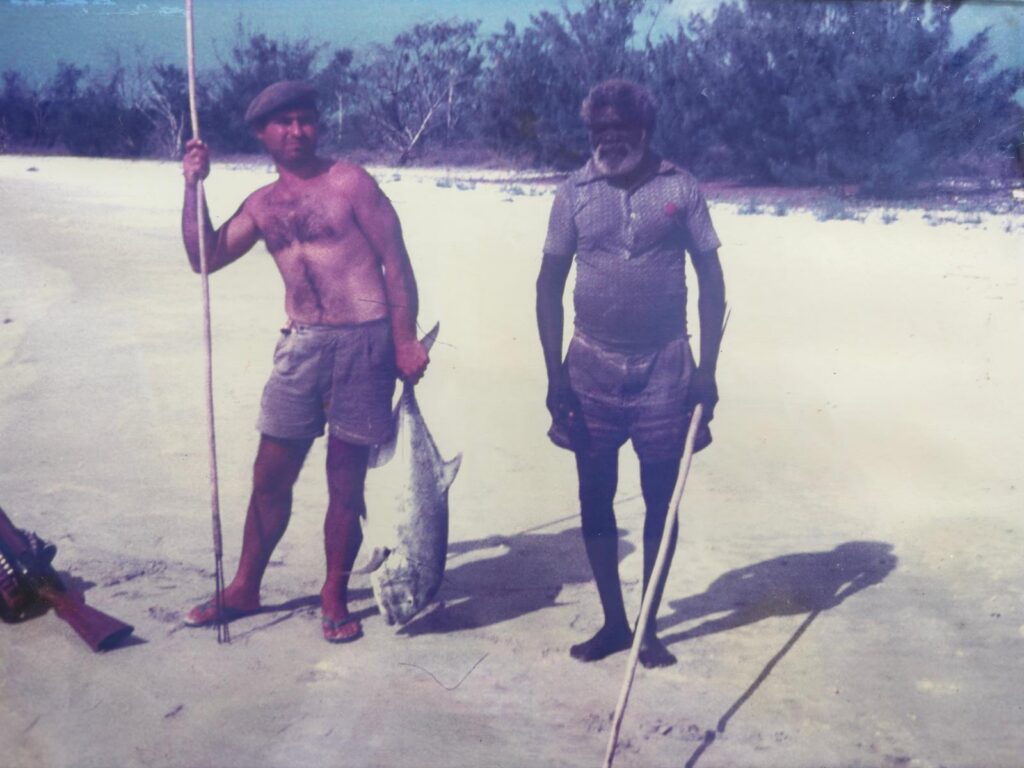
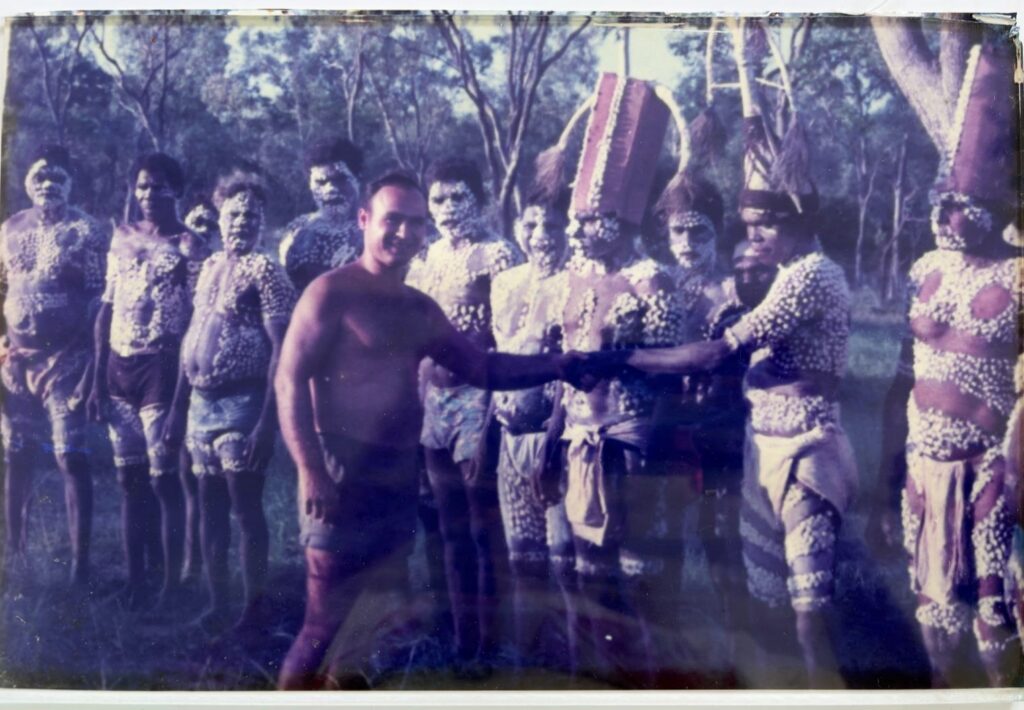
My father’s eagerness to share his experiences through the slide presentations he would enthusiastically give at family gatherings transformed his individual memory into a collective family memory. What made this possible was the care he devoted to documenting those experiences.
As a child, I would often drift off to sleep in the dim light of the slide projector while listening to these stories. Looking back, I feel that those stories, the flickering images of cultural rituals from a distant geography, of fish whose names I did not know, and of bodies painted with earth pigments, appearing one after another, have played a significant role in shaping my interests today. As lived knowledge and experience take shape through personal ties, they also become the source of a gradual transformation.
During my early childhood, our family moved to Australia following my father. With the perspective that came with being a foreigner accompanied my growing interest in painting, I found myself joining the long family tradition of making a living through skilled hand work. During the early years of my ceramics education in Ankara, red clay, an affordable and readily available local material, was also used for making models in plaster mould classes. While modelling a relief of a prehistoric artefact from the Museum of Anatolian Civilizations in red clay, I would moisten it repeatedly to prevent it from drying out. The smell that rose from the meeting of water and clay, the feeling of rain falling on fresh earth, distracted me. Looking back, I realize that what has remained with me from that moment is the curiosity that shifted my attention from clay as a packaged material to its origin in the earth and the natural world. In the years that followed, when I first began teaching courses in ceramics and glaze technology, [7] I found myself fascinated by the chemical composition of raw materials and by the direct relationship between rocks and the earth’s surface, despite the highly technical nature of the subject. Although the Turkish word sır (glaze) is unrelated to sır meaning “secret,” the association is difficult to ignore. It evokes a form of experiential knowledge that emerges through long processes of trial and error and becomes legible through direct engagement with the material.
Focusing intensively on a single material during my artistic education deepened my awareness of the capacities and cultures of different materials. Understanding material as a source of tacit knowledge in its own right, situated at the intersection of craft and art, gradually became a field of inquiry for me. I became interested in the ways materials activate the body, in the hierarchies that exist between them, in the varying speeds at which they circulate, and in the kinds of meanings they carry.
I developed the Yaban Düşünce (Wild Thought) series in an effort to create a pause within a contemporary perception inevitably shaped by the dominance of writing. Reading Claude Lévi-Strauss’s book from which the series takes its title [8] over an extended period, I was deeply affected by the way he examines, through the logic of so called primitive languages, the organic relationships that resist categorization and the profound connections established with nature. From ceramic tablets that intersect with the history of writing to texts whose transmission was interrupted with the invention of paper, this trajectory fostered in me a sensitivity to the sometimes limited lifespan of material and to the changing meanings it acquires across time. Through material, I began to pursue a form of knowledge that exists beyond the verbal, one that can be transmitted through touch.
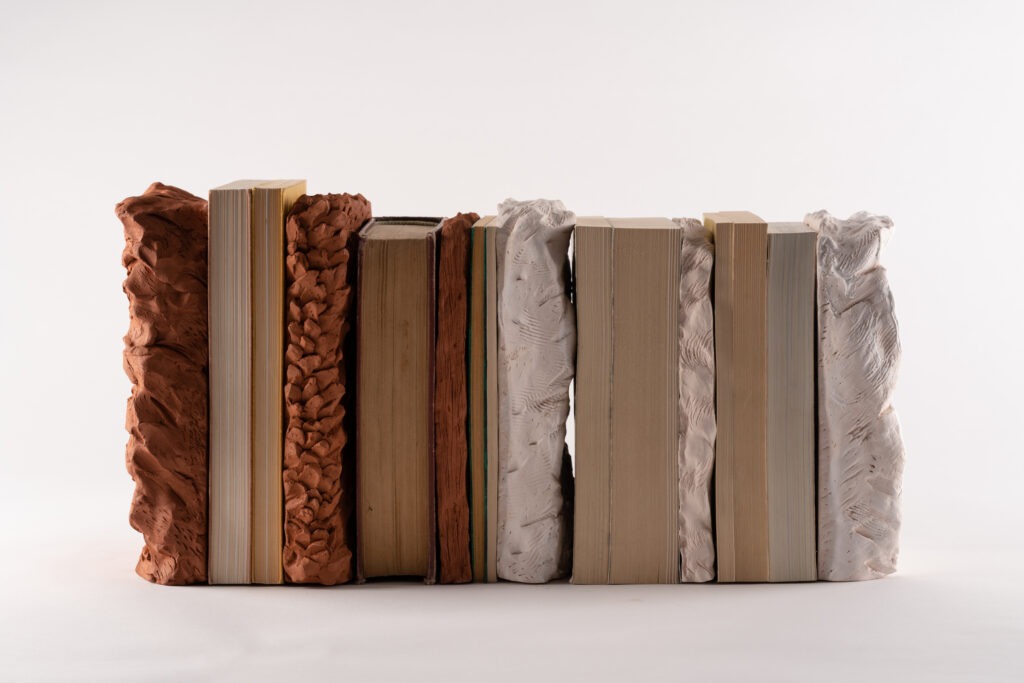
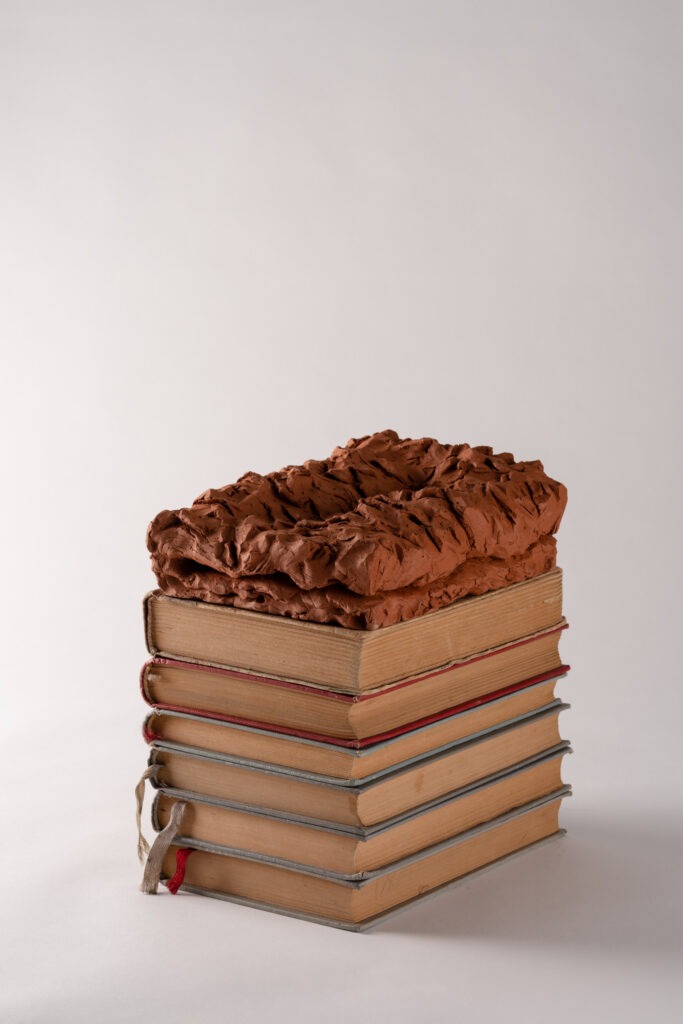
In the same work, Lévi-Strauss examines the bricoleur, the maker who works with their hands, the logic of constructing with what is already at hand, and the mode of thought shaped by gathering whatever the surrounding environment has to offer according to the principle that “it might come in useful one day.” The bricoleur not only “speaks” to objects, but also speaks through them: Through the choices made within the limits of available means, they tell the story of their personality and their life. They never fully realize their original plan, yet they always leave something of themselves within it. [9]
One artist whose performative installations resonate closely with Lévi-Strauss’s bricoleur is A. Serkan Aka. In his studio, he meticulously reconfigures all kinds of materials collected from the city. He describes the acts of collecting and accumulating as a way of relating to, and coming to terms with, the continual demolition and reconstruction of the city in which he lives. His assemblages, part machine, part sound sculpture, and part musical instrument, are “irregular apparatuses” that resist definition. Their function is not immediately apparent, yet they invite us into an encounter, into a process of mutual acquaintance, and into a shared experience.
Reflecting on the source of the relationship he has developed with a wide range of materials, first through his engineering education and later through many years of working as a designer producing practical solutions, the artist points to the conditions under which he grew up in the countryside, where access to materials was shaped not from the position of a consumer but by constraint. His memories of the looms and sewing machines that formed part of his family’s shared memory become eloquent in the relationships he establishes with found objects and discarded fragments. Aka describes contemporary industrial materials as “deaf” or “mute.” Compared to a natural and resilient material such as wood, whose own movement and character require attentiveness and care, he argues that newer industrial materials are far more compliant. The dialogue he constructs through the diversity of materials gathered from his surroundings turns our attention to the memory embedded in the everyday.
Aka is also a member of the Tophane Noise Band. Together they create improvised performances using sounds produced from urban waste, scrap, and recycled materials. The apparatuses, most of them built by Aka, amount to an excavation of sound in its most elementary form. Retracing the knowledge he acquired through the precision of instrument making, he explores sound through simple constructions.
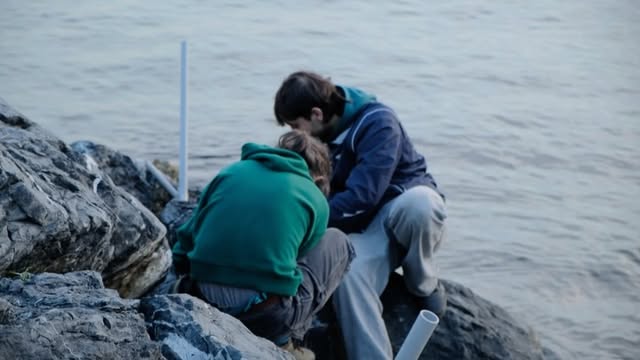
A.Serkan Aka, Batak Arşiv (Swamp Archive), 2025, Installation and performance at the Moda waterfront.
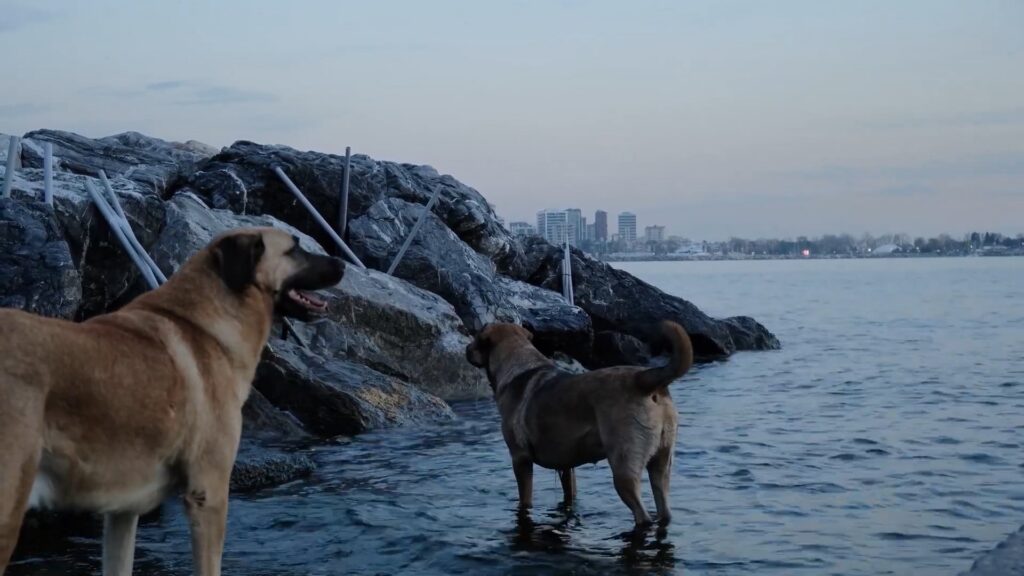
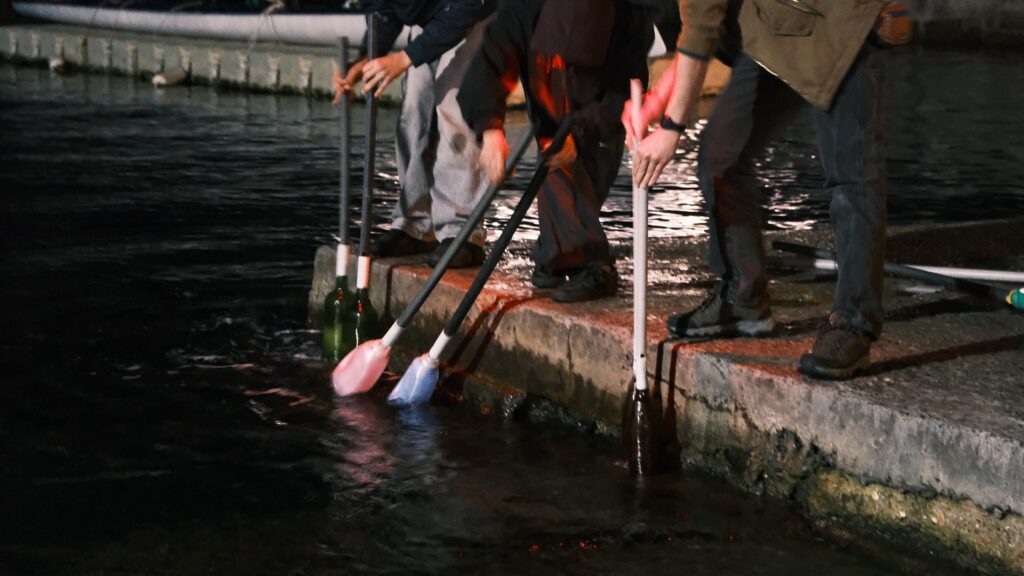
Their recent installations and performances, Batak Arşiv (Swamp Archive), [10] create opportunities for unexpected encounters among the rocks where the city meets the sea. When the southwesterly wind allows, water flutes installed among the rocks blend their sound into the noise of the city. As the flutes are played along the shoreline in this improvise performance, we witness, however briefly, a form of publicness open to interaction, where passersby and animals alike become part of the encounter, revealing the transformative potential of shared experience.
Lévi-Strauss’s emphasis on the first rather than the primitive [11] appears in artistic practice as a way of looking backwards. Today, under the pervasive influence of the digital, the impulse to look again at the material world and to reconsider the meaning of what remains invites us to reflect once more on what it means to be in genuine contact with life. Can reflecting on the meanings carried by material open up a productive discussion for an artist, an upholsterer, an archaeologist, or a performance artist alike? As different modes of practice come into dialogue with one another, and as people and objects enter into unique relationships, we encounter materials that acquire unexpected forms and meanings.
At a moment when our increasingly instrumental relationship with the earth has brought us to an impasse, and when our interaction with the more-than-human has reached an ethical threshold, the meaning of the material [12] has become a central concern, regardless of distinctions between the animate and the inanimate. Every point of contact therefore calls for careful consideration through an integrated perspective. The engagement with material transforms the entire process of making into a living and reciprocal experience. Material positions itself as a collaborator capable of revealing itself to us. Ultimately, what I have sought to open up here under the name of material is perhaps the possibility of hearing the thing we hold in our hands begin to speak to us, as every form of contact expands through memory and awareness. Rather than inviting classification, it calls for a way of seeing that remains open to transformation. From a more than human perspective, what we define as material also occupies a place as one of the social actors [13] in an ongoing process of transformation, participating in exchanges that unfold across both micro and macro scales. What is at stake here is a field of interaction shaped by the care with which we attend to the particular worlds of those with whom we enter into relation. Material is not something fixed, but a web of relations that asks us to become acquainted with its voice and its disposition.
Establishing a dialogue with material that becomes personal through interaction may require a slow rhythm and years of accumulation. Equally, it may begin by using a completely unfamiliar material in entirely the wrong place. More than a matter of technical skill, it is an experimental process that develops through encounters with different disciplines and fields, and one that is often nourished by being in the wrong place at the wrong time. To understand the character of a clay body, to become capable of hearing the sound produced by a plastic pipe, and to listen as it speaks with the sea, is to begin learning the language of material. Although this may appear simple, it is something that can only be reached after a long journey. To think through material is always to preserve the possibility of opening a space for something singular, together with all the historical and cultural relations it carries, through a deeply personal mode of attention directed toward what lies embedded within it.
[1] Susamoğlu, F. (2018). “Görsel Sanatlarda Malzemeyle Düşünme ve Sözel Olmayan Bilgi.” Gazi Üniversitesi Sanat ve Tasarım Dergisi, no. 21, pp. 191–203.
[2] Polanyi, M. (1958). Personal Knowledge. New York: Harper Torchbooks.
[3] Ingold, T. (2018). Anthropology And/As Education. New York: Routledge.
[4] Ibid., p. 58.
[5] Ibid., p. 61.
[6] Ibid., p. 65.
[7] “A ceramic glaze is a glass or glass like inorganic material that melts onto the surface of ceramic clay, forming a thin coating.” (Arcasoy, A., & Başkırkan, H. Seramik Teknolojisi. Istanbul: Literatür Yayıncılık, 2021.)
[8] Lévi-Strauss, C. (2016). Yaban Düşünce. Trans. Tahsin Yücel. Istanbul: Yapı Kredi Yayınları.
[9] Ibid., p. 49.
[10] Batak Arşiv installation. Artist: A. Serkan Aka. Performers: A. Serkan Aka, Basma Seiba, Selim Cizdan. Images from the Echoes sound walk project, November 2025 (Left to right 1st photograph by Kaan Akkaya, 2nd photograph Kaan Akkaya, 3rd photograph Emre Tarduş).
[11] “There is also a form of activity that continues to exist in our own lives today, one that allows us to imagine, on the technical plane, what we prefer to call a ‘primary’ rather than a ‘primitive’ science on the speculative plane. It is the activity commonly referred to as bricolage (yaptakçılık).” (Lévi-Strauss, C. (2016). Yaban Düşünce. Trans. Tahsin Yücel. Istanbul: Yapı Kredi Yayınları, p. 44.)
[12] The separation of matter and meaning is critiqued by new materialist thought. Karen Barad situates the relationship between matter and meaning within an intra active relationality (“intra-action”). Barad, K. (2003). “Posthumanist Performativity: Toward an Understanding of How Matter Comes to Matter.” Signs: Journal of Women in Culture and Society, 28(3), 801–831.
[13] Through the concept of the “social actor,” Bruno Latour proposes in Politics of Nature a conception of collective life in which human beings can escape objectification only by recognizing the nonhuman as a subject. (Latour, B. (2004). Politics of Nature: How to Bring the Sciences into Democracy. Cambridge, MA: Harvard University Press, p. 76.)
In this text, Pelin Tan considers land and landscape as layered archives that carry the memories of human and more-than-human beings. Moving from walks through the Tigris basin to seed...
read
In her curatorial practice, Naz Kocadere explores the ways artistic expression takes shape in language and within relations of power. Here, she shifts her focus from words to the materiality...
read
In the series Experiments and Stumbles on Collaboration, İpek Çınar writes about how coming together and being "we" gets built —and where it falters— through the experience of running an...
read