Landscape as Archive
In this text, Pelin Tan considers land and landscape as layered archives that carry the memories of human and more-than-human beings. Moving from walks through the Tigris basin to seed...
read
Kübra Aycan Gelekçi


“Thinking with Concepts in Contemporary Art” has been supported as part of the SAHA Writing Series / Supported by SAHA Art Writing.
Once upon a time…
In a valley among the misty mountains of Garhwal, where even time moved slowly, there lived women who can speak the language of the soil.
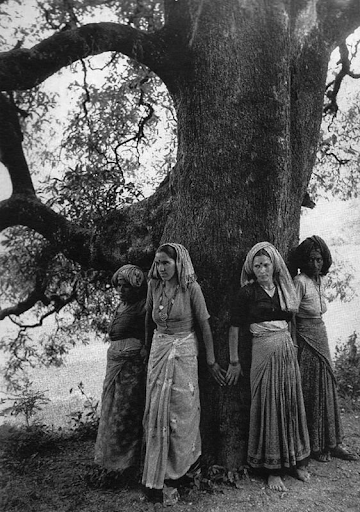
They say that in this valley, everyone worked. At the break of dawn, the oxen would plow the land, waking it with their heavy steps. The men would follow behind them, dividing the day into specific tasks, beginning and completing them. Work had a beginning and an end. The day would end, the work would end, and the hours would be completed.
But women’s time flowed differently.
When they finished one task, they would quietly move on to another. They selected the seeds and stored them, knowing in which season each one would awaken. They sensed the thirst of the soil and prepared it before the rain arrived. When the sprouts emerged, they protected them, cleared away the weeds, and when harvest came, they gathered, dried, and stored them… And while doing all this, they also kept the fire burning at the stove, carried water, and raised the children. That is why no one could ever say when their work began or when it ended.
The oxen awakened the soil; the men began the work. The women made all of this possible. No one understood what that meant.
One day, they began counting the hours. The time of the oxen and the men lined up easily side by side. But the women’s time overflowed; it could not fit onto the pages. Their labor was measured not by hours, but by its continuity. That is why theirs appeared to be the longest; because in truth, their labor was never interrupted.
This scene, through which I describe the immeasurability of women’s labor in the mountain villages of Garhwal, offers a powerful starting point for thinking about care work. We can see that the issue is not simply about working too much; it is about the uncertainty of where labor begins and where it ends. The labor of the oxen and the men is tied to specific tasks, hours, and outcomes. The work women do, however, is dispersed between production and reproduction, the field and the household, nourishment and protection, making it difficult to count and measure. In this way, it reveals the fundamental nature of care work: continuity, dispersion, and invisibility.
Throughout history, people defined care work that enables the reproduction of labor, in other words, the activities that protect, sustain, and repair life, especially within the family, by calling them “love.” This call obscured the fact that care is a real form of labor requiring time, energy, and skill; the work came to be perceived as a natural and unpaid sacrifice. As a result, the labor of the caregiver became invisible, and this invisibility was reproduced from one generation to the next.
In this text, in order to speak about care labor, I will first try to separate it into its layers. Only then can we arrive at our main concern here: contemporary art. Because when we speak of care work in contemporary art, there are not only practices that make it visible, but also works that represent and aestheticize it without carrying its burden. For example, care sometimes circulates within institutional discourse; yet these institutions often fail to transform wage policies, production chains, and working conditions. For this reason, flexible and precarious forms of labor, along with the lack of accessibility, continue to persist.
Care Work as an Anxious Form of Healing
When considered together with its etymology, it can easily be said that care is neither only an emotion nor only a task. It is a relational form of labor aimed at sustaining the world.[4]
Self care, skincare, personal care, daily care routines, intensive care, nursing homes, home care, and believe it or not, even brain care; there are dozens of forms of care, some deeply comforting, others carrying only negative associations. Yet regardless of the kind of care, we are essentially speaking about the same thing: a relational form of labor aimed at sustaining the world.
Care work is relational, repetitive, spread over time, and often has low visibility as a form of sustaining labor. Practices of protection, repair, and maintenance carried out for children, the sick, the elderly, the household, friendships, communities, and nonhuman beings all belong to this field. The capitalist regime of productivity, however, most often rewards the result, the object, and the output. It treats the infrastructural labor of care as secondary. This is why care becomes invisible, while its absence brings life to a halt.
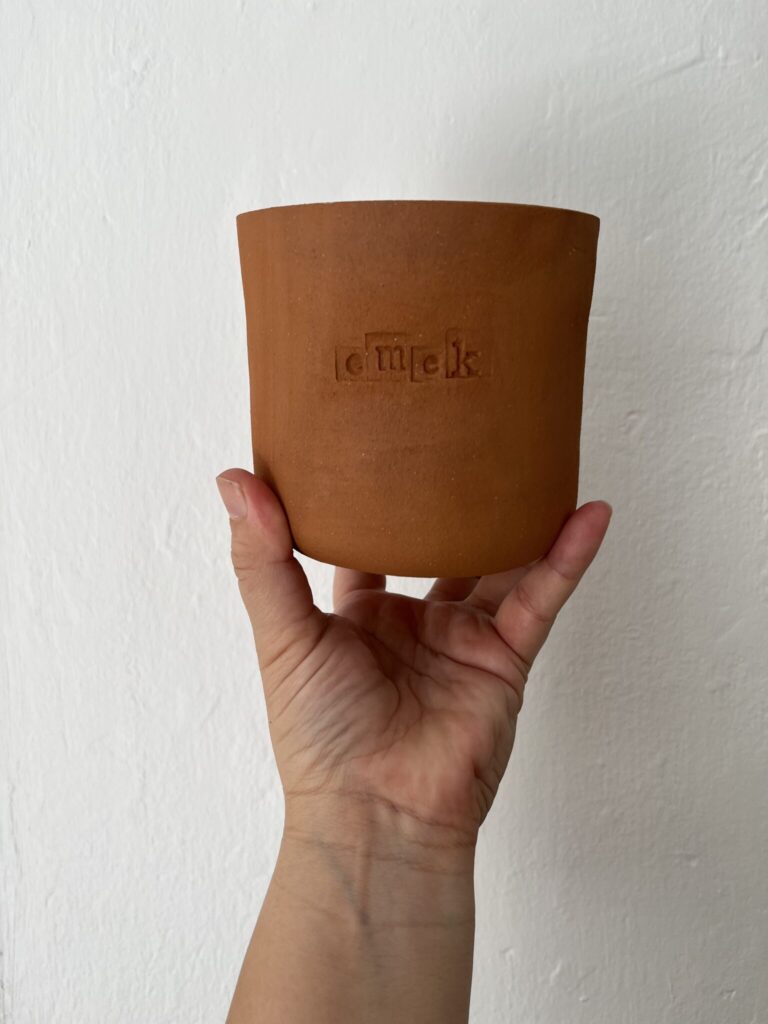
The work above, produced by Yasemin Özcan during the pandemic period, was conceived in an environment where the artist was thinking about “inequality, class, and the value of a single lentil that has managed to enter the home.”[5] However, because the artist did not have a studio, the work took a very long time to reach its final form. Under normal conditions, what is needed to complete the ceramic piece bearing the word “labor” is firing it in a kiln. Yet because of the lack of a studio and technical infrastructure, the work remained unfinished, showing that artistic production itself exists within a crisis of care. Ceramic is fragile, dependent on the firing process, and requires technical infrastructure. Therefore, this work cannot exist without care, patience, waiting, and equality of access.
The root of the word labor, emgak, means to endure hardship, to make an effort, and to suffer difficulty; in this sense, it can today be connected in certain ways to precarity. I will leave that relation here for now and return to it later. First, I want to focus on the forms of fragility within care work: childcare, care for the sick and the elderly, household labor, physical and emotional care, direct and indirect care, formal and informal care, paid and unpaid care.
Care Work as a Form of Solidarity
When I began writing this text, I also started thinking about my own forms of labor. Even though I encountered the concept late, I had been giving different kinds of labor since childhood. What remains most vividly in my memory, and what also made me question life itself as a mode of becoming, were the times when I cared for the sick.
I stayed at the hospital to take care of my grandfather. For days, I listened to his breathing while he was sleeping. Later, I did the same for my mother. Being strong and healthy, appearing cheerful, trying not to be affected by the pain they were enduring; meeting needs such as the toilet, food, and cleaning with tenderness and care, taking precautions by thinking through every possibility, both what was happening and what might happen… all of this shows that care is also a constant state of alertness.
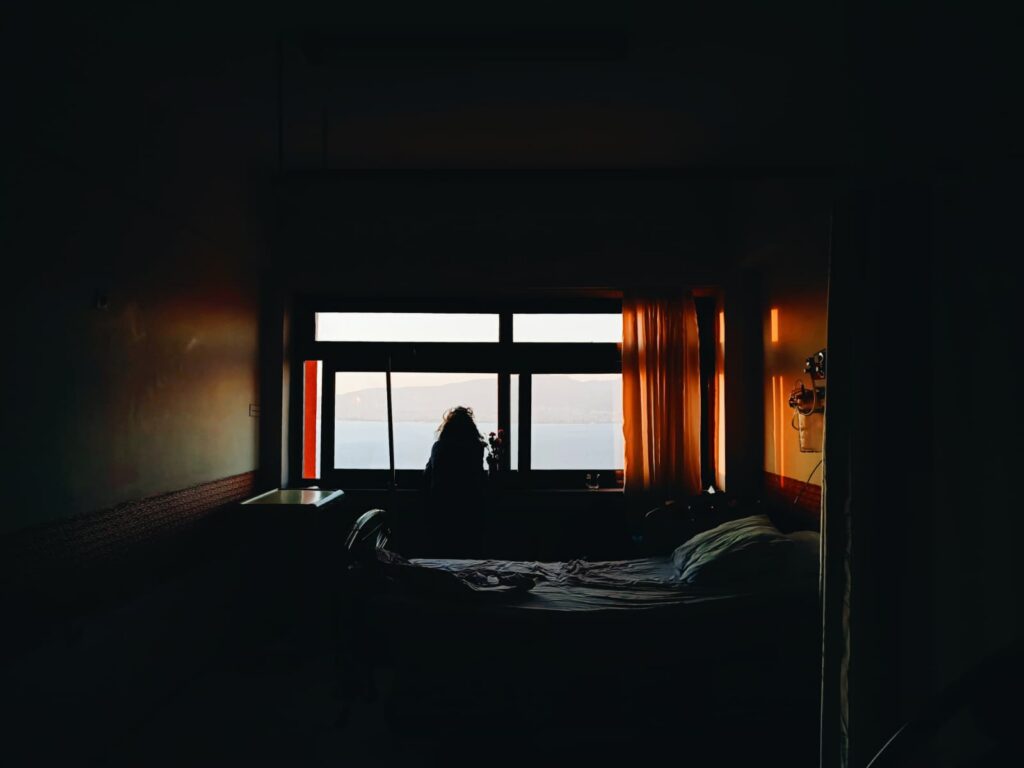
I was lucky; the hospital room overlooked the sea, and I became friends with the seagulls that came to the window in exchange for bread.
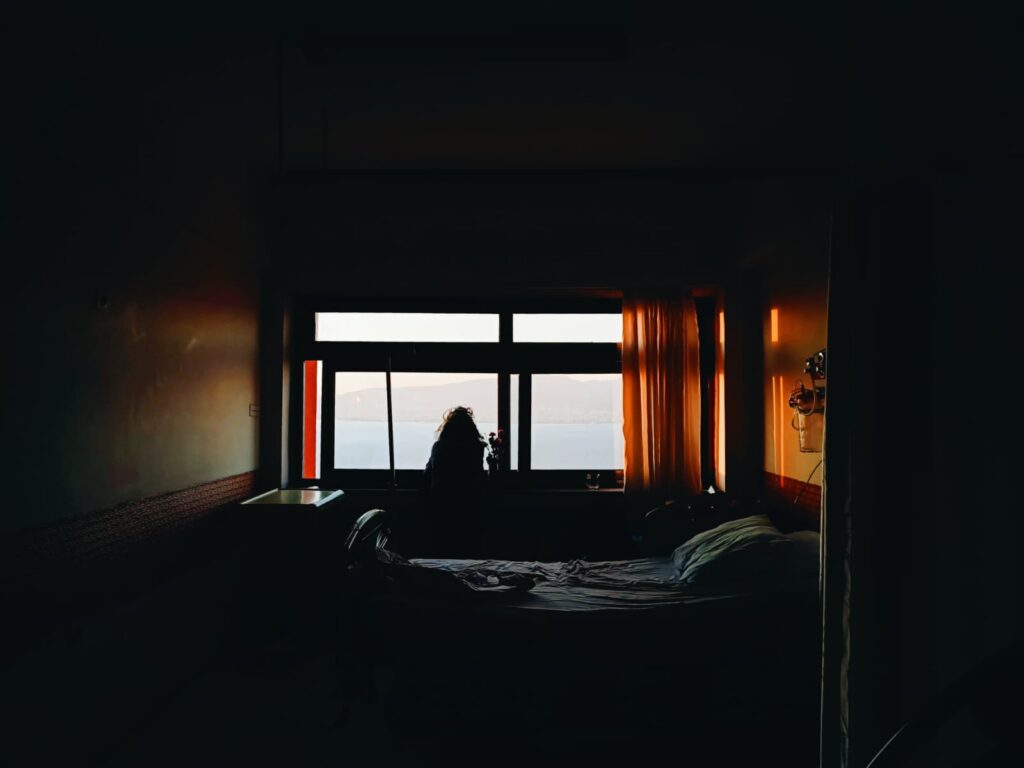
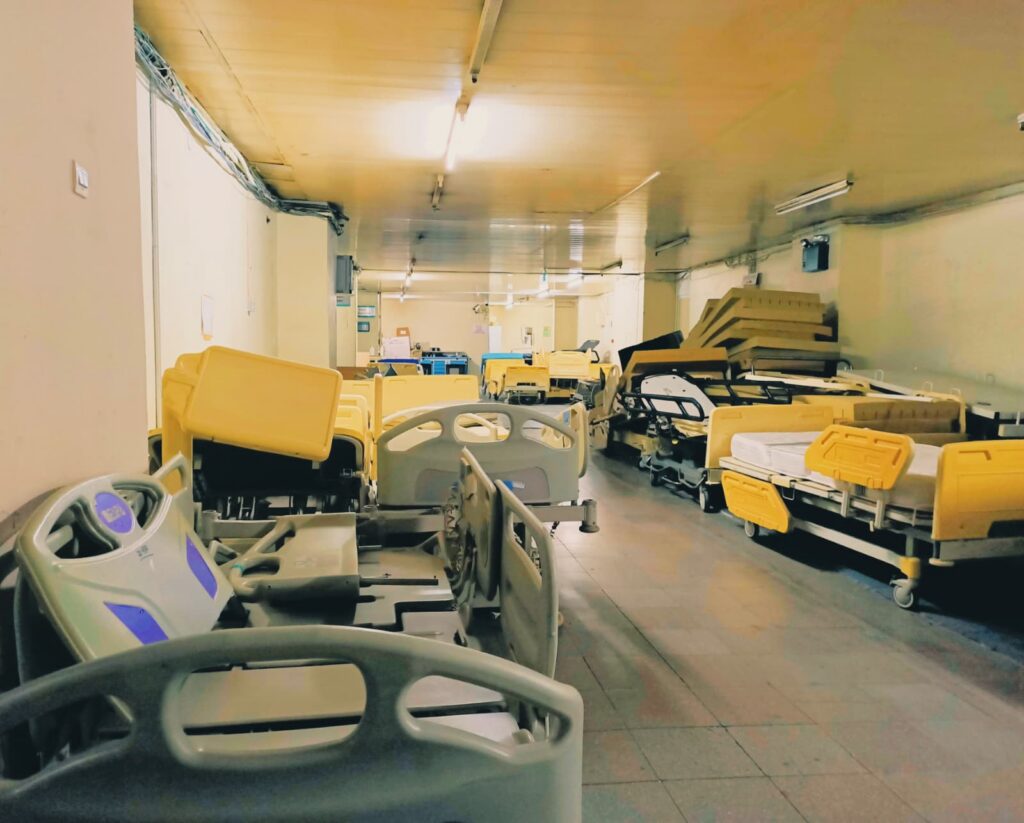
Hospitals are among the rare places where one can experience many emotions at the same time. It is strange that the primary function of this space is care, and yet this condition has turned into an enormous market and become an instrument of domination.
In Love, the final film of Dag Johan Haugerud’s Oslo Trilogy, Tor, a gay character working as a urology nurse in a hospital, realizes that Bjorn, whom he met on a dating app, is one of the patients at the hospital where he works. Bjorn has had his prostate removed. In one scene, during a conversation between Tor and the doctor Marianne, we see Tor telling her, “When I see a man, I can tell whether he is gay, and when you tell a gay man that removing his prostate will make him infertile, that is not enough; this surgery carries other risks that concern gay men.” Marianne is not aware of this. She did not learn it during medical school. Because science, as an instrument of domination, also tries to discipline sexual orientation. Afterward, Tor offers to do Bjorn’s grocery shopping after he is discharged from the hospital, and in later scenes we see him caring for him during the recovery process. Here, care exceeds clinical procedure and turns into the worn yet magnificent solidarity of a micro community.
Bias in scientific research causes women, Black people, and queers to reach proper treatment late, and sometimes not at all. Civilization, after all, is capable of disciplining the body through such means. In connection with this, the care of people belonging to these groups often has to be undertaken by others within their own micro communities. An immense amount of care work is sustained here. Yet apart from queer economics[6], a field that only a very small number of people in the world have studied so far, I have not encountered this labor being recognized as a form of labor in its own right.
Even beyond this, while society supports caregivers through neighborhood or kinship relations, especially queer communities do not receive the same support when they care for a queer patient. Some forms of care are considered legitimate, while others are stained with a criminal allure.[7]
Withdrawing Care Work as a Form of Resistance
There is a saying: to discipline through absence. In today’s toxic world, this expression may sound very different, but let us look at it through the framework of care work.
To me, care work is an organized labor practice, a temporal form of organization, a class-based resistance, and a gendered tendency. The possibilities and the breadth of imagination opened by this sentence give me hope.
I want to speak about Feminism for the 99%. The formation emerged when Cinzia Arruzza, Tithi Bhattacharya, and Nancy Fraser came together during the organization of the 2017 women’s strike in the United States. They brought together their academic work on socialism, social reproduction, and capitalist crisis with the voice of the street. This crossbreeding of academia and the public square is quite ordinary, yet equally radical.
As post Fordist capitalism spread production beyond factories and across society, it also turned knowledge, emotion, and social relations into the raw material of capital accumulation. This means that not only manual labor, but also a contralto tone of voice, a softened facial expression, the right amount of empathy, a well timed compliment, a timely response, and plenty of smiling all became part of production. This process created a twofold compression within the field of care work: while activities such as care, education, and healthcare became increasingly marketized, unpaid care within the home continued to be defined as “love” and “natural responsibility,” and was therefore devalued. Against this, Feminism for the 99%: A Manifesto constructs the feminist strike not merely as the stopping of paid work, but as a political intervention that makes care work and social reproduction visible, revealing that care is not a natural practice of love, but a fundamental form of labor that sustains the continuity of the capitalist economy.
The Aesthetics of Maintenance
The reflections of such creative and effective forms of resistance within artistic production can be considered together with Paolo Virno’s definition of virtuosity. Virtuosity refers to performative actions that do not produce a concrete object, but sustain the continuity of sociality. Like everything we experience when watching a concert or a dance performance. Labor should be measured far beyond the product that emerges, through a process that also includes the audience. From this perspective, we can say that because the act of care produces a relational process rather than a product, it sustains the continuity of social life. Both the privilege and the curse of care lie here. It postpones the disintegration of the world, if only for a while.
In 1998, Nicolas Bourriaud called this relational aesthetics. In other words: “Aesthetic theory consisting in judging artworks on the basis of the inter-human relations which they represent, produce or prompt.”[8] As examples, he gives Rirkrit Tiravanija cooking and serving soup in a gallery, or Felix Gonzalez-Torres’s piles of candy that viewers can take away, which can be depleted and replenished again. In these practices, form moves beyond being an object and takes on the function of a connection that binds people to one another. In other words, they become the starting point of a dialogue. Relational aesthetics values the micro utopias and spaces of sharing that emerge within everyday life. However, one thing is certain: while both Virno and Bourriaud make relationships visible, they often aestheticize the labor dimension of care. Because care does not only produce encounters, it also produces time, exhaustion, repetition, unequal distributions of burden, and very often unpaid work. One is an experience, while the other is deeply entangled with labor.
In 1969, Mierle Laderman Ukeles wrote the Manifesto of Maintenance Art, centering both experience and labor.[9] This three and a half page text emerged from the artist’s effort to escape the divided state she experienced as both a mother and an artist, the problem of spending half the week on housework and the other half on creative production. While documenting the coexistence of the everyday and the artistic, it fundamentally abolishes the distinction between art making and care, in harmony with Virno’s definition of virtuosity.
The argument she constructs while doing this is genuine. She says that the world stands on two pillars: development and maintenance. Development is historically associated with masculinity and the public sphere, with pure individual creation, innovation, progress, and the pursuit of excitement. It is the realm applauded by culture and history. Maintenance, on the other hand, is associated with women and the private sphere, built upon protection, continuation, and keeping excitement alive. She destroys the hierarchy between these two systems by defining art itself as a practice of care. Through a Duchampian gesture, almost as if saying “what I call art is art,” she reperforms every act of care she carries out, washing, dusting, and so on, as art.
This is Not a Precariat
“The winner of the poverty race, started not with a passing ‘Oh well!’ but with full awareness, becomes the distance that arrives with guilt.” (Yasemin Özcan)[10]
Art is often presented as a field capable of experimentally establishing care based relationships. Artistic practices do indeed rely on collective work, are sustained under fragile conditions, and generate alternative forms of relation. But within a distorted reality.
The distinction between representing care and undertaking it becomes visible here. An institution may adopt the language of care, yet allocate its budget to visible brand value. It may praise fragility in exhibition texts, while ignoring the lack of security, insurance, and the pressure of time imposed on those working during the installation of the exhibition. It may turn the burden of care within the artist’s production process into an aesthetic theme, while deepening the artist’s precarity through irregular income, delayed payments, and lack of infrastructure. Therefore, there is a contradiction between the increasing representations of care and the failure to recognize its material compensation.
Today, exhibitions continue to be organized through quotations from Mierle Laderman Ukeles, but what do curators and institutions that build their exhibitions around Ukeles actually do regarding the economic and social conditions of the people involved? I am speaking about the difference between equality and justice.
While these exhibitions are being made, are the conditions we live under being taken into account? For example, does the economic and political condition of the country affect how an exhibition is planned? In the face of the housing crisis, financial hardship, unemployment, precarity, mobbing, violence, harassment, censorship, and self censorship, are the institutions we work with, the artists, workers, and service providers being considered? Which institutions have policy documents based on gender equality and ethics?
This gap between potential and practice prevents us from seeing that there is a crisis of care lying within the art world itself. Could it be that this field, which produces discourse on precarity, is ironically reproducing inequality by rendering it invisible?
Although resources in the art world appear to function like a medium of exchange open to everyone, do they in fact circulate with low friction only among certain class based clusters?
In The New Spirit of Capitalism, Luc Boltanski and Eve Chiapello explain how capitalism absorbs and transforms critique. The discourse of creative freedom in the art world functions through a similar mechanism. Care work does not disappear, but it is rendered invisible by being transformed into passion, dedication, and simply being part of the artwork. During the 2022 strike at the Philadelphia Museum of Art, museum workers challenged this discourse by demanding wages, security, and representation.[11] Unionization efforts at the Metropolitan Museum of Art pointed to a similar demand.[12] W.A.G.E., meanwhile, works to place artist fees within a framework of justice.[13]
It is worth asking again: can the care mentioned in exhibition texts be carried into the way art is made, into relationships, into economic choices? When discussing the work of an artist who produces around precarity, are artists living under precarious conditions themselves actually being seen, or are relationships being built according to those conditions?
Symbiotic Bonds, Holobiont Humans
Although the questions above are not new, they are not independent from one end of care or another. At this point, I want to widen the universe of this text a little further and push the boundaries of relationality.
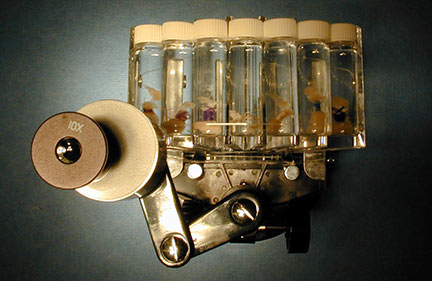
One example is the semi living sculptures in Oron Catts and Ionat Zurr’s installation The Semi-living Worry Dolls (2001), produced at a time far removed from the current state of technology. These sculptures require constant care in order to sustain life within a laboratory environment. [14]
The artists design bioreactors as artificial wombs, taking on tasks such as providing nutrients and cleaning waste. According to them, the growth process of a semi living sculpture can never be fully predicted; the interaction between tissue and polymer scaffold produces different results each time. This situation calls into question the moralism that can turn care into an instrument of domination. The artists invite the viewer to become part of an ethical inquiry: what will happen to these living beings?
Another example is The Camille Diaries Symposium[15], organized by Art Laboratory Berlin in September 2020, which feels like a theoretical turning point centered on the concept of care. The symposium opened up the aesthetics of care to discussion across a wide range of issues, from biopolitics to gender, from environmental change to interspecies interaction.
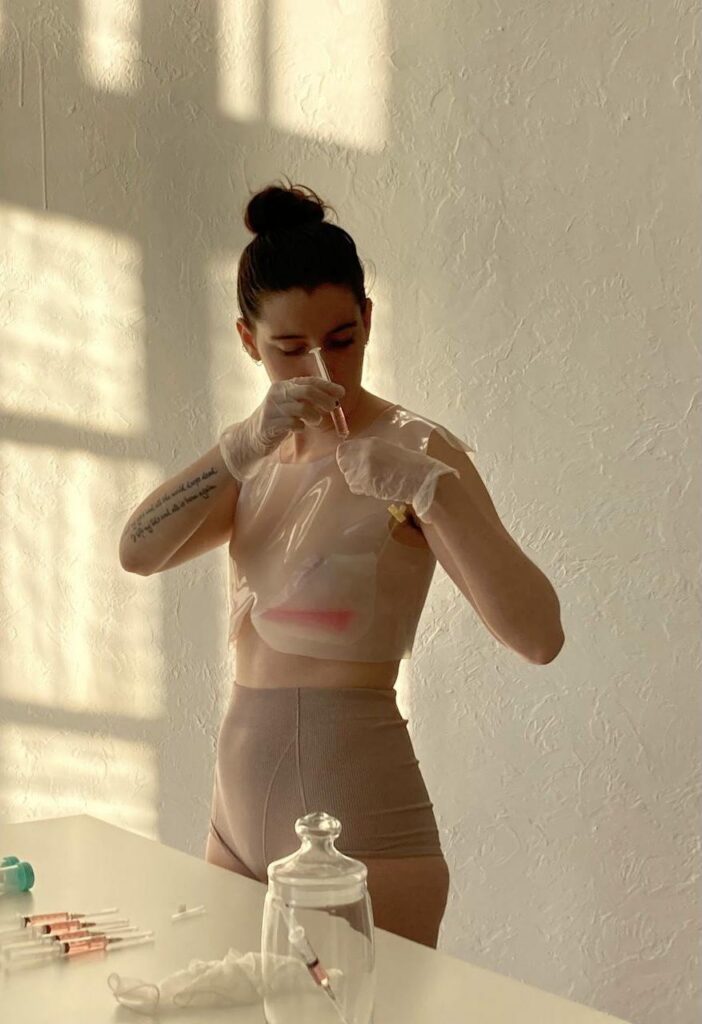
One of the participating artists, Lyndsey Walsh, developed her long term work Self-Care after receiving a diagnosis of the BRCA1 mutation. This mutation means that the gene responsible for repairing DNA damage and preventing tumor development loses its function. Using her own body, the artist’s work fights against what is called the medical gaze, the perspective that sees a person as nothing more than a collection of symptoms and data. Inside a prosthetic attached to the chest are living breast cancer cells. The artist attempts to take responsibility for the care of the cancer before it has even appeared in her body.
Another work by symposium participants Shu Lea Cheang and Ewen Chardronnet, UNBORN0x9,[16] moves care into the technological plane of artificial wombs and cyber communication systems, redefining parenthood and reproduction as a biotechnological cyborg future.[17] Problematizing the institutional authority of science over reproductive experience, the duo explores speculative forms of attachment that may emerge with the appearance of artificial wombs.
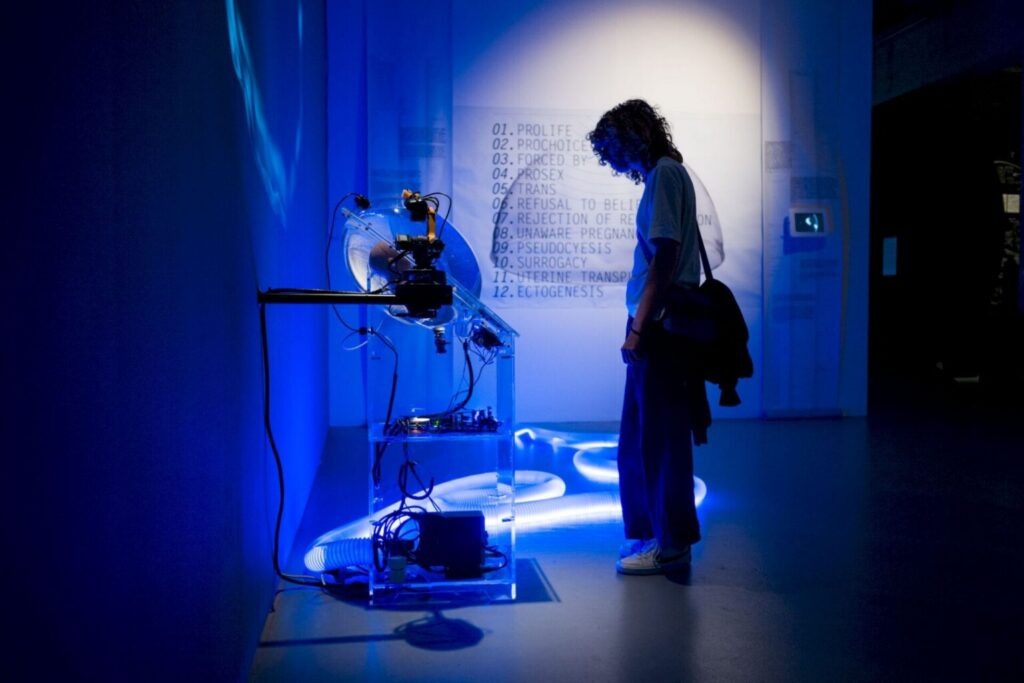
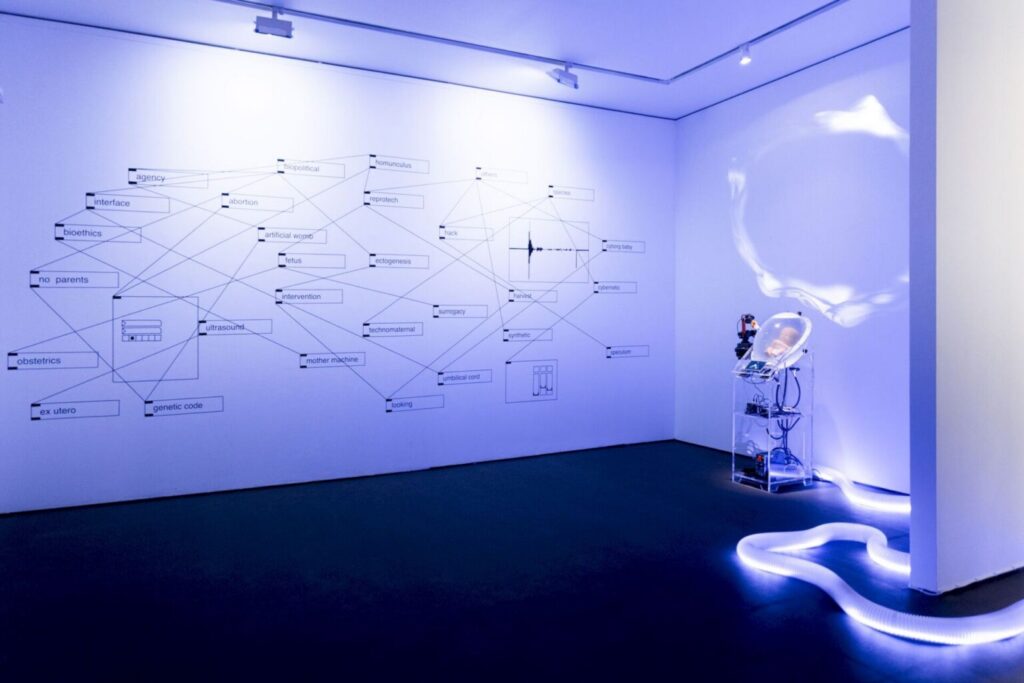
Care consists of the actions undertaken to make the world livable together. The subject is not a solitary and autonomous being, but exists within a continuous network of relationships. If we look through symbiotic theory, just as humans and the microbiomes in their intestines live as holobionts,[18] the human is also an integrated holobiont with everyone else, with things, and with relationships.
Look at the photographs of Nan Goldin, whose work we never tire of speaking about. The characters embody Scott Gilbert’s phrase, “We Have Never Been Individuals.” These characters constantly reinvent themselves as part of a web of relations, somewhere between the need for the presence of others and the desire for autonomy. Subjectivity leaves behind its atomized structure and transforms into a layered relationality passing through sexual codes, pleasure, pain, and memory.
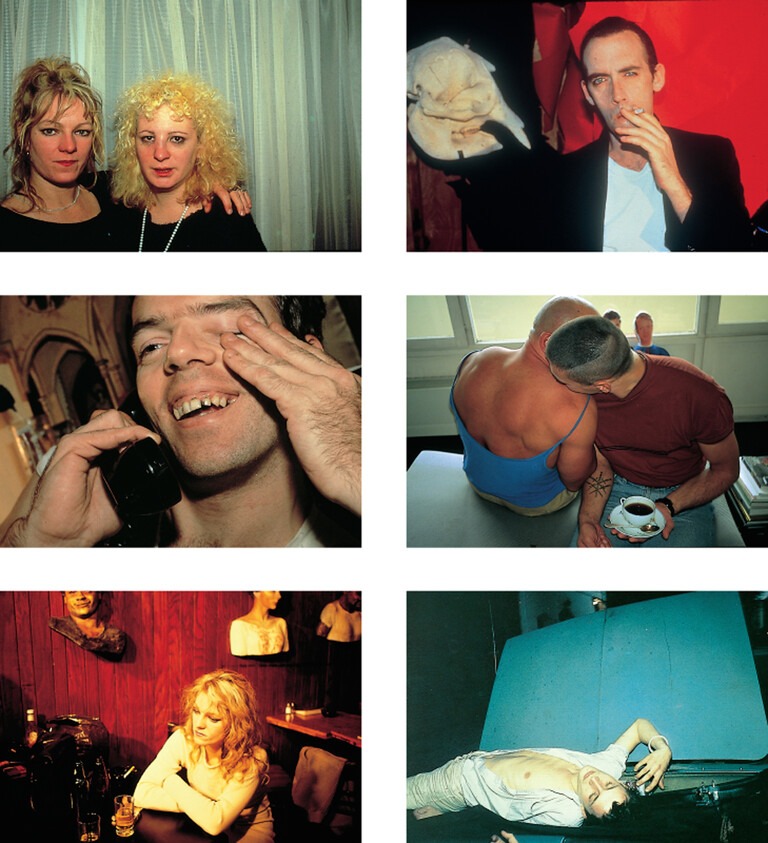
Our lives are a symbiotic knot formed by the coming together of species, relationships, and technologies, where everyone and everything, all forms of existence, are connected to one another. Subjectivity is a relational flow, validated only through the presence of things. For this reason, care opens a radical space against the neoliberal illusion of the “self sufficient individual” imposed by today’s world. At the same time, by being repositioned within medical observation, algorithmic surveillance, and institutional mechanisms of power, it confronts us with the fact that we have never been individuals and that at every moment we depend on another form of existence.
When I place Donna Haraway’s call to “make kin not babies”[19] at the center of this line of care stretching from Bektashism to cyborg theory, I see that as traditional care roles become queered, they open a space for questioning colonial and species based hierarchies. Each of them forms an alliance with Vandana Shiva’s women. Each one performs the act of transformation by inviting us to rethink the bonds that the dominant order considers harmful, worthless, superior, powerful, or insignificant.
But precisely here, another issue appears that requires a note of caution. I return to the questions I asked earlier when speaking about exhibitions built around Ukeles narratives. Because just as capitalism absorbs critique, the concept of care itself carries the risk of turning into a moralistic imposition within contemporary art.
Beauty Is the Beginning of Terror [20]
Maggie Nelson explains the hardness embedded within the seemingly soft word care in her book On Freedom: Four Songs of Care and Constraint. According to Nelson (2021)[21], care has become intertwined with the burden of precarious life placed on the shoulders of the artist, the educator, the freelance worker, and the caregiving subject within late capitalism.
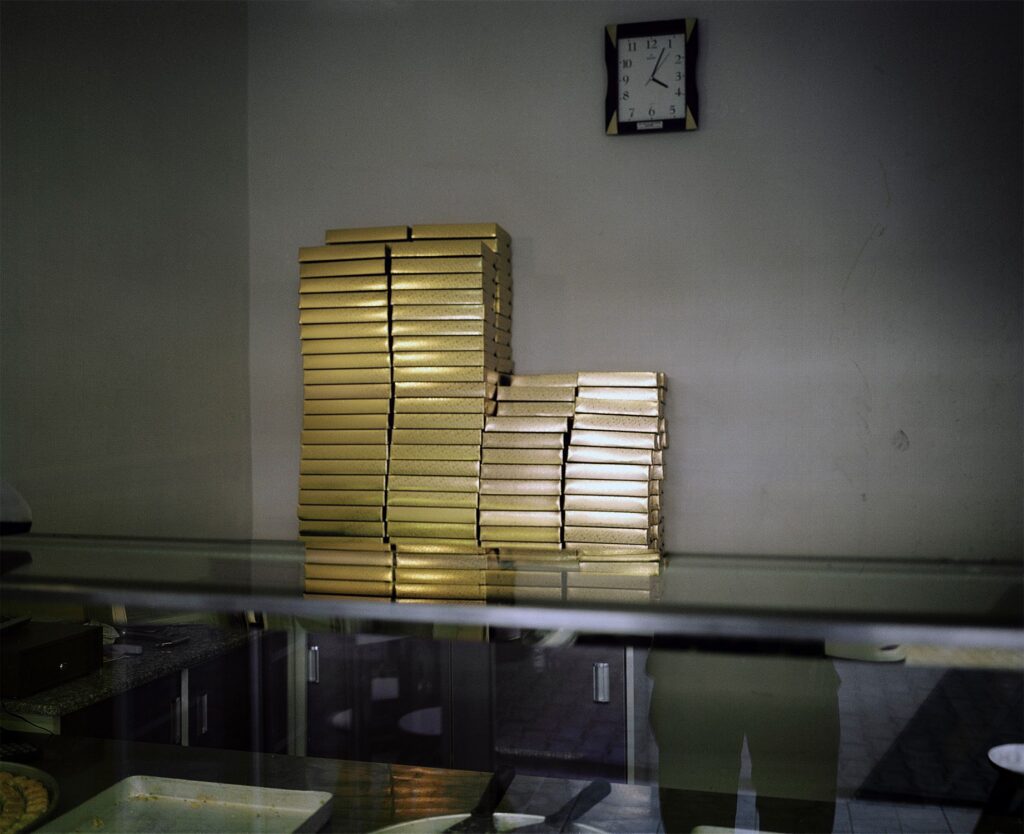
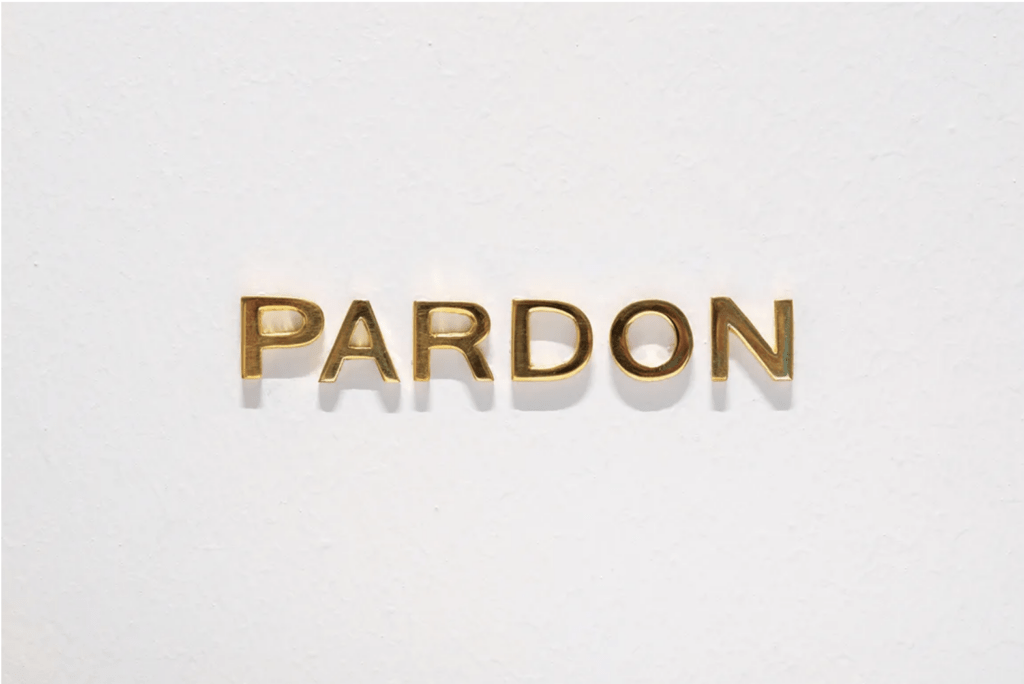
Look at the photograph above by Civan Özkanoğlu. At first glance, the objects resemble gold bars inside a bank vault, but after noticing the trays of baklava around them, we realize that they are actually empty boxes. Just as Zeus turning into golden rain to reach Danaë transforms greed and evil into a spectacular desire, these gold looking but empty baklava boxes reveal the conflict between outward brilliance and inner emptiness. Like Cengiz Tekin’s 14 karat gold installation Pardon placed just below it. An expensive pardon. Not quite an apology, not remorseful. A grand Pardon, full of arrogance and wealth.
These decorated surfaces conceal intention. In a similar way, when care is aestheticized and represented, its real labor, full of exhaustion, repetition, and insufficiency, becomes invisible. Could the multiplication of representations of care be concealing the absence of care itself?
In this book, Nelson points to an important distinction. On one side, there is a language of care that institutional art discourse can easily appropriate, one that can be translated into exhibition texts and curatorial narratives. This language, revolving around healing, sensitivity, inclusivity, and compassion, often renders labor invisible beneath its own moral surface. On the other side, there is the artist’s labor, stretched across time, requiring patience, repetition, and often offering no guarantee of results. The artist reading for hours, researching, struggling with surfaces, waiting, erasing, making again, preserving, repairing; all of those everyday and exhausting processes that make the work possible. This is a form of labor often devalued within capitalist measures of productivity. Sustained without insurance, without retirement security, and with irregular income, this labor is much closer to the hard reality of precarity than to the romantic discourse of care. For this reason, Nelson keeps a distance from approaches that read art through the language of kindness or compassion. Art is not independent from lived lives.
Between 1978 and 1986, Tehching Hsieh, in his One Year Performances series, locked himself in a cage for a year, punched a time clock every hour, lived homeless on the streets of New York, and remained tied by a rope to Linda Montano. Each work lasted one year.
Hsieh thinks of time not as a measurable, productive resource that must be filled with meaning, but as a state of existence that one is exposed to and passes through. In this way, the boundary between doing art and doing life disappears; both become different forms of doing time. Time ceases to be a tool evaluated in terms of productivity or output. Through its unstoppable flow, it becomes a continuity that one can only experience and accept.
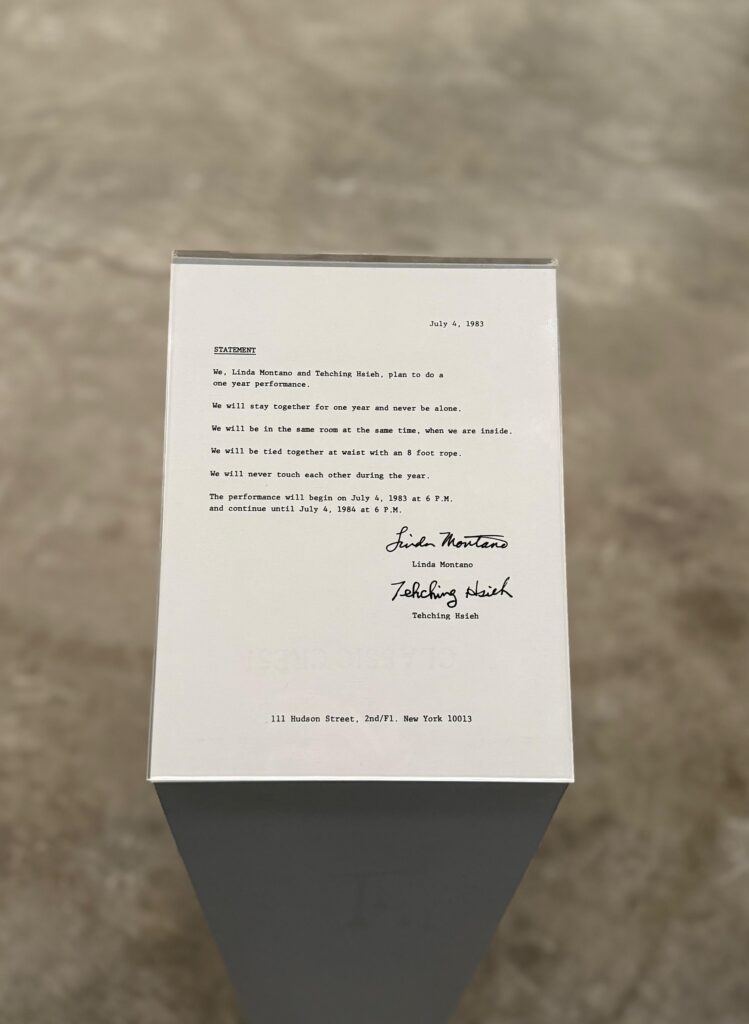
Therefore, Hsieh reads care in reverse. He shows us the cost of sustaining, laboring, and enduring. Returning once again to Nelson, what she proposes is essentially to remove care from being a polite and soothing ethical discourse. From childcare to health insurance, from everyday financial struggle to the physical preservation of an artwork, all of these issues are therefore not outside aesthetic or ethical thought, but precisely at its center. Art can only open a liberating possibility to the extent that it is able to protect its own fragilities, its aesthetic attentiveness, its boring other tasks, its bonds, and its capacity for disobedience.
Instead of an Epilogue
“They call it love. We call it unpaid labor.”
Silvia Federici
From this perspective, thinking about care in contemporary art does not mean simply speaking about compassion, repair, or protection. It means displacing the narratives we think we know, reversing roles accepted as natural, pushing against given boundaries, and never stopping asking questions. In this way, care can become a critical tool for imagining the world otherwise; for questioning norms, hierarchies, and forms of relation by turning them inside out. This is where the power of care in contemporary art lies: making our bonds visible, giving voice to the dependency and fragility contained within them, and imagining other possibilities precisely from within this relationality. The best way to do this begins with looking first at what is closest to us, remaining persistent, and not forgetting how to breathe properly.
* I borrowed the title of this text from Pune Haeri’s book Women, Giants and Other Things.
References and Notes
[1] Vandana Shiva, V. (1988). Staying Alive: Women, Ecology and Development. Zed Books.
[2] According to the research cited by Vandana Shiva, in a production cycle on a farm where a pair of oxen contributes 1,064 hours of labor and men contribute 1,212 hours, women carry a workload of 3,485 hours. This period is measured through vital activities that sustain the continuity of life, such as weeding to protect the soil ecosystem (640 hours), irrigation (384 hours), transporting organic fertilizer to the fields (650 hours), seed planting (557 hours), and harvesting and threshing (984 hours).
[3] This condition is referred to as “maldevelopment.” Samir Amin, S. (1990). Maldevelopment: Anatomy of a Global Failure. Zed Books; United Nations University Press.
[4] See also agency.
[5] Kaya, E. (2024), Emek ve İdrak. https://argonotlar.com/yasemin-ozcan-emek-ve-idrak/
[6] Queer economics is an approach that rethinks labor, household, care, and market relations through the diversity of gender identity and sexual orientation by questioning how heteronormative assumptions shape economic analysis. M. V. Lee Badgett, M. V. L. (2020). The Economic Case for LGBT Equality: Why Fair and Equal Treatment Benefits Us All. Beacon Press.
[7] People who care for animals on the streets or in shelters are often in the same situation. While they were once labeled as the “crazy person of the neighborhood,” today their category has shifted and they are increasingly regarded as criminals.
[8] Nicolas Bourriaud, N. (2005). Relational Aesthetics (Trans. S. Özen). Bağlam Publishing.
[9] Mierle Laderman Ukeles, M. L. (1969). Manifesto for Maintenance Art.
[10] https://www.mantipostasi.com/tr/yazi/tam-bugday-ile-beyaz-unun-maceralari
[11] https://www.theartnewspaper.com/2022/10/27/philadelphia-museum-workers-back-strike-contract
[12] https://uaw.org/staff-of-the-metropolitan-museum-of-art-vote-to-unionize/
[14] The Semi Living Worry Dolls were handmade using multiple cells (skin, muscle, and bone cells) grown on a biodegradable polymer matrix and later stitched together with surgical sutures. Each Worry Doll carries a specific concern:
Doll A worries about absolute truths and the people who believe they possess them.
Doll B worries about biotechnology and the powers that direct it.
Doll C worries about capitalism and corporations.
Doll D worries about demagogy and destruction.
Doll E worries about eugenics and the people who believe themselves superior enough to enforce it.
Doll F worries about fear.
Doll G worries about gene editing. (G is not a doll, but like genes existing in all babies, it permeates all the others.)
Doll H worries about hope and the unintended consequences caused by those who possess it.
[15] Inspired by the Camille Stories section in Donna Haraway’s Staying with the Trouble. The Camille Stories are a speculative ecological fable about the symbiotic union between humans and nonhuman beings, specifically monarch butterflies. Set between the years 2025 and 2425, these stories describe a new mode of life called “children of compost” and humanity’s effort to rebuild its relationship with the world in response to ecological crises.
[16] https://unborn0x9.labomedia.org/
[17] A hybrid being formed by the combination of human and machine.
[18] A holobiont is a community that functions as a single ecological whole through the symbiotic relationships established by a host organism with different species living within or around it. Lynn Margulis & René Fester (Eds.). (1991). Symbiosis as a Source of Evolutionary Innovation: Speciation and Morphogenesis. MIT Press.
[19] Donna Haraway, D. J. (2016). Staying with the Trouble: Making Kin in the Chthulucene. Duke University Press.
[20] Rainer Maria Rilke, Duino Elegies. This title is used here in a different context from what Rilke originally intended.
[21] Maggie Nelson, M. (2021). On Freedom: Four Songs of Care and Constraint. Graywolf Press.
In this text, Pelin Tan considers land and landscape as layered archives that carry the memories of human and more-than-human beings. Moving from walks through the Tigris basin to seed...
read
In her curatorial practice, Naz Kocadere explores the ways artistic expression takes shape in language and within relations of power. Here, she shifts her focus from words to the materiality...
read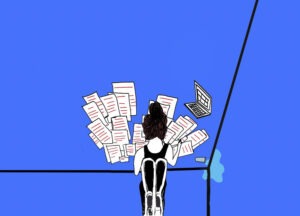
In the series Experiments and Stumbles on Collaboration, İpek Çınar writes about how coming together and being "we" gets built —and where it falters— through the experience of running an...
read