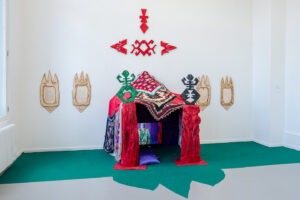
The Right to Color
In her curatorial practice, Naz Kocadere explores the ways artistic expression takes shape in language and within relations of power. Here, she shifts her focus from words to the materiality...
read
Pelin Tan

“Thinking with Concepts in Contemporary Art” has been supported as part of the SAHA Writing Series / Supported by SAHA Art Writing.
The Hymn on the Tip of My Tongue
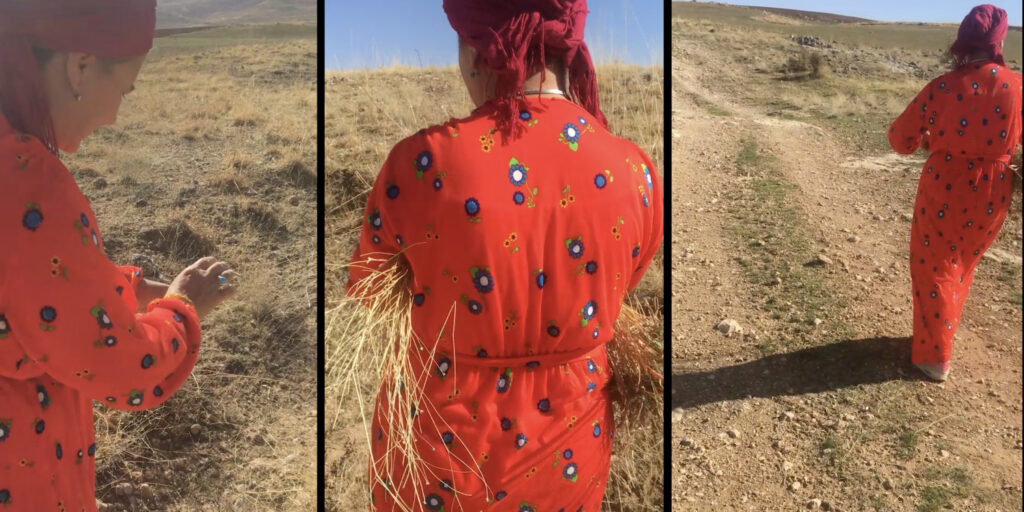
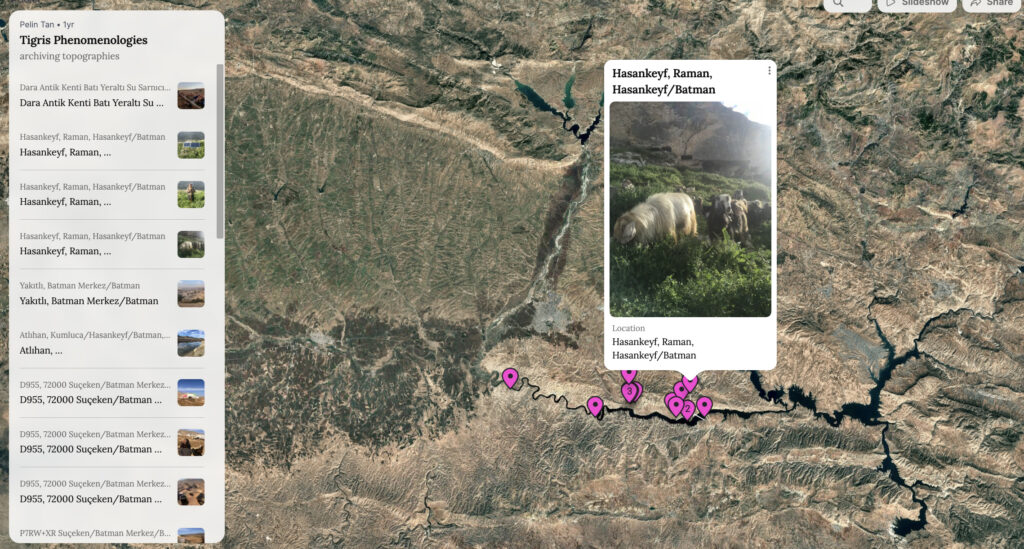
“Av, agîr, erd, ba, roj” (water, fire, earth, wind, sun), whispers the Êzdî woman I follow as she walks. Quietly, she hums an Êzdî hymn. We pass through agricultural fields planted with wheat and lentils. A discarded plastic pesticide container lies on the ground. The soil has been contaminated by chemicals widely used in local agriculture and promoted through agricultural state policies. The seemingly naïve image of the landscape, gesturing towards its abstract horizon, is ecologically contaminated, socially forcibly dispossessed, and withdrawn as a means of protection from structural violence. For Êzdî women, long walks through the lands, hills, and streams surrounding the Tigris River constitute a fundamental practice of remembering, reconnecting with what has been forcibly lost, and forming entangled memories as a practice of decolonization. These walks teach about the land, water, and cycles of ecological production, and how these connect to Êzdî cosmology, in which the preservation of grain, seeds, and healthy soil holds particular significance. Respect for more-than-human elements is fundamental to Êzdî cosmology. As they walk, Êzdî women recount stories of dispossession, mourn the loss of land and seeds, and continue to whisper, as part of a hymn, the words: “av, agîr, erd, ba, roj” (water, fire, earth, wind, sun). As she walks, the woman gathers straw and makes a broom, mourning the diminishing biodiversity and fragments of nature damaged by interconnected extractive forces such as militarism, oil, hydroelectric power plants, and dams. She quickly binds the stalks and recounts a childhood memory. She remembers how they used to make brooms from this straw, and how they fashioned many tools for everyday village life from materials found in nature. She recalls that, as a young girl, she and her sister would take the goats and sheep across the hills and steppes every day to drink from the banks of the Tigris. It is almost as if this were a ritual of ecological mourning: an everyday performance of remembrance through which the past is recalled and a commitment to tradition is renewed through a relationship with the earth. To invoke Elizabeth Povinelli, the distinction between Life and Nonlife is intrinsic to colonial history.[1] Decolonization brings to the foreground the entangled relations and narratives among these elements. Layered landscapes can be understood as entangled archives that transmit invisible narratives and inscribe memory into the earth. Through Tigris Phenomenologies / Fenomenolojiyên Dîcleyê / Dicle Fenomenolojileri, I am attempting to create an entangled visual archive of human and more-than-human elements that might appear insignificant or transient in everyday life.[2] Like the flowing river, flowing knowledge, and flowing encounters. What memories of the future might the Tigris River itself, its surroundings, and the lands extending across borders toward Iraq—the gardens, buffer zones, river basins, and fragments of nature—indicate? Adnan Mirhanoğlu defines water grabbing not merely as capitalist extraction but also as infrastructural violence. According to Mirhanoğlu, “the modernization of irrigation infrastructures involves not only changes in water flows, but also simultaneous and intertwined changes in actors’ access to resources, transformations in social position and power relations. The existence of irrigation systems affects social relations and shapes particular ways in which people relate to their environments.”[3] In the research conducted together with Zeynep Sıla Akıncı, we argue that infrastructures—particularly dams—militarise lands and landscapes, enabling forms of Anthropocene extractivism while perpetuating structural violence.[4] The landscapes and inhabitants of the Tigris continue to constitute a terrain of conflict between forces of extraction and colonization. Despite attempts to control it through settlement policies, land ownership regimes, and extractivist infrastructures, the Tigris remains a threshold: it promises the unknown, new potentials, and what is yet to come. The digital archive Tigris Phenomenologies / Fenomenolojiyên Dîcleyê / Dicle Fenomenolojileri[5] aims to reveal not only forms of survival under conditions of displacement and extraction, but also the possibilities offered by these threshold spaces and practices of substitution. Cultural, religious, and mythological heritage provides a ground for these narratives, yet under the violence of aggressive spatial transformations, such heritage can be reduced to naïve constructions. With reference to Marisol de la Cadena’s research, it is important to remember that the historical legacies of violence and relations of power also shape these elements.[6] Within this context, artistic research can produce forms of representation attentive to resistance and to an ethics of place-based sharing.
In the context of dwelling, the onto-epistemological approach to entanglement can imply material culture as well as the act of living in the spatial world. Archaeologist Ian Hodder has analyzed this entanglement of humans and things in Çatalhöyük, a Neolithic settlement in Anatolia, Turkey, that existed between 7500 BCE and 5700 BCE. Hodder sees the settlement as an “open system” that entangles clay-made dwellings with social and material systems. To examine the resilient parts of entanglement, Hodder looks at the material processes of human labor within these dwellings, asserting that if “things go wrong in an entanglement, and as change occurs, it is these focal nodes that are likely to be the most resilient.” It is interesting to see the connective tissue around the formation of matter and entanglement between Hodder, the archaeologist, and philosopher/physician Barad. The notion of resilience is crucial in Barad’s notion of entanglement too; Barad labels it as “an affirmative critical tool attending to the constructive and/as relational ontology.” Taking up Barad’s claim that entanglement “entails possibilities and obligations for reworking the material effects of the past and the future,” I understand it as the ethical aspect of entanglement, an aesthetic means of differentiating it from “assemblage.” This difference frames entanglement as affecting related entangled existences and their conditions, while assemblage refers to a visual epistemology in which fragments and layers are orchestrated on the surface.
Hodder explains: “The distinctive aspect of entanglement derives from the attention given to the term ‘depend’ in the relationships between things and between humans and things.” Dependency, however, entails ethical grounds. Barad’s “intra-action” is a slightly different term that does not refer to interaction or dependency, but I think it still shares parallel frames with Hodder. For Barad, materialization is at once a process, a relation of production, and a reconfiguration of the material-social relations of the world. Intra-action, by contrast, suggests that actors do not pre-exist the relations through which they emerge. Actors come into being within the relation itself. In other words, actors are differentiated from one another only through their relational entanglements; they do not exist independently as separate, individual entities. Materialization is therefore a process, a relation of production: a reconfiguration of the world’s material and social relations.
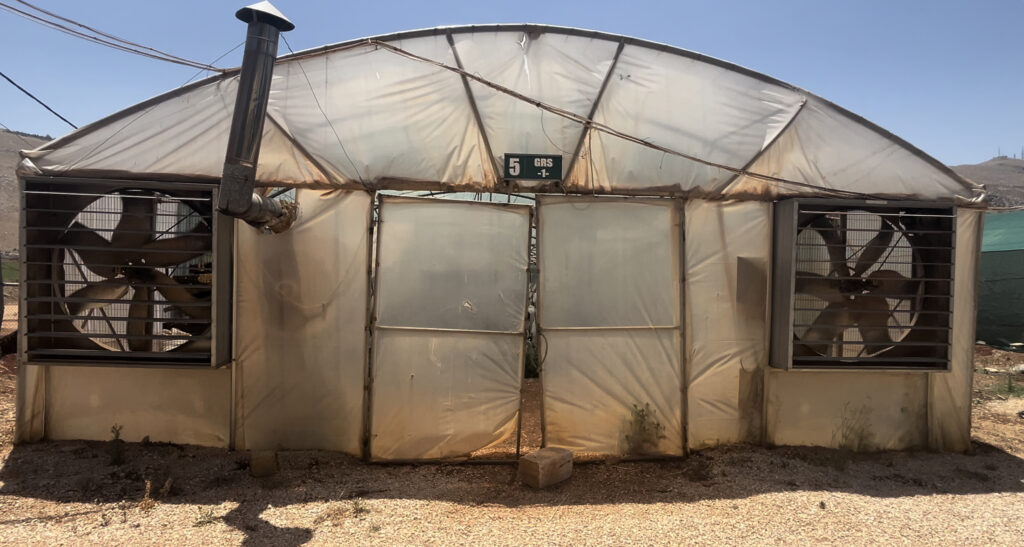
Views from the Icarda Seed Centre, Bekaa Valley, Lebanon (2024–2025). Courtesy of Pelin Tan.
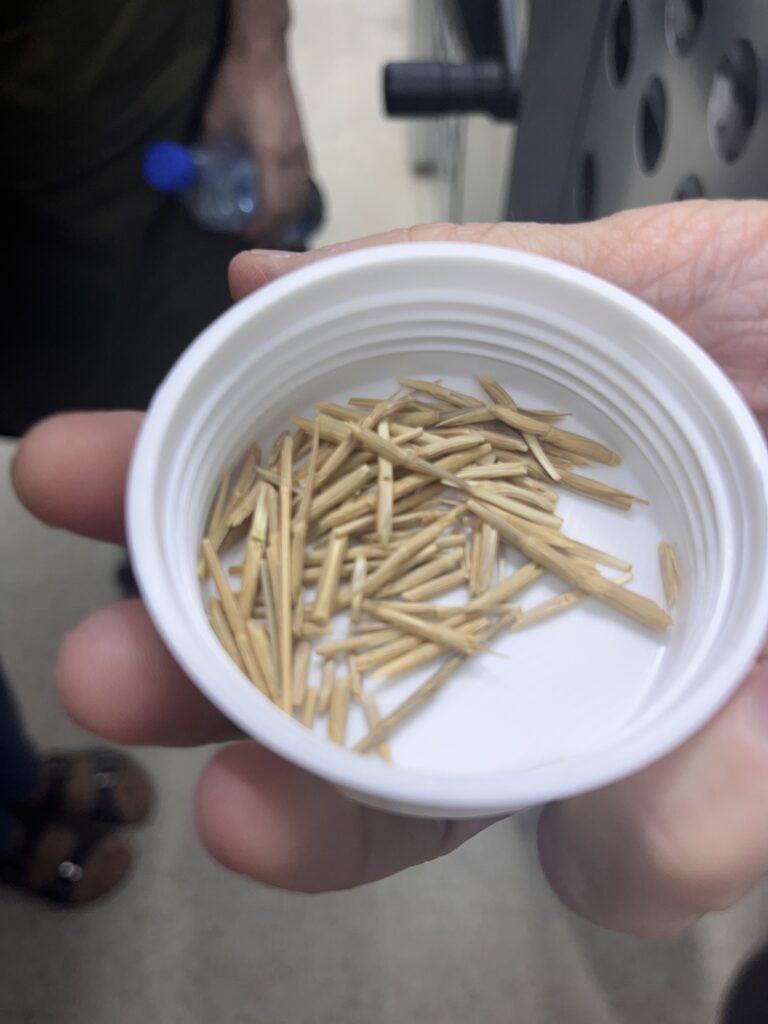
Views from the Icarda Seed Centre, Bekaa Valley, Lebanon (2024–2025). Courtesy of Pelin Tan.
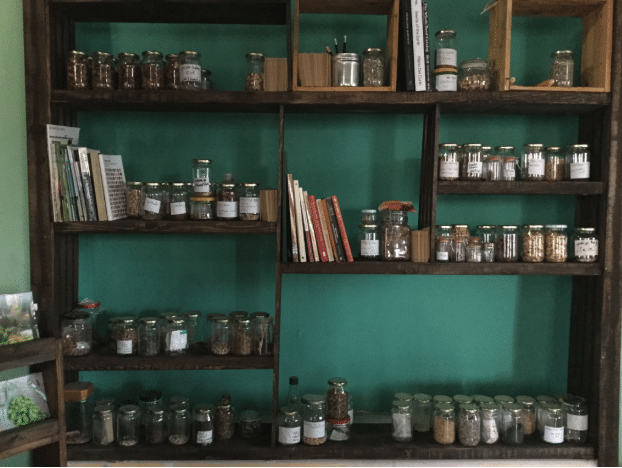
Still from the Atatohumu Library video (2019), Palestine. Courtesy of Pelin Tan.
It is a hot summer day in 2025. In Lebanon’s Bekaa Valley, I listen to the archivists at the ICARDA seed archive as they describe how they preserve different varieties of grain and ensure their resilient survival. Seed archives and discursive initiatives such as ICARDA or Buzuruna in Lebanon, and the Heirloom Seed Library in Palestine, seek to preserve the seed as a more-than-human entity within geographies of violence, while strengthening its discursivity and agency. This effort can also be understood as a form of vital resilience within the present temporality of a catastrophe yet to come. How do more-than-human entangled existences bear witness to catastrophes through writing, images, and narratives? What kinds of paths do the enduring expansions of threshold spaces produced by regimes of catastrophe offer us across the past, present, and future, and what kinds of traces do they hold? How are witnesses’ relationships to space, geography, and land constituted? How are sensibility and imagery reconstituted in the aftermath of catastrophe?
In The Arab Apocalypse, poet and artist Etel Adnan speaks words that evoke a fractured narrative—or the memory of cycles—beneath the sun rising in the East and amid the overlapping shadows of catastrophes.[14] Thinker Jalal Toufic, in turn, describes this as an effort in which the culture and tradition through which the artist thinks and represents are withdrawn, suspended, and surpassed under the effects of catastrophes and disasters.[15] What Donna Haraway calls “staying with the trouble” means registering catastrophe not as a story of loss with the human at its center, but as a condition sustained together by the human and the more-than-human.[16] This absence of the human is not a lack, but a chosen position. A seemingly naïve and empty terrain or landscape may render past violence and catastrophe as though they were invisible. In the writings of Sema Aslan, too, fiction and space emerge as a threshold narrative of witnessing, constituted through testimony to a human agency that cannot be fully described or substantiated.[17]
Artistic practice can reanimate imaginaries of the future, apocalyptic narratives, and thresholds under the horizon of ecological and colonial apocalypses. As is the case in many parts of Anatolia today, we look for forms of resistance, knowledges of solidarity, and methods developed by displaced, dispossessed, and precarious human and living communities within the local phenomenologies of the Tigris basin. By local phenomenologies, I mean cosmologies in which no single subject is placed at the centre, and which encompass entangled forms of knowledge and experiences of being shared by humans and more-than-humans. In her work, researcher Macarena Gómez-Barris discusses the phenomenology of local communities, which differs from Western-centred more-than-human discourses, in the context of decolonisation and as a response to epistemic violence. The phenomenology of these local communities, as she describes it, extends beyond the individual biological body toward the earthly body of mountains, rivers, stones, and the lands on which people live. I adopt this approach in order to understand intertwined and entangled ways of knowing, as well as the layers of memory that are being systematically erased. Accordingly, the effects of war and the renegotiation of regional borders require us to rethink how we approach spatial infrastructures and how we work with them. This situation should be considered not only as a threshold at the regional scale, but also as part of the capitalism-centred militarist mechanism that we call the geontologies of landscape and land. As we live through the catastrophe of the future in the present, communities forcibly displaced and exiled from the apocalyptic landscapes of the present and the landscapes to come, and from spaces operating at different scales, will form alliances as exiles entangled with seeds, plants, animals, and all forms of life, as well as with their narratives. The assemblages formed through all these forms of resilience and vulnerability contain an organic and inorganic vitality in which different ecological cosmologies come into relation with one another.
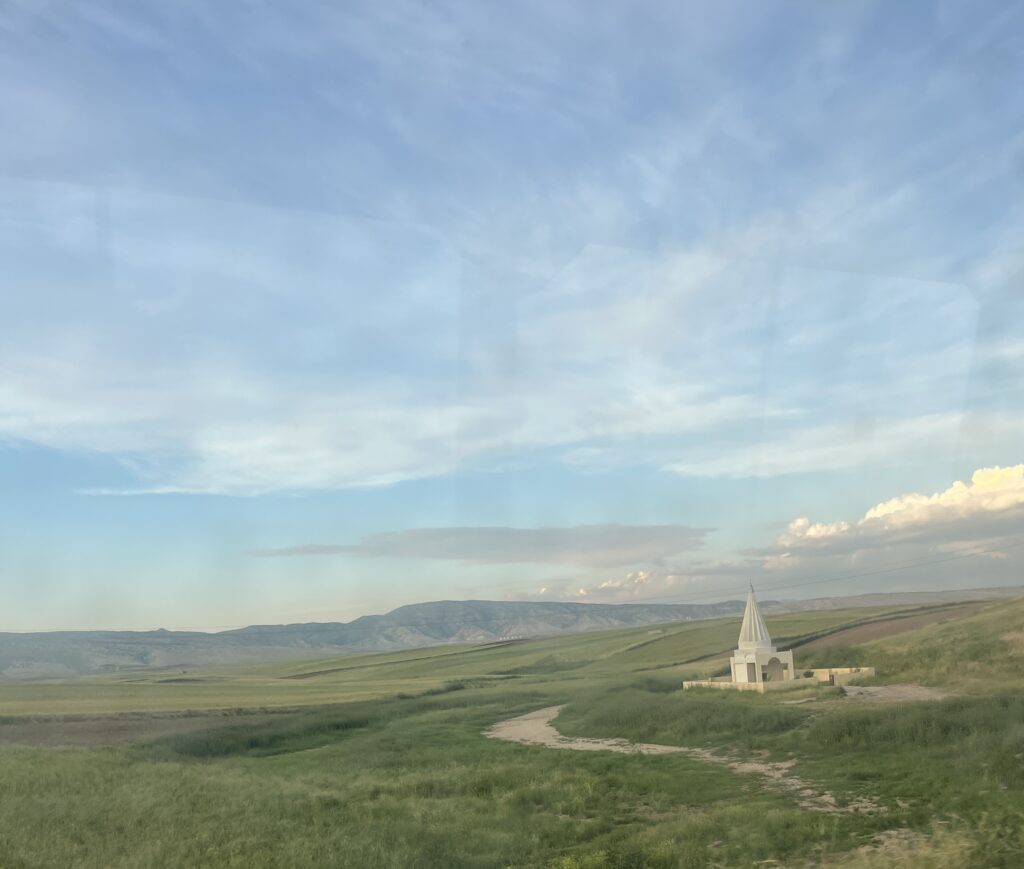
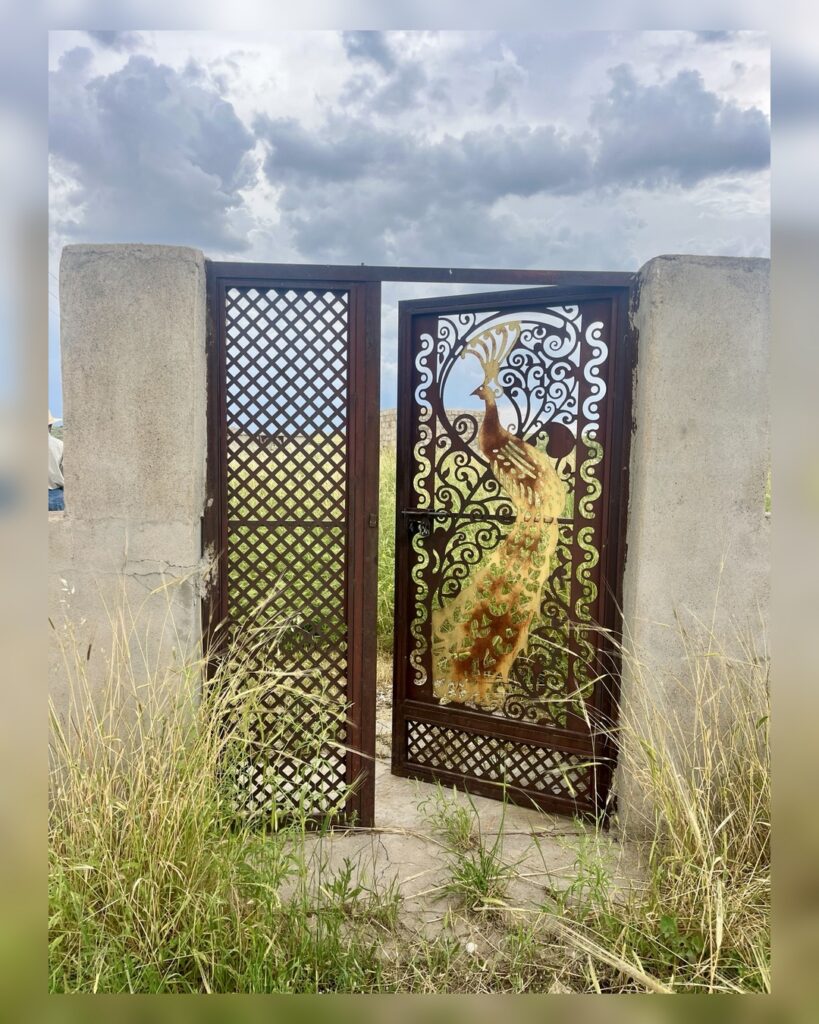
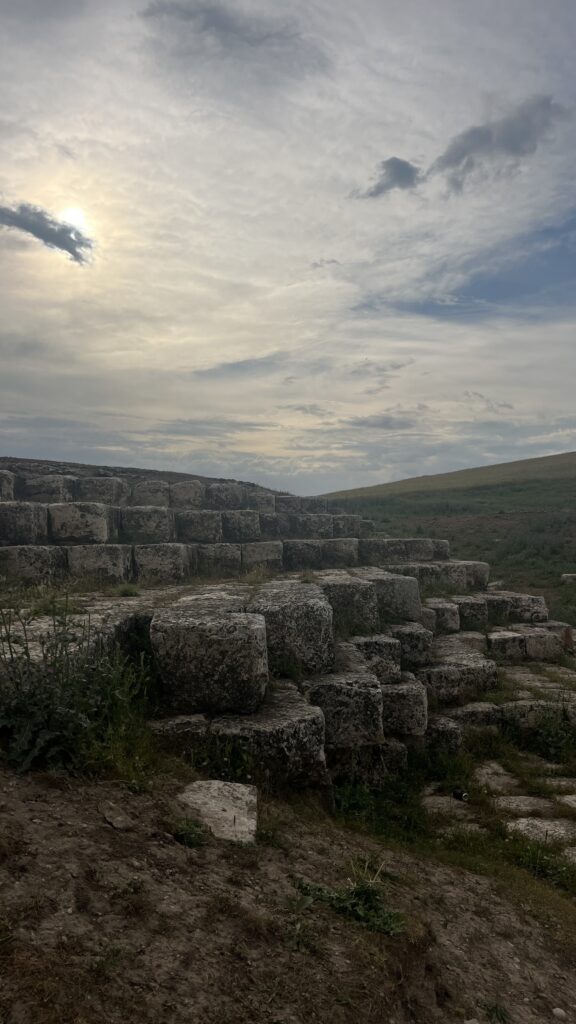
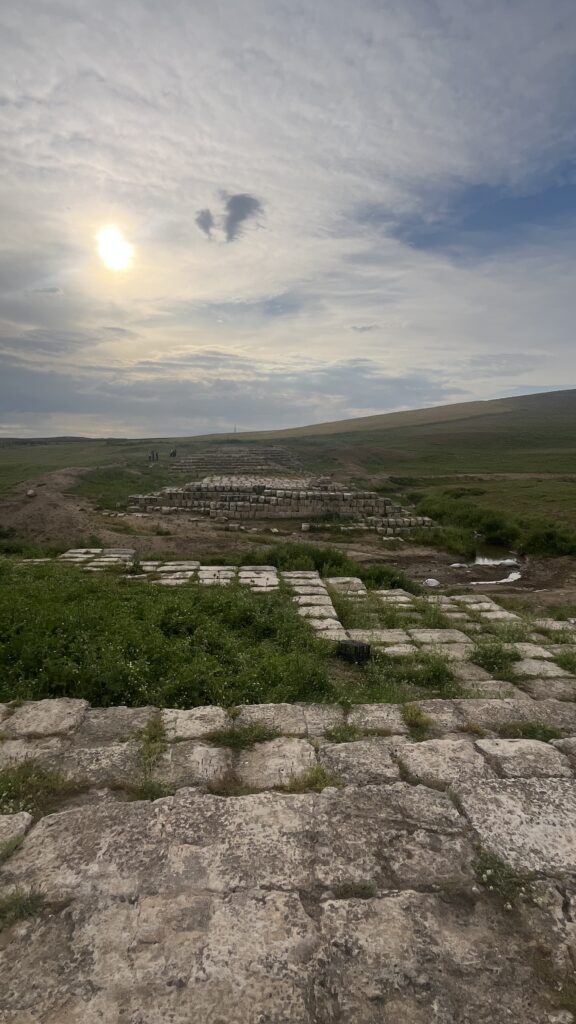
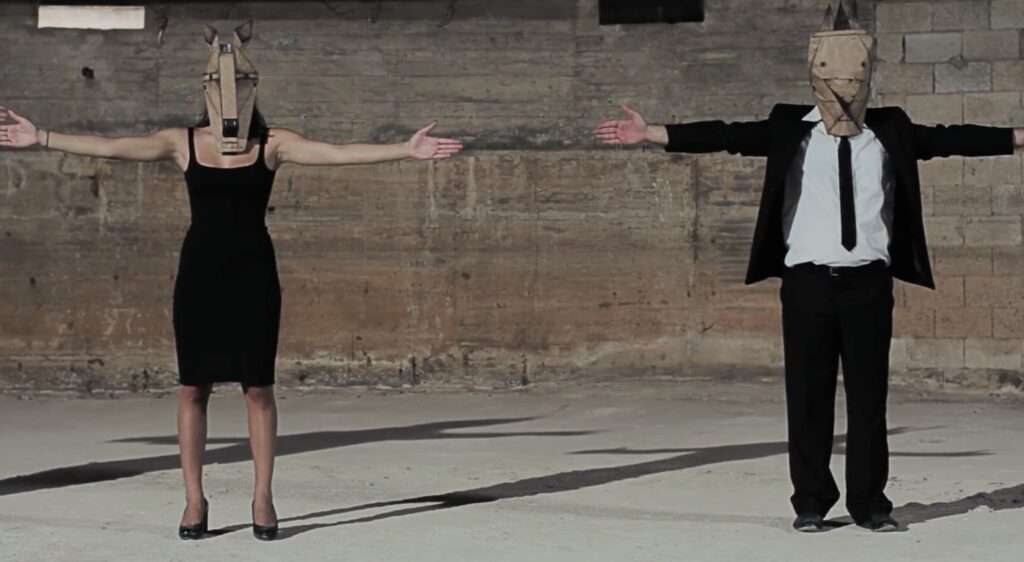
Inspired by the Epic of Gilgamesh, a major historical epic of the Mesopotamian region, the medium-length film Gilgamesh: She, Who Saw the Deep[18], which I made with artist Anton Vidokle in 2022, interrogates catastrophe and the posthuman through myth and the shared ground between the human and the more-than-human, much like our 2013 short film The Fall of Artists’ Republic / Sanatçı Cumhuriyetinin Düşüşü. The watersides of Batman, Mardin, and Hasankeyf; hidden small valleys; Êzdî villages; sacred sites known as Ziyaret; caves submerged beneath earth and water as a result of the Ilısu Dam; construction sites; and pastures that, at the time of filming, had not yet been fenced off by extractivist companies—all became witnesses to our Gilgamesh film.
In my work, grounded in experimental film practice, I draw on different modes of knowing—from imaginary narratives and poetic discourse to land, pasture, and landscape—as an accumulative way of thinking. This possibility opens up space at thresholds for witnessing that which cannot be seen. I was interested in archives of landscapes across the Tigris River basin, pre-architectural structures, and—as I mentioned earlier—the relationships women establish with more-than-human worlds. I drew inspiration from Zainab Bahrani and Marc Van De Mieroop’s books on Mesopotamia, as well as from David Wengrow’s research. These readings helped me understand not only the history of settlement in Mesopotamia, but also the fragmented, non-linear timelines of humans and more-than-human beings.
Perhaps we might describe Enkidu as the first ecologist, as he attempts to save the Cedar Forest when Gilgamesh seeks to destroy it. I find it particularly compelling to consider how the epic’s stories resonate with the effects of climate change in the region where I live, displacement caused by dams, catastrophes produced through the erasure of memory, and processes of aggressive urbanization.
The Sumerian king Gilgamesh became renowned as the founder of Uruk, particularly through the architectural representations of his power. The Epic of Gilgamesh conveys the transformative effects that environmental catastrophes—in this case, floods and droughts across Mesopotamian landscapes—have always exerted. Read from an ecological perspective, Gilgamesh emerges as a symbol of ancient urbanization and a figure representing the sovereign power of modernizing forces. Colonization and landscape standardization have always depended on controlling agricultural production and erasing localities.
Fertility, ecology, and seasonal transformations have long been connected to agricultural cycles, as expressed in myths in which women appear as central protagonists. These traditions, which originated in the ancient world, remain of central significance today, particularly among communities along the banks of the Tigris River. If we follow the work of anthropologist David Graeber and archaeologist David Wengrow, the transition of early human civilizations to sedentary life cannot be understood as a linear story in which hunter-gatherers simply evolved into vertical and hierarchical agricultural societies. As Graeber and Wengrow argue, tracing non-linear narratives also challenges patriarchal genealogies. The “Mesopotamian fertility rituals” associated with Dumuzi/Tammuz, for example—the shepherd-god and personification of vegetal life whose death was mourned each summer—reveal the origins of significant female cults.[19]
Today’s climate crisis and the extractive practices that underpin it reactivate in our memory the ecological catastrophes and anthropogenic extinction events depicted in ancient texts.
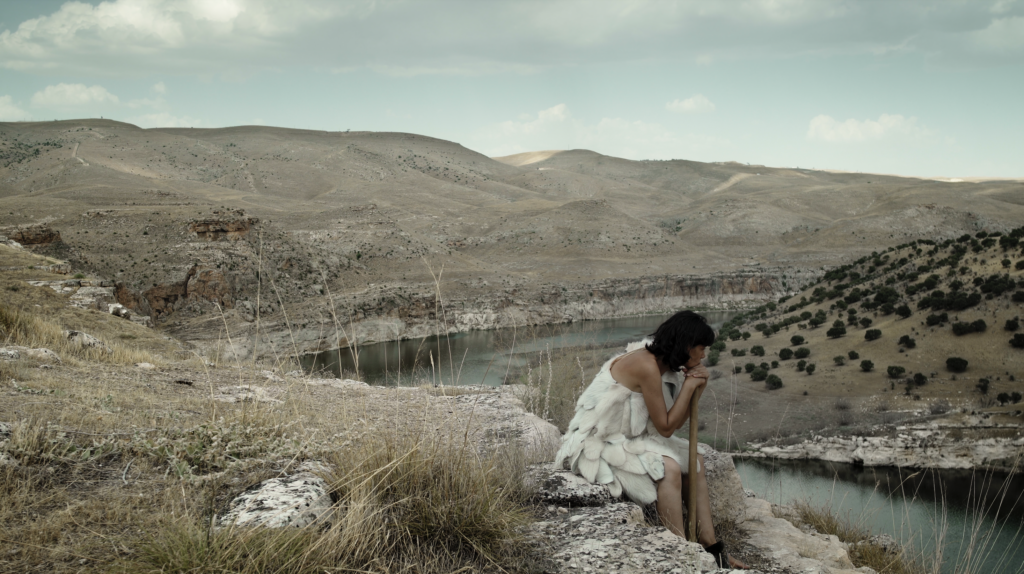
Gılgamesh: She Who Saw the Deep, film stills, Anton Vidokle & Pelin Tan, 2022 (Mardin & New York).
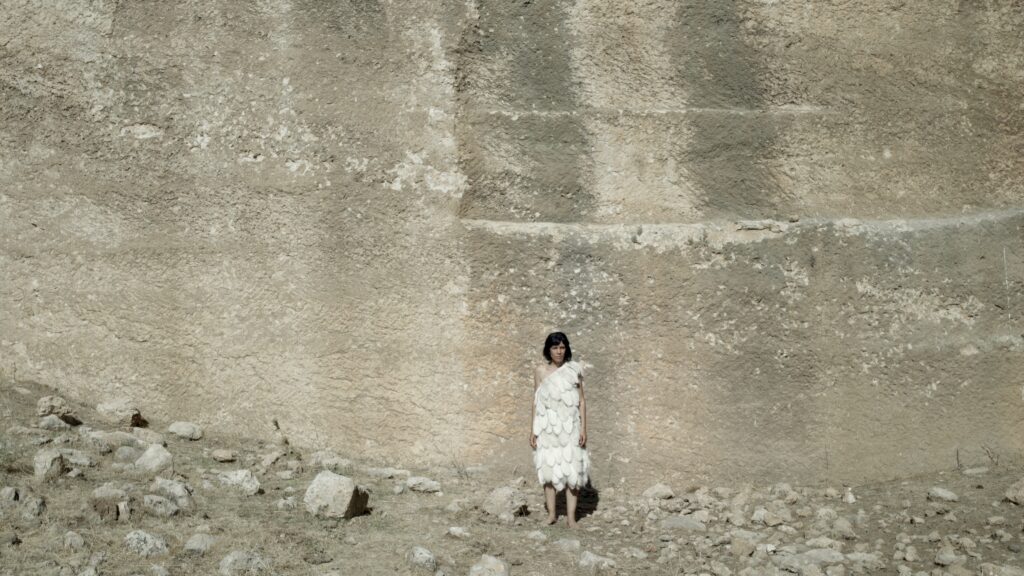
Gılgamesh: She Who Saw the Deep, film stills, Anton Vidokle & Pelin Tan, 2022 (Mardin & New York).
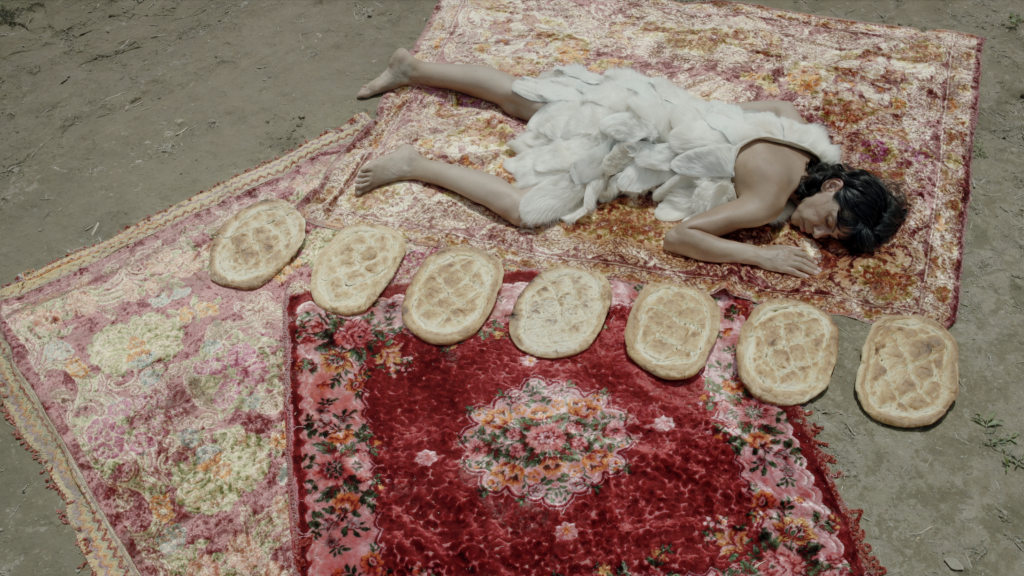
Gılgamesh: She Who Saw the Deep, film stills, Anton Vidokle & Pelin Tan, 2022 (Mardin & New York).
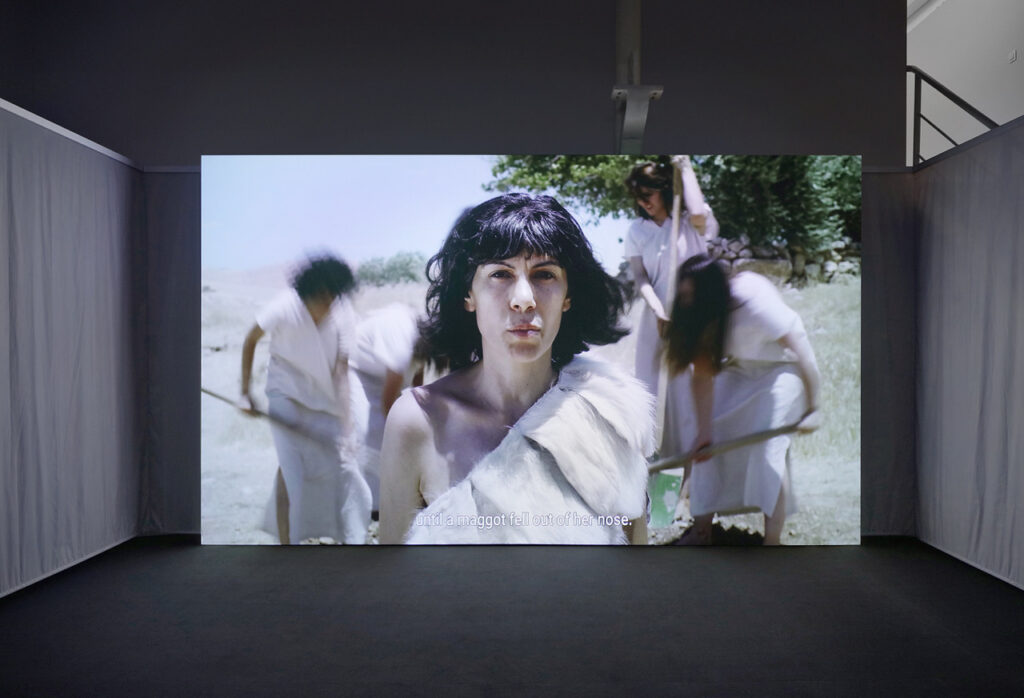
View from the Pre-Architecture exhibition, CIVA, Brussels (06.11.2024–30.03.2025).
How, then, within this conceptual framework—in which I take the Tigris River and its basin as a point of departure and as a companion—can we confront catastrophe and crisis in solidarity, within a reality in which the earth is engaged in intra-action with entangled layers operating at different scales?
In Radiation and Revolution, writer Sabu Kohso considers ruin, destruction, and capitalism together through the context of the Fukushima disaster. He identifies the Fukushima nuclear disaster as the singular name for the corruption, decay, and degeneration operating through the layers of the state under contemporary capitalism. Kohso also emphasizes the significance of alternative networks of solidarity woven in the aftermath of catastrophe and identifies three principles of action: protecting life, militantly confronting conflict, and connecting the two through autonomy: “If there is some hope for the future of disasters and crises, it lies in the possibility that these three initiatives can be particularly developed and mutually reinforced in confronting apocalyptic situations.”[20]
Kohso elaborates these three initiatives as follows: first, protecting life in a form that encompasses all horizontal elements through decentralized organization; second, resisting by confronting conflict with determination; and third, producing the methods of such resistance while linking these two forms of action and rendering them autonomous.
Although the scale of the Tigris’s climatic and infrastructural catastrophes across deep time extends throughout the region and across borders into other countries—Iraq, Syria, and beyond—and although it offers us diverse forms of local knowledge and layered ecological cosmologies, it also reminds us of forms of resilience and resistance. In this context, spatial scale is not merely a physical component of design and architecture; it is also a question of how scale is understood within social and political contexts.
The artist’s engagement in the field, within a region, in contested territories, landscapes, or other forms of spatiality requires, through an ethno-phenomenological method, a material and embodied attachment situated along the delicate line of onto-epistemology. Within this context, the artist acts as a mediator, a shaman, and a reactivator, unsettling the established relations that colonialism has produced with more-than-human worlds. In this sense, we witness the agential intra-action of phenomena that constitute the world’s reality; the artist, in turn, relates to this reality primarily through more-than-human elements and territories.
I am thinking through the planetary conditions that a phenomenological approach might invite us to understand through the inseparability of human and non-human—or more-than-human—worlds, rather than approaching humans and matter, or subjectivities and territories, through oppositional distinctions. Such an approach might offer a methodological tool for understanding more-than-human elements as sites of resilient agency capable of generating different ontological roots.
A crucial question within such artistic practices is this: while bringing local knowledge to the surface, forging kinship with more-than-human elements, and developing an intersectional artistic methodology, how can we prevent artistic experience from becoming enclosed within itself? How can we transform this experience into shared vulnerability and the formation of willful alliances? Without falling into the fetishization of land or territory, and without becoming trapped in an essentialist notion of the local, how can artists construct an effective social and visual representation in conjunction with practices of resistance?
Each everyday practice is, in part, a form of resistance to the forced transformation of the earth and, in part, a way to coexist with and survive through the earth. I understand layered landscapes, lands, gardens, and pastures as interwoven archives that transmit hidden narratives and the earth’s memory.
* Some parts of this text have appeared under the title “Landscape as Archive: Tigris Phenomenologies” in Bundle of Reeds: Art and Cosmotechnics in the Wake of The Tigris, edited by Rana Issa and Mike Sperlinger, published by OCA in collaboration with Archive Books, November 2026, and under the title “The Entanglement Ontology of Architecture: Territorial Materiality without Matter” in the book Swamps and the New Imagination: On the Future of Cohabitation in Art, Architecture and Philosophy, edited by Nomeda Urbonas, Gediminas Urbonas, and Kristupas Sabolius (2020).
[1] Povinelli, Elizabeth Geontologies: A Requiem to Late Liberalism. Durham, NC: Duke University Press, 2016.
[2] Tigris Phenomenologies: https://padlet.com/mardin2021/tigris-phenomenologies-yrlmx4ng1qufsukm
[3] Mirhanoğu, Adnan “Water grabbing through infrastructures and institutions in Turkey”, Water Alternatives, 17/3 (2024), s. 610.
[4] Akıncı, Z.S. ve Tan, Pelin, “Waterdams as Dispossession: Ecology, Security, Colonization”, Climates: Architecture and the Planetary Imaginary, ed. J. Graham, C. Blanchfield, Lars Müller Publishers ve Columbia University Trustees, New York, 2016, ss. 142–148.
[5] https://padlet.com/mardin2021/tigris-phenomenologies-yrlmx4ng1qufsukm
[6] de la Cadena, Marisol Earth Beings: Ecologies of Practice across Andean Worlds. Durham, NC and London: Duke University Press, (2015)
[7] Hodder, Ian Entangled: An Archaeology of the Relationships between Humans and Things, John Wiley & Sons, 2012.
[8] Thiele, Kathrin “Entanglement” in Symptoms of the Planetary Condition: A Critical Vocabulary, edited by M. Bunz, B.M. Kaiser, and K. Thiele, Meson Press, 2017
[9] Hodder, Ian Entangled: An Archaeology of the Relationships between Humans and Things, John Wiley & Sons, 2012.
[10] Ibid.
[11] Barad, Karen p. 441 (2003). Meeting the Universe Halfway. Durham & London: Duke University Press.
[12] Thiele , Kathrin “Entanglement” in Symptoms of the Planetary Condition: A Critical Vocabulary, Edited by M. Bunz, B.M. Kaiser, and K. Thiele, Meson Press, 2017
[13] Karakaş, Ö. (t.y.) Intra-action: İç-İlişkisel Edim. D. Kaşdoğan (Ed.) iris: Kitle Kaynaklı Türkçe STS Ansiklopedisi (Sonbahar 2021 Yayını) içinde. https://irisansiklopedi.net/2021/11/29/intra-action-ic-iliskisel-edim The concept of “intra-action” is a complementary concept to the theory of agential realism, which new materialist feminist theorist Karen Barad discusses in detail in her book Meeting the Universe Halfway (2003). This theory, which argues that “matter-ing is simultaneously a matter of substance and meaning” (2003: 3), posits that matter and meaning emerge within one and the same apparatus.
[14] Adnan, Etel. “Arab Apocalypse.” Middle East Report (1989): 32-33.
[15] Toufic, Jalal The Withdrawal of Tradition Past a Surpassing Disaster https://jalaltoufic.com/downloads/Jalal_Toufic,_The_Withdrawal_of_Tradition_Past_a_Surpassing_Disaster.pdf
[16] Haraway, Donna J. Staying with the trouble: Making kin in the Chthulucene. Duke University Press, 2020.
[17] Aslan, Sema “Unutmaya Karşı Bir Eylem Olarak Umursamak.” Birikim, no. 409 (Mayıs 2023): 39–47.
[18] Tan, Pelin, and Anton Vidokle. “Gilgamesh: She Who Saw the Deep. A Conversation with Lukas Brasiskis.” e-flux, August 3, 2026. e-flux Notes https://www.e-flux.com/notes/6783526/gilgamesh-she-wtanımlayabilirizho-saw-the-deep-a-conversatioyerindenyerindentanımlayabilirizn
[19]Graeber, David ve Wengrow, David The Dawn of Everything: A New History of Humanity (New York: Farrar, Straus and Giroux, 2021), s. 162.
[20] Sabu Kosho s.4-5, Radiation and Revolution, Duke Press, 2021
In her curatorial practice, Naz Kocadere explores the ways artistic expression takes shape in language and within relations of power. Here, she shifts her focus from words to the materiality...
read
In the series Experiments and Stumbles on Collaboration, İpek Çınar writes about how coming together and being "we" gets built —and where it falters— through the experience of running an...
read
Whistleblowing actions have transformed our perception of surveillance and control in today’s information society. This text examines the effects of whistleblowing as a form of dissent on politics, society, and...
read