Landscape as Archive
In this text, Pelin Tan considers land and landscape as layered archives that carry the memories of human and more-than-human beings. Moving from walks through the Tigris basin to seed...
read
Şener Soysal



For some time now, I have been questioning how art initiatives sustain themselves, what strategies they adopt in this process, and what kinds of self-organizing practices they develop.
I have an important reason for doing so: I imagine Orta Format, of which I am one of the co-editors, sustaining its publishing activities and expanding its reach. At the same time, as a designer at Baht. Studio, which I co-founded and where I work on the branding processes of startups and NGOs, I am also questioning whether the entrepreneurial ecosystem can offer a methodological point of reference for art initiatives.
Can art initiatives, like startups, develop business models and strategies, and devise different revenue models and visibility plans?
Taking on the role of an observer and trying to understand the possibilities and the current situation, I have incorporated my personal reflections and experiences, as well as conversations with Hayy Open Space (an independent art initiative in İzmir), YerMekân (an independent space in Ankara), and Emre Erbirer (a cultural manager), whose perspectives I believe would bring different contributions to the discussion.
Let’s begin.
Sustainability or Survival Skills?
Although we generally discuss the survival of independent art initiatives through the concept of sustainability, the name of the folder we have chosen at Orta Format is slightly different: survival skills.
I understand sustainability as an initiative’s ability to contribute to society in the long term while preserving its values and using its resources efficiently. However, I observe that in the art field, the concept of sustainability is more often associated with economic sustainability than with values or resource efficiency. In an environment where there is no order, capital, or resources, the sustainability of initiatives extends only as far as their founders are able to sustain themselves. On the other hand, the tendency to reduce sustainability to financial support also has to do with the fact that no one seems able to devote the energy required to focus on forms of support such as non-monetary labour, solidarity, trust, time shaped around needs, and the emotional sharing and intimacy. Therefore, I think it makes more sense to focus on survival.
Another fundamental problem is that, if I look at it from an entrepreneurial perspective, there are only a handful of investors. If the number of organizations such as SAHA, CultureCIVIC, and Sivil Düşün were to increase, and their forms of support become more diverse, a form of sustainability in which expectations and outputs are clearly defined might become possible. I would like to see clearly defined funding schemes, such as seed funding for new initiatives, accelerator funding for those with projects ready and a clearly defined focus, and scaling grants for those whose operations are well established and who want to expand their reach.
In other words, we find ourselves in a fragile environment in which both initiatives and institutions need to take a step back and reflect on the system itself. I hereby invite other four-letter and five-letter capital holders, businesspeople, and public institutions onto the stage. Are we just here to sit around? Doesn’t the cultural and arts scene deserve a “pitch” of its own?
Vulnerabilities and Hayy Open Space as a “Very Good Example”
The harder something looks, the more likely it is to be fragile. Think of a turtle’s shell or a car’s windshield. Once it cracks, there is no going back.
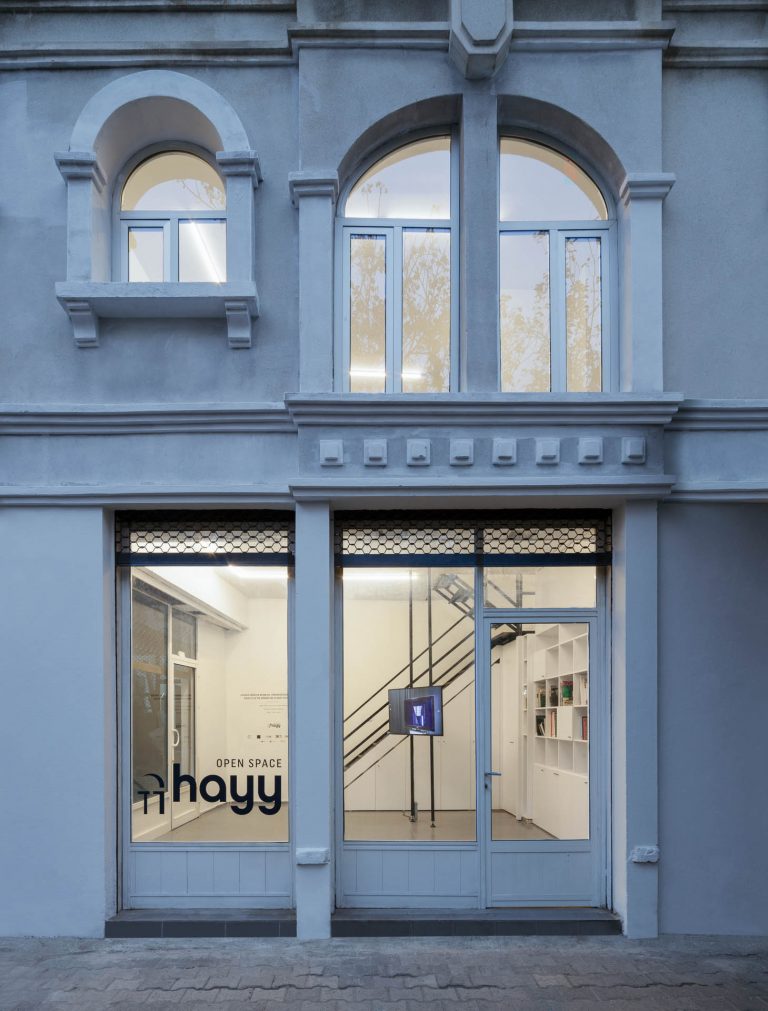
For this article, I particularly wanted to speak with Saliha Yavuz, a cultural worker and one of the founders of Hayy Open Space, which operates in İzmir. Because whenever I spoke to anyone, they would say, “Hayy is doing really well, it’s a very good example.” Over the years, I had followed some of Saliha’s various projects from a distance. I suspected that Hayy’s success was rooted not only in her belief in arts and culture but also in her professional experience. Indeed, when we started talking about Hayy, this was the first question I asked: What did you do differently that enabled Hayy to stand still since its foundation in 2018? Saliha’s answer was clear: the fact that they did not have to pay rent for the space, that the founders had been channelling part of their personal incomes into the initiative over the years, and the professional networks they had built as art practitioners. In fact, Hayy’s biggest funders are its founders themselves, Saliha and Ayşe Gür.
I alsobelieve another advantage of the venue is that, as art professionals, its directors are better able to identify needs. Simply establishing a space and making room for activities is not enough. A consistent strategy, detailed project planning (physical materials, marketing, manpower, etc.), and visibility activities are also necessary. In this respect, Saliha and Ayşe have had regular plans and goals over the years, worked out budgets for them, and held meetings to secure sponsorships. In doing so, they have also worked with other professionals and commissioned services.
I would also like to add the downside of owning a space. Even when no events are taking place, the space continues to operate and incur expenses, including hidden costs. Moreover, someone has to open the space on specific days, keep it running, and close it. Taking responsibility for a space is a job in itself.
I think the labour invested by those who run initiatives often remains invisible. They could have used the time and connections they devote to this work for other purposes, investing them in their personal well-being or careers. Of course, their work within the initiative also brings other forms of gain, even if it does not come with financial compensation: the passion, motivation, social benefits, and creative output, among other things. After all, these are people who have chosen to take on this responsibility themselves, despite all the difficulties, and there is something that excites them about it. So what? Does that mean we should withhold recognition of the value of their labour?
In Hayy’s case, I have mentioned how owning the space and relying on personal labour have helped keep everyday “official” expenses to a minimum. On the income side, meanwhile, there are grants and sponsorships. Unfortunately, sponsorships are much like grants. Sponsors who support projects often cannot even cover their actual costs. Once again, the wheels keep turning thanks to personal connections, goodwill and favours, and the contributions of partners and professionals who offer their support in good faith and for budgets far below what their work is worth.
Saliha and I also discussed alternative ways of generating income. Renting out the space, organizing other events, and undertaking exhibition installations are among the first activities that come to mind. Although these may seem to align with the space’s objectives, they now amount to commercial activities, which require a corresponding realignment. Ensuring their continuity might mean hiring an employee and taking other unforeseen expenses into account. In other words, a journey that begins with the idea of an independent space also requires addressing the kinds of issues that a shopkeeper or entrepreneur would need to consider.
The most reasonable approach that makes sense to me here is renting the space out to other initiatives or artists. Of course, it is important to carefully define exactly what is being offered. If you make this decision simply by saying, “Let’s do it,” you become a shopkeeper, and more often than not, it ends up costing you more than it is worth. On the other hand, a model that places commerce at its centre also creates an uncomfortable feeling. For this reason, I think it is important to research and analyse the possibilities thoroughly and approach them within the framework of a business plan. For example, if there is enough space, it could be used for shared desks, address rental, or artist studios. A shared space can also help develop artistic production through the sharing of resources and the collaborations it makes possible. (An art space near my home in London provides artists with affordable studios. I believe the building was granted to them by the state. The modest rents also help ensure the space’s continuity. This is an example where I feel I can use the word “sustainability” in its fullest sense.)
Another issue, meanwhile, is involving audiences or participants in supporting the initiative. I often find myself wondering whether a viable model could be developed here. Ten years ago, sponsorship was the only potential source of income for physical spaces or digital publications. For some time now, however, membership or subscription models, which can be thought of as simplified, bureaucracy-free forms of association membership fees, have also become widespread. These models have also evolved into a format through which organizations without legal entity status can participate via intermediary platforms, and which audiences have become more accustomed to. While some membership models, such as those offered by YouTube, Patreon, and Substack, provide exclusive content, others allow people to build a relationship with the content they follow through very small contributions alone. I think these kinds of membership models could also work for art initiatives that have built their own communities and provide their followers with access to a physical space.
Let me also touch on Hayy’s Open School project, which offers hybrid participation in a range of different courses, before closing this section. Thanks to the option of attending theoretical classes online, the program can reach many people in different cities. The project also gives the space a new function. Even so, I find it a little crazy to undertake a project on this scale without substantial support from the public sector or a major institution. This seems to be the only way to ensure that everyone involved in such a learning programme receives the fees or royalties they are entitled to, and that the programme can be sustained and archived. Yet cultural institutions continue to turn a blind eye, while the political climate makes it impossible to discuss these matters with public authorities. The accumulation of cultural capital can also become an active component and driving force in processes of gentrification. As part of their survival strategies, artists, initiatives, and small businesses may come together in the same neighbourhood, gradually making the area more attractive to capital. While the value they create is converted into real estate profit, the neighbourhood may eventually become a place where its former residents can no longer afford to live. We have witnessed this process unfold before our eyes in the cases of Yeldeğirmeni and Karaköy-Galata.
Focusing, Aligning, and the Example of YerMekân
In an era when not only production but also consumption takes place on digital screens, I sometimes question what we actually need in terms of physical spaces. On the other hand, among all the alternatives, I also feel the need to have a specific focus. In Turkey, there is a tendency, as a survival practice, to try to do a little bit of everything and to invite every possible target audience. However, once again borrowing the language of entrepreneurship, I believe it would be better to identify certain verticals, narrow the scope, and establish criteria. If even examples at the startup level raise questions and remain open to debate, how do initiatives navigate this process?
I sometimes feel that initiatives which place importance on ethical and artistic concerns and maintain them as key criteria throughout their production processes can also find themselves like rafts adrift at sea when it comes to defining their own field of activity, drifting gently with the wind. The conditions in the country and economic difficulties also play a role in this. But after a while, it turns into a vicious cycle: as the economy takes its toll, goals begin to shift, and as goals shift, the economy is affected in turn.
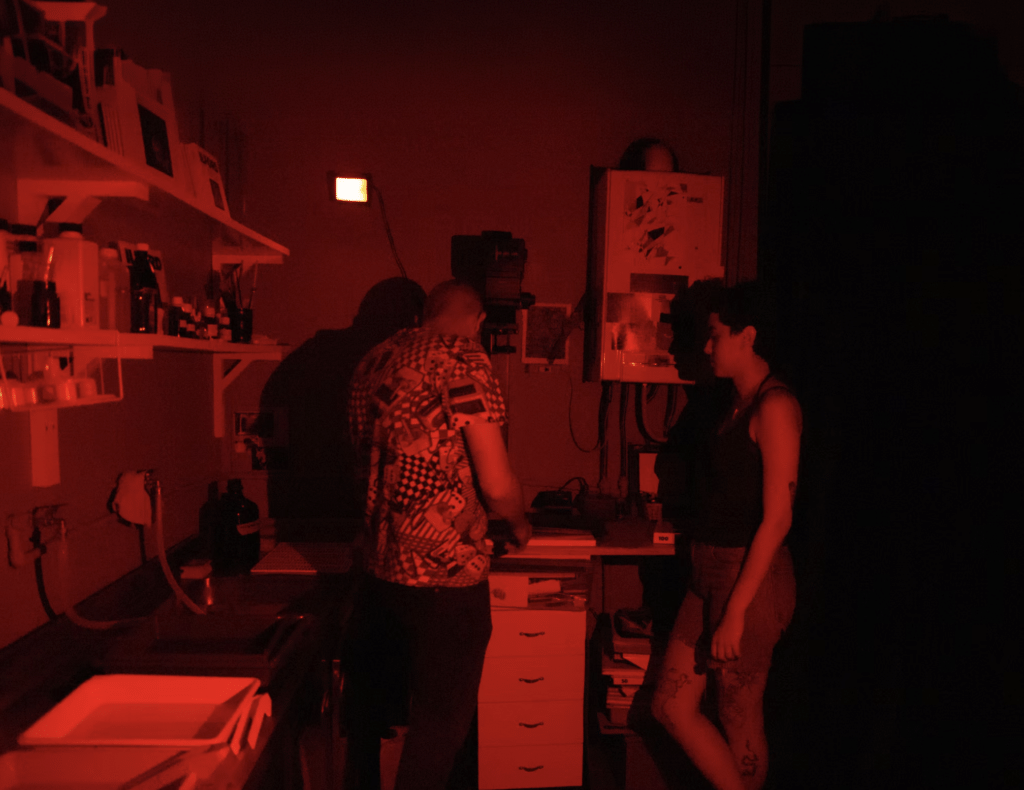
When I spoke with Ekin Kula, Hazel Kılınç, and Zeynep Üçöz, the founders of YerMekân in Ankara, I saw how they had gradually arrived at a clear focus by making successive decisions about what they did not want to become. As you can see on their website, they have a room for workshops and events, a darkroom open for use, and an open display window where products can be bought and sold. The darkroom, in particular, sets them apart from other art spaces.
They have tried almost every model that comes to mind to cover their rent and expenses: exhibitions, workshops, events, renting out the space, renting out the darkroom, and selling products. Each of these requires a separate investment of time and labour. Since they also work in different jobs, they took into account how much time they could devote to the space and chose project-based grants as their primary source of income. By dedicating their time outside work to the space, this arrangement both reduces their workload and allows them to keep it open. Darkroom memberships continue to provide an additional source of income.
We also talked about how trying to reach a wider audience might transform the structure of the space. I understand that they have no such ambition, and this seems to sit well with the whole team. Reaching a wider audience would have required them to devote time to digital marketing and organize events aimed at visitors with less familiarity with art. The demands of managing darkroom memberships might also have increased. Their being at ease with the people they currently reach and the work they are able to take on strikes me as a good example of maintaining a clear focus.
Resistance That Gets in the Way, A Conversation with Emre Erbirer
I particularly wanted to speak with Emre Erbirer because he is familiar with both art initiatives and art institutions, and because, through Espas, which he founded, he provides cultural management consultancy services. The fact that he is also someone who doesn’t mince his words when it comes to the field is an added bonus.
Emre got straight to the point in our conversation and described art initiatives as “resistant.” By resistance, however, he did not mean a steadfast existence in the face of all the difficulties of the art world, or a stance that seeks to protect its own space. Rather, he was referring to how most members of initiatives focus exclusively on their personal artistic production and the experience they have accumulated so far, closing themselves off to the processes of learning, research, and strategy development that are necessary for an initiative to move forward. He is talking about something that goes beyond individual skills and talent in artistic practice: all the competencies and new approaches required to sustain an initiative.
Perhaps, in their struggle to survive, they behave like turtles retreating into their shells. But a turtle that retreats into its shell stays where it is, and its sphere of influence shrinks. This is something I particularly agree with Emre on. Just like startups, initiatives need to think about their revenue models, visibility plans, and target audiences.
It seems that even major art institutions are unable to do what we expect of initiatives. As Emre put it: “When asked who they are trying to reach, both a major museum and a boutique gallery can say, ‘Everyone is a potential visitor.'” That “everyone” often turns out to consist of little more than the team’s immediate circle. On the other hand, given the current situation in the country, there is only one or two representative institutions for almost everything, so redirecting the search for resources is also a possibility. Drawing on Emre’s experience in the field and my own observations from projects I have been involved in as a designer, I can say that NGOs in Turkey manage to operate successfully despite all the restrictions they face.
I also heard from Emre many of the things I was tackling but never quite managed to articulate. It seems that, regardless of their scale, many institutions fall short when it comes to developing strategies.
In short, while criticizing startups for their limited engagement with arts and culture, I also find myself criticizing the artists and cultural workers who establish art initiatives for not participating sufficiently in entrepreneurship training. At this point, of course, I am aware that, by its very nature, art involves a more creative, emotional, and critical mode of production. For this reason, I neither expect nor want art initiatives to develop strategic plans at a level that even most startups fail to achieve, or to turn into commerce- or marketing-oriented structures. I believe that striking the right balance would better serve the aspirations of everyone who invests their labour in an art initiative, make their work more visible, and alleviate the disappointments caused by failures. In other words, establishing an art initiative does not mean you have to become a strategist, but you do need a strategy. Ideally, you need to acquire at least the basic skills to develop one yourself, or seek support from others.
An Example I am Familiar with: The Orta Format Experience as a Case Study
There are so many art initiatives I would like to remember: those that are still active, those that have gone quiet, and those that have come to an end… Even establishing shared ground for thinking and talking together about the same concerns would be incredibly valuable. However, if I were to speak with all of them, it would clearly result in a piece that goes beyond the scope of this article and that I would not be able to handle on my own. Perhaps a podcast in the future, why not? For now, I would like to draw your attention to Bagimsizlar.org, an index containing information on more than 160 independent initiatives, from their founders and resources to their legal status. It should serve as a useful point of reference for anyone interested in looking into different initiatives.
I would also like to summarize the Orta Format experience, now that exactly 15 years have passed since its first publication. In 2011, we started out as an online magazine on contemporary photographic practices, together with Tevfik Çağrı Dural. It was an outcome of our motivation to learn. We researched the subjects we wanted to learn about, spoke with relevant people, and published texts that we or others had produced on these topics. Naturally, our motivation stemmed from a kind of amateur courage. We had a clear focus and knew what we wanted to do, but we made no effort to generate any financial return from it. Over the years, we secured grants and various forms of support, updated the website, and began paying writers’ fees. With İpek Çınar joining us first, followed by Eda Yiğit as editors, our perspective also grew richer. In 2021, however, we got stuck. I moved to London, and İpek moved to Germany. My priorities changed with the birth of my daughter, while İpek and Eda turned their attention to their PhDs. We had not a single penny left in our personal resources to put towards Orta Format. We did not experience this situation as particularly dramatic: sometimes an initiative needs to pause or come to an end. Sometimes it has fulfilled its mission, whether for its readers or its founders. What we were fortunate about, in Orta Format’s case, was that we were a digital publication. Even when we stopped, the archive remained online. Closing the doors is an entirely different decision for an initiative with a physical space.
Towards the end of 2025, during the moment of #metoo in Turkey, we found ourselves immersed in a conversation longer than any we had managed to have in years. Amid all that sense of vulnerability and loneliness, we decided to hold on to one another and create a space both for ourselves and for others who shared these feelings. We redefined our focus as the intersection of artistic practices and social issues, and reconsidered our editorial policy and publishing frequency. The energy generated by Orta Format 2.0, the responses we received, the requests to submit texts, and the sense of shared feeling that emerged also did us good.
We are continuing our efforts to diversify our revenue model. Beyond grants, we are exploring both content sponsorship and reader support, and trying to open up these channels. Some of our writers leave their fees in the pot to help fund the next article. Although we are trying to strengthen our finances, we are also aware that keeping our distance from everyday consumption (I mean this both in terms of content and as a medium) limits the possibilities for brand collaborations in particular. We are looking for a balance without compromising our content or values. I am sure our paths will cross with brands that share this awareness, and that such examples will become more common over time.
For now, we all prefer to remain in our respective professional fields while continuing our active editorial work at Orta Format as a regular commitment. What the future holds, I cannot say either. What do you think, dear readers? Would you be willing to provide regular monthly financial support? Or perhaps buy a tote bag bearing the words “[A good midfield (orta) pass leads to a goal]”?
Conclusion: I Can’t Offer a Solution by Speaking, but I Can’t Stay Silent Either
After these conversations, I still believe that there are methods that initiatives can borrow from entrepreneurship. I observe that initiatives capable of doing so can reach wider audiences, make their voices heard, and touch the lives of many people, even if they eventually come to an end. On the other hand, Turkey’s political, economic, and social conditions seem to operate beyond the realm of rational thinking, driven instead by momentary opportunities, solutions, and high-risk moves. The stories of ordinary citizens caught up in fund fraud schemes are not so different either. Survival, quite literally, becomes a “skill.” You can read this either as a reference to practically minded people who can make quick decisions, or as a description of people who live without plans, somewhat fatalistically, from one moment to the next. So I neither want to complain too much nor do I want to remain silent.
In recognition of the labour of all the initiatives trying to grow plants in an arid environment that offers neither fairness nor favourable conditions, I would like to recall something my grandfather, who was a gardener, used to say: Hoeing twice is better than watering once. If you water continuously, the vegetables will not flower.
In this text, Pelin Tan considers land and landscape as layered archives that carry the memories of human and more-than-human beings. Moving from walks through the Tigris basin to seed...
read
In her curatorial practice, Naz Kocadere explores the ways artistic expression takes shape in language and within relations of power. Here, she shifts her focus from words to the materiality...
read
In the series Experiments and Stumbles on Collaboration, İpek Çınar writes about how coming together and being "we" gets built —and where it falters— through the experience of running an...
read